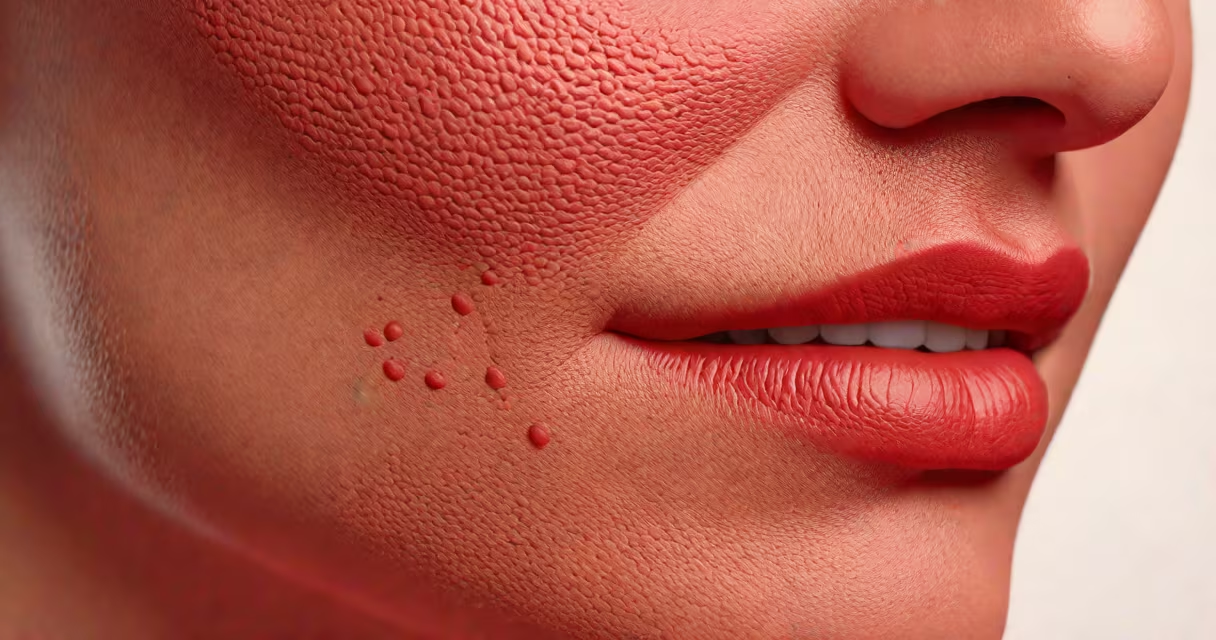
Erysipelas is a bacterial skin infection characterized by red, swollen patches, typically on the face, legs, or arms. It's caused almost exclusively by group A streptococcus bacteria, the same pathogen behind strep throat.
The bacteria enter the skin through a break, such as a cut or scratch. They then multiply rapidly, triggering inflammation. The infection spreads along the lymphatic vessels just under the skin, creating the distinctive raised, red borders.
Erysipelas appears in two primary forms:
| Type | Key Features |
|---|---|
| Facial erysipelas | Swelling of the cheeks, eyelids, and sometimes the entire face. Often mistaken for dental infections. |
| Leg erysipelas | Common in older adults with poor circulation. Typically affects the lower legs. |
Both types cause fever, chills, and fatigue within 48 hours of onset.
Doctors diagnose erysipelas based on appearance and symptoms. Blood tests confirm strep infection. Treatment involves oral or intravenous penicillin or cephalosporins for 10-14 days. Most patients recover fully, though severe cases may lead to complications like sepsis.
Many doctors confuse erysipelas with cellulitis, another bacterial skin infection. Unlike cellulitis, erysipelas has well-defined borders and spreads along lymph vessels. The Centers for Disease Control and Prevention notes that erysipelas accounts for about 5% of skin infections requiring hospitalization.
To reduce risk, treat minor wounds promptly, maintain good hygiene, and manage conditions like lymphedema that increase susceptibility. "I saw a patient whose facial erysipelas was initially misdiagnosed as an allergic reaction," says Dr. Jane Smith, a dermatologist at Mayo Clinic. "Recognizing the distinct borders helped correct the diagnosis quickly."