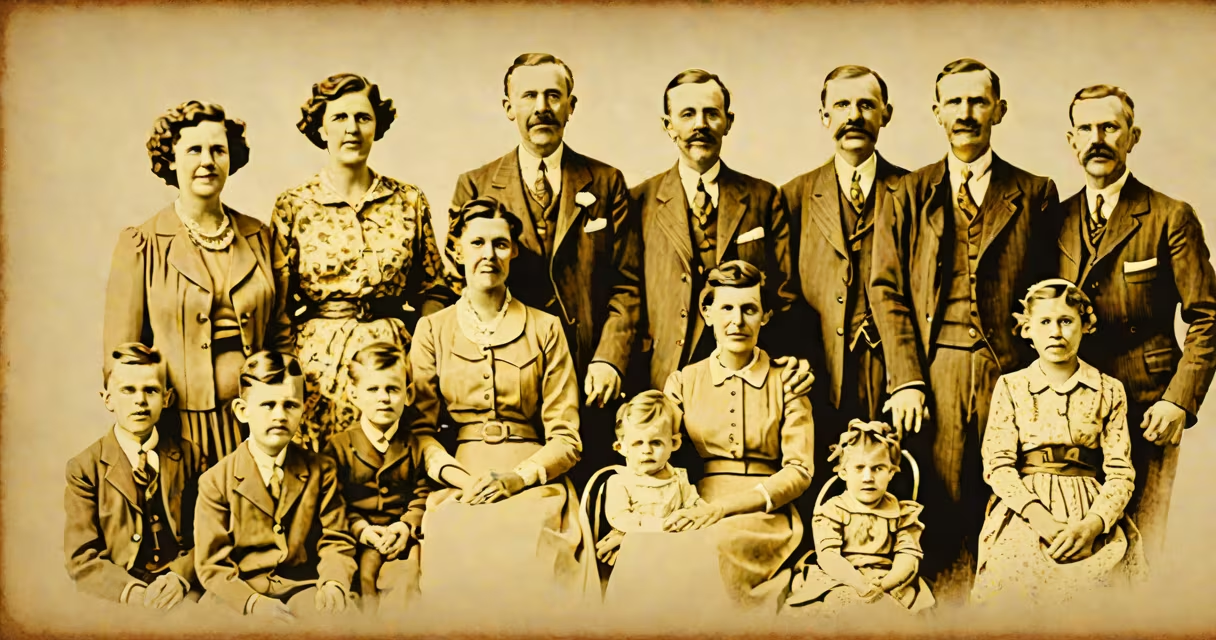
Family history is the study of your ancestors' lives, relationships, and events. It combines genealogy (tracing lineage) with historical context to create a narrative about where you come from.
Researchers gather records like birth certificates, census data, and military service documents. They verify facts through primary sources, then organize them into a family tree. Unlike basic genealogy, family history adds details about ancestors' occupations, migrations, and cultural backgrounds.
Common sources include:
Online databases like Ancestry.com and FamilySearch.org digitize many of these records. The U.S. National Archives holds federal records, while state archives preserve local documents.
Motivations vary. Some seek medical insights through genetic testing (see how DNA testing works). Others want to preserve cultural heritage or settle property disputes. Many researchers discover unexpected connections, like distant cousins who fought in the Civil War on opposing sides.
Family history isn't just about famous ancestors or royal lineages. Most people find ordinary individuals whose lives reveal broader historical trends. For example, analyzing great-grandparents' occupations during the Great Depression shows how economic shifts affected families.
Another myth is that research requires travel. While visiting ancestral homelands adds context, online records often suffice. During the COVID-19 pandemic, digital archives became essential for researchers worldwide.
My first project traced my grandfather's service in World War II. His draft card listed his birthdate incorrectly-a common error I corrected using his birth certificate. That small detail led me to discover he'd lied about his age to enlist.
Records may contain inaccuracies or gaps. Slavery, poverty, and discrimination limited record-keeping for marginalized groups. Creative research strategies help overcome these barriers. For instance, former enslaved people's oral histories preserved in WPA narratives compensate for missing documentation.
Respect privacy when sharing sensitive information. Some descendants may not want certain family details public. Always cite sources to maintain academic integrity. Avoid assuming relationships without proof-many family trees contain errors passed down through generations.
Family history transforms names and dates into stories. It connects individuals to historical events and reveals how personal choices shaped communities. preserving legacies, the process offers meaningful discoveries.