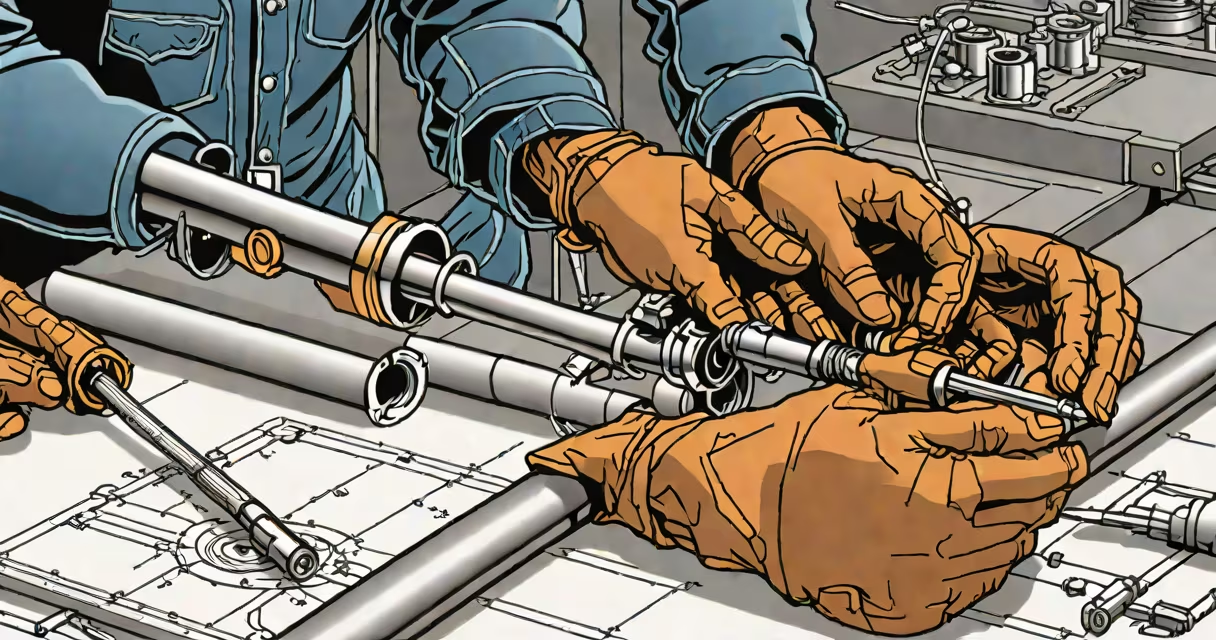
A filler rod in welding is a consumable metal wire or rod added during welding to fill gaps, reinforce joints, and create stronger connections between workpieces. Unlike welding electrodes, filler rods don't conduct electricity-they're manually fed into the weld pool.
Filler rods melt into the weld pool alongside the base metals, creating a homogeneous bond. They're typically used in gas tungsten arc welding (GTAW/TIG) and gas metal arc welding (GMAW/MIG) processes. The welder controls the feed rate, adjusting as needed to maintain weld quality.
Filler rods come in various compositions to match different base metals:
| Material | Common Applications |
|---|---|
| Mild steel | Structural steelwork, automotive repair |
| Stainless steel | Food processing equipment, chemical plants |
| Aluminum | Aircraft components, marine applications |
| Nickel alloys | High-temperature environments, corrosion resistance |
Welders use filler rods when the joint requires extra material for strength or when working with thin metals that might burn through without additional support. They're essential for achieving precise weld bead size and controlling dilution-the mixing of filler and base metal.
For example, when welding a thin aluminum sheet, a welder might use a 1/16-inch aluminum filler rod to prevent heat warping while ensuring full penetration. According to the American Welding Society, proper filler rod selection can reduce defect rates by up to 30%.
Filler rods are often confused with sounding rods, which are used to measure molten metal levels in furnaces. Unlike sounding rods, filler rods become part of the final weld structure.
I once observed a welder repair a cracked stainless steel tank using a 308L filler rod. The precision required-matching the rod's composition to the base metal and controlling the feed rate-highlighted why filler rods are critical for durable welds.
Select filler rods based on:
For instance, ER70S-6 filler rods are common for mild steel structures due to their high tensile strength and ductility. Always consult manufacturer guidelines for specific applications.