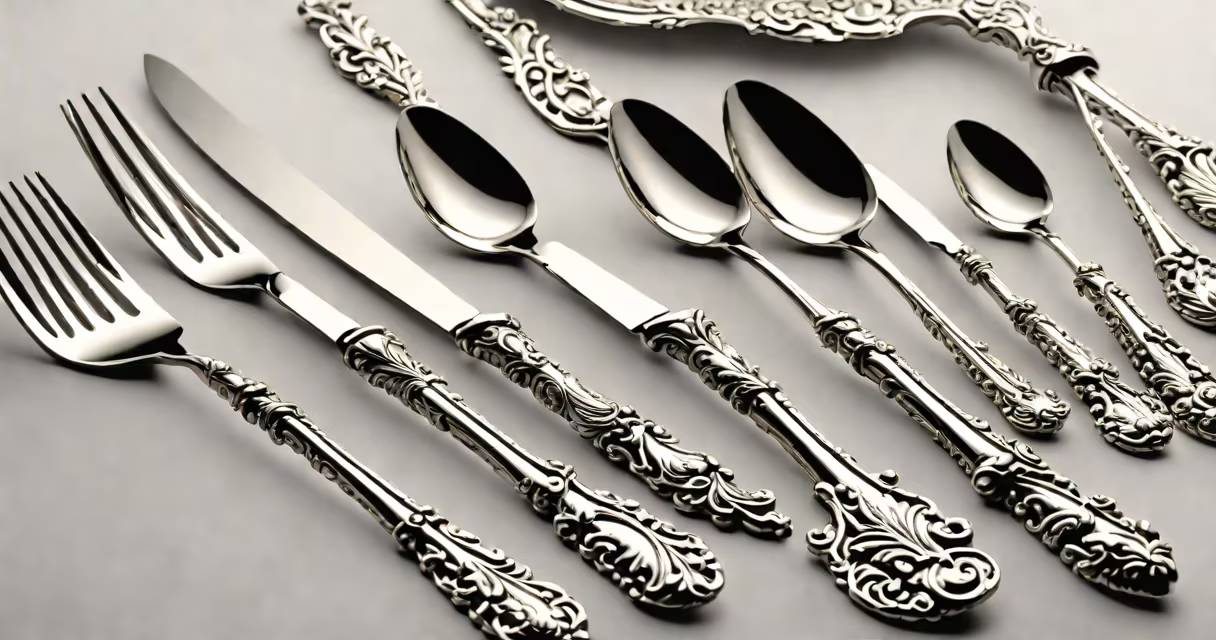
Italian silver refers to silverware produced in Italy, typically marked with "800" to indicate 80% silver content. These pieces range objects, often featuring elaborate designs.
Unlike sterling silver (92.5% pure silver), Italian silver contains 80% silver and 20% other metals like copper. This alloy makes the silver more durable while maintaining its lustrous appearance. The remaining 20% is usually copper, which enhances strength and durability.
Authentic Italian silver bears hallmarks indicating its origin and purity. The most common mark is "800," stamped on the piece. Additional marks may include the maker's initials or symbols representing the city of manufacture. For example, a piece marked "800 MILANO" was made in Milan.
Italian silver includes various items such as:
Italian silver dates back to the Renaissance period, with Venice and Milan emerging as key centers for silver production. During the 19th century, Italian silversmiths gained international recognition for their detailed craftsmanship. Many pieces from this era are highly sought after by collectors today.
Today, Italian silver remains popular among collectors and enthusiasts. Vintage sets are particularly valuable, with prices varying based on age, condition, and maker. Modern Italian silversmiths continue to produce high-quality silverware, blending traditional techniques with contemporary designs.