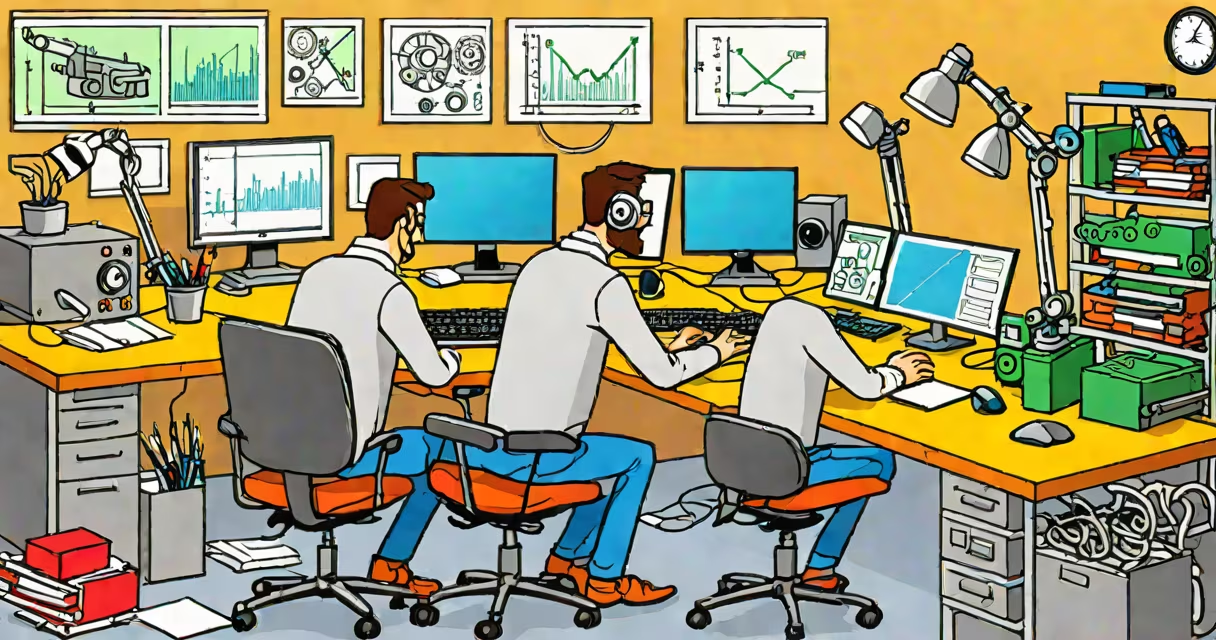
Mechanical engineer work involves designing, analyzing, and manufacturing mechanical systems using principles of physics, mathematics, and materials science. These professionals create solutions for problems involving force, motion, and energy.
Core Tasks of Mechanical Engineers
Mechanical engineers perform many tasks across various industries. Their primary responsibilities include:
Design: Creating blueprints and schematics for mechanical components and systems using computer-aided design (CAD) software. For example, a mechanical engineer might design a new type of turbine blade for a wind energy project.
Analysis: Testing and analyzing designs to ensure they meet performance requirements. This often involves simulations and stress tests. For instance, an engineer might use finite element analysis (FEA) to test how a bridge would respond to different loads.
Manufacturing: Overseeing the production process to ensure products are made efficiently and according to specifications. This includes working with machinists and other technicians to troubleshoot issues on the factory floor.
Maintenance: Developing maintenance plans for mechanical systems to extend their lifespan and prevent failures. For example, an engineer might create a schedule for regular inspections of industrial machinery.
Main Types of Mechanical Engineering Work
Mechanical engineering is a broad field with several specialized areas. The most common types include:
Type
Description
Example Projects
Automotive Engineering
Focuses on the design and manufacture of vehicles and their components.
Involves the design and testing of aircraft and spacecraft.
Creating lightweight materials for airplanes, developing propulsion systems for rockets.
Robotics Engineering
Deals with the creation of robots and automated systems.
Designing robotic arms for manufacturing, developing autonomous drones.
Energy Systems Engineering
Concentrates on the development of energy production and distribution systems.
Designing solar panels, improving wind turbine efficiency, optimizing power plants.
Where Mechanical Engineers Work
Mechanical engineers work in different settings, including:
Manufacturing Plants: Overseeing the production of mechanical components and systems. For example, an engineer might work in an automotive plant ensuring cars are assembled correctly.
Research Laboratories: Conducting experiments and developing new technologies. A mechanical engineer might work in a lab testing new materials for durability.
Construction Sites: Managing the installation and maintenance of mechanical systems. For instance, an engineer might oversee the installation of HVAC systems in a new building.
Offices: Designing and analyzing mechanical systems using software. An engineer might spend most of their time in an office creating CAD models and running simulations.
Common Misconceptions About Mechanical Engineering Work
Many people confuse mechanical engineering with other engineering disciplines. Here are some key distinctions:
Civil Engineering: Focuses on infrastructure projects like bridges and roads, while mechanical engineering deals with mechanical systems and components.
Electrical Engineering: Concentrates on electrical systems and electronics, whereas mechanical engineering involves mechanical systems and thermodynamics.
Chemical Engineering: Involves chemical processes and reactions, while mechanical engineering deals with mechanical systems and their interactions.
For example, a civil engineer might design a bridge, while a mechanical engineer might design the mechanical components within the bridge, such as elevators or moving parts.
Tools and Software Used in Mechanical Engineering
Mechanical engineers rely on different tools and software to perform their work effectively. Some of the most commonly used tools include:
Computer-Aided Design (CAD) Software: Programs like AutoCAD, SolidWorks, and CATIA are used to create detailed designs and schematics. For instance, an engineer might use SolidWorks to design a new type of gear system.
Computer-Aided Manufacturing (CAM) Software: Tools like Mastercam and Fusion 360 help in planning and controlling manufacturing processes. An engineer might use Fusion 360 to program a CNC machine to cut metal parts.
Finite Element Analysis (FEA) Software: Programs like ANSYS and COMSOL are used to simulate and analyze the behavior of mechanical systems under different conditions. For example, an engineer might use ANSYS to test how a new material will perform under stress.
3D Printing Technology: Used for rapid prototyping and creating physical models of designs. An engineer might use a 3D printer to create a prototype of a new product before mass production.