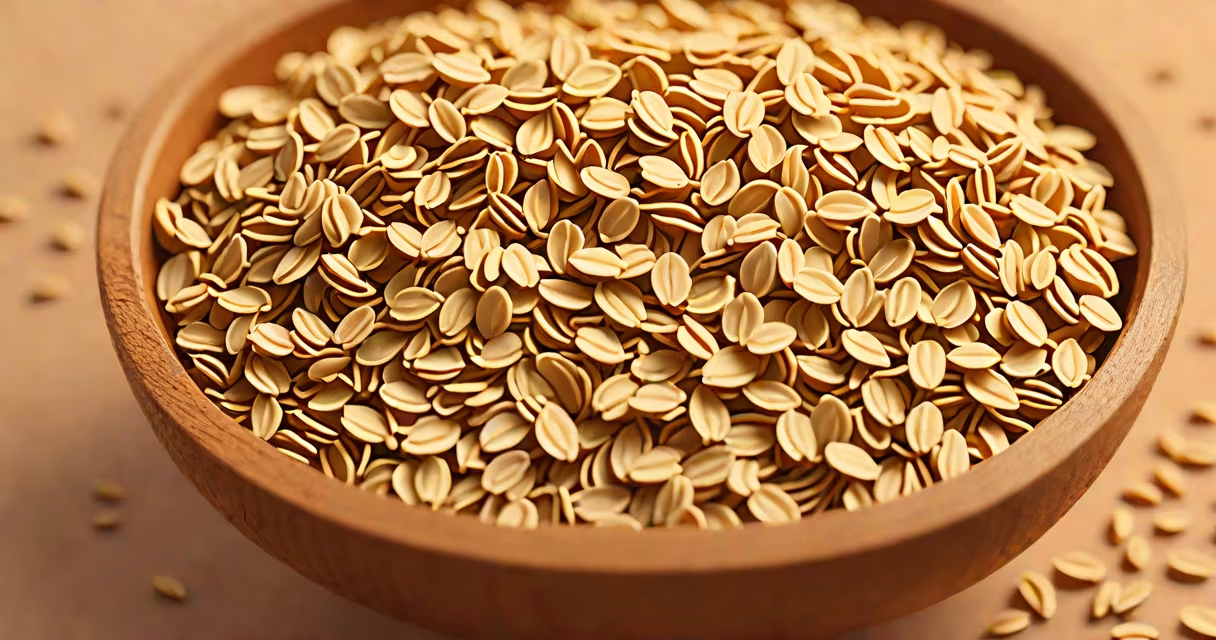
Rolled oats are whole-grain oats that have been steamed and flattened with a roller. They cook faster than steel-cut oats but retain more texture than instant oats.
Rolled oats start as whole oat groats, which are dehulled, steamed, and pressed between rollers to flatten them. This process stabilizes the oats' natural enzymes and makes them cook faster. According to the Oatly Institute, rolling also improves digestibility by breaking down some of the oat's tougher fibers.
Rolled oats come in three main varieties:
| Type | Processing | Cook Time |
|---|---|---|
| Steel-Cut Oats | Cut into small pieces with a steel blade | 20-30 minutes |
| Rolled Oats | Steamed and rolled flat | 5-10 minutes |
| Instant Oats | Pre-cooked and dried | 1-3 minutes |
Rolled oats are most often used in breakfast dishes like oatmeal, overnight oats, and granola. They can also be used in baking, such as in oatmeal cookies or oat-based bread. The FDA notes that rolled oats are a good source of fiber, protein, and essential vitamins and minerals, making them a nutritious addition to many meals.
I often use rolled oats in my morning oatmeal, topped with fresh fruit and a drizzle of honey. The texture is perfect-creamy yet slightly chewy, which keeps me full until lunchtime.
Many people confuse rolled oats with steel-cut oats, but they are processed differently. Steel-cut oats are chopped into smaller pieces, while rolled oats are flattened. This difference affects cooking time and texture. Rolled oats are more common in quick-cooking recipes, while steel-cut oats are preferred for a heartier, porridge-like consistency.
Rolled oats are also sometimes mistaken for instant oats, which are pre-cooked and dried for even faster preparation. Instant oats lack the chewiness of rolled oats and often contain added sugars or flavors.