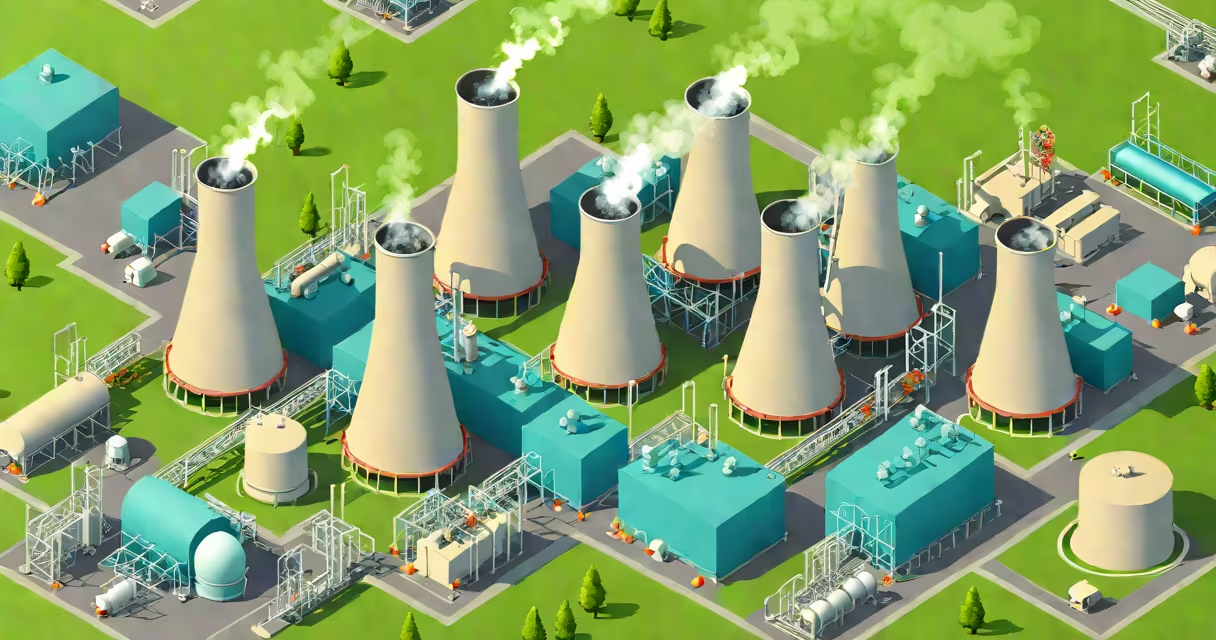
Spark energy refers to electricity generated by burning natural gas to create steam that spins turbines. This process, called combined-cycle generation, produces about 40% of U.S. electricity.
Natural gas power plants use a two-step process. First, gas burns in a combustion turbine, creating hot gases that spin the turbine's blades. Second, leftover heat boils water into steam, which powers a second turbine. This efficiency gains the name "combined cycle."
| Type | Efficiency | Example Capacity |
|---|---|---|
| Simple-cycle | 35-45% | 100 MW |
| Combined-cycle | 50-65% | 500 MW |
Spark energy provides flexible, low-emission power. Unlike coal or nuclear, gas plants ramp up quickly to meet demand spikes. The U.S. Energy Information Administration reports they provide 38% of U.S. electricity, with output peaking in summer afternoons.
Many confuse spark energy with "spark ignition," the process that ignites fuel in car engines. While both involve sparks, they serve entirely different purposes. Spark energy specifically refers to electricity generation from natural gas.
I visited a combined-cycle plant in Ohio last year. Seeing the massive turbines up close-each taller than a building-drove home how scale enables efficiency. The plant manager noted their output varies hourly based on grid demand.
Spark energy often backs up renewables. When wind speeds drop, gas turbines compensate within minutes.
Spark energy's efficiency and flexibility make it a key part of modern grids. Its ability to balance intermittent renewables ensures reliable power as demand grows.