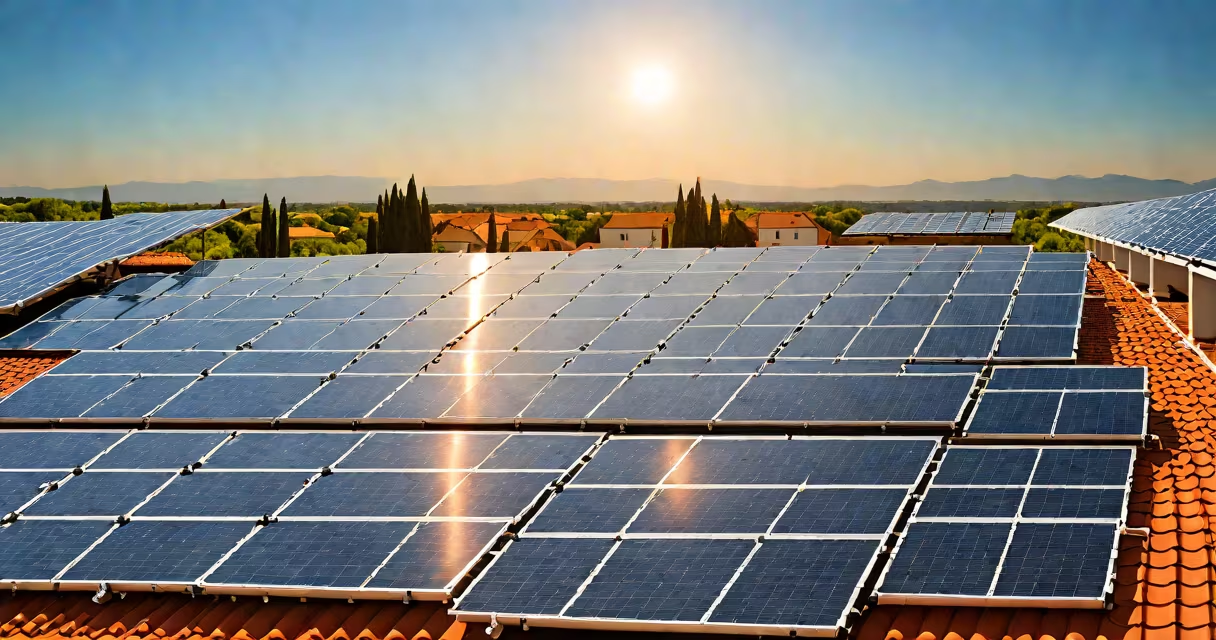
A solar energy source captures sunlight and converts it into electricity using photovoltaic cells or concentrated solar power systems. This renewable resource harnesses the sun's radiation, providing a clean alternative to fossil fuels.
Solar energy begins with sunlight, which contains photons. When these photons hit photovoltaic (PV) cells, they knock electrons loose from their atoms, creating an electric current. Inverters then convert this direct current (DC) into alternating current (AC), which powers homes and businesses.
Concentrated solar power (CSP) systems use mirrors to focus sunlight onto a receiver, heating a fluid that produces steam to drive turbines. Unlike PV cells, CSP generates electricity through heat rather than direct photon conversion.
| Type | Description | Example |
|---|---|---|
| Photovoltaic (PV) Systems | Convert sunlight directly into electricity using semiconductors | Rooftop solar panels |
| Concentrated Solar Power (CSP) | Uses mirrors to concentrate sunlight and generate heat | Solar thermal power plants |
| Solar Water Heating | Uses sunlight to heat water for domestic or industrial use | Solar water heaters |
Solar energy is used worldwide, from small-scale residential installations to large utility-scale power plants. It reduces reliance on finite resources like coal, lowers carbon emissions, and provides energy independence. For example, California's Topaz Solar Farm generates enough electricity to power 160,000 homes annually.
Solar energy is particularly effective in sunny regions, but advancements in technology allow it to work efficiently even in cloudy or less sunny areas. Governments and businesses increasingly adopt solar power to meet sustainability goals and reduce energy costs.
Many people assume solar energy only works in deserts or extremely sunny locations. However, modern solar panels operate effectively in various climates, including overcast conditions. Another misconception is that solar energy is expensive, but costs have dropped over the past decade, making it a cost-competitive option.
Some confuse solar energy with other renewable sources like wind or hydro. While all are clean energy options, solar power specifically relies on sunlight, whereas wind energy uses wind turbines and hydroelectric power uses flowing water.
I installed a small solar panel system on my garage roof last year. Even in a moderate climate, it generates enough electricity to power my workshop tools and offset part of my home's energy use. The system pays for itself within five years, proving solar energy's practicality beyond just environmental benefits.