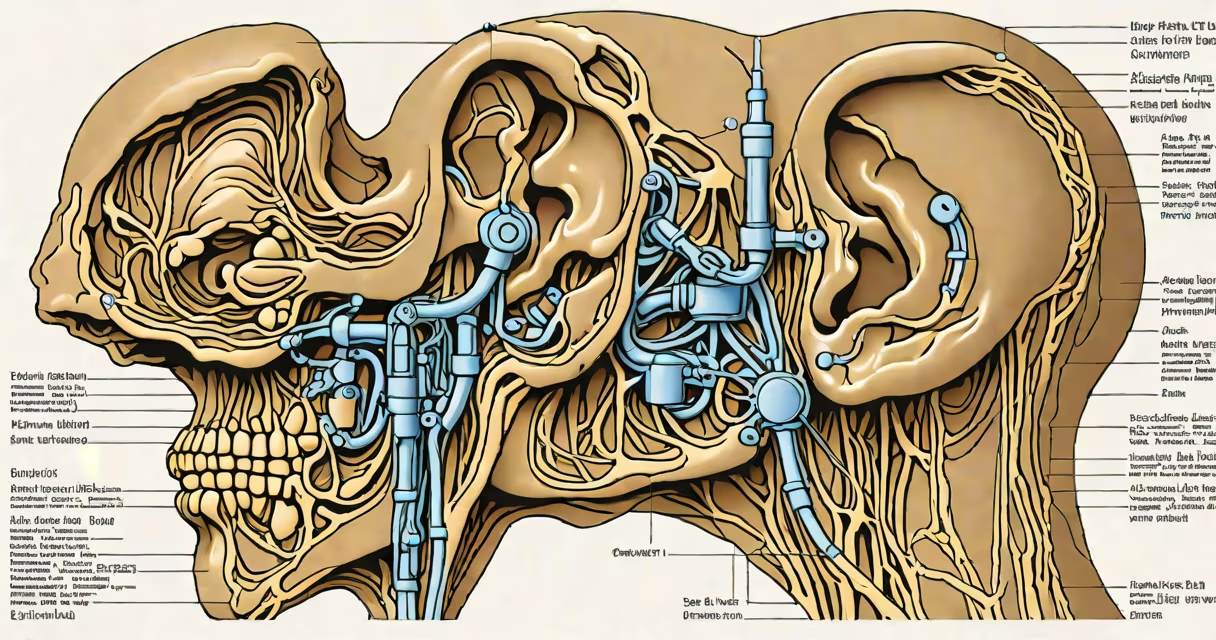
The area behind the ear is called the mastoid region, a bony part of the skull that houses air cells and supports middle ear function.
The mastoid region forms part of the temporal bone, located behind the ear and above the neck. It contains honeycomb-like air cells connected to the middle ear space through small channels. These air cells help regulate pressure within the ear and contribute to sound transmission.
This area gets its name from the mastoid process, a prominent bump on the skull behind each ear. The process serves as an attachment point for several neck muscles and provides structural support for the outer ear.
The mastoid region plays several key roles:
Several conditions can affect the mastoid region:
Mastoiditis was once a serious complication of middle ear infections, but it's now rare due to effective antibiotics. However, chronic ear infections can still lead to mastoid problems.
Doctors diagnose mastoid issues through physical exams, hearing tests, and imaging studies like CT scans. Treatment typically involves antibiotics for infections, drainage for cysts, or surgery for severe cases.
In rare cases, surgeons may perform a mastoidectomy to remove infected air cells or repair damaged structures. This procedure helps restore proper ear function and prevent further complications.
When my son developed a persistent ear infection, his pediatrician noticed swelling behind his ear. An ENT specialist diagnosed early mastoiditis, which resolved quickly with antibiotics. This experience underscored the importance of prompt treatment for ear infections.
Understanding the mastoid region's anatomy and function helps recognize potential issues early. If you notice swelling, pain, or other concerns behind your ears, consult a healthcare professional for evaluation.