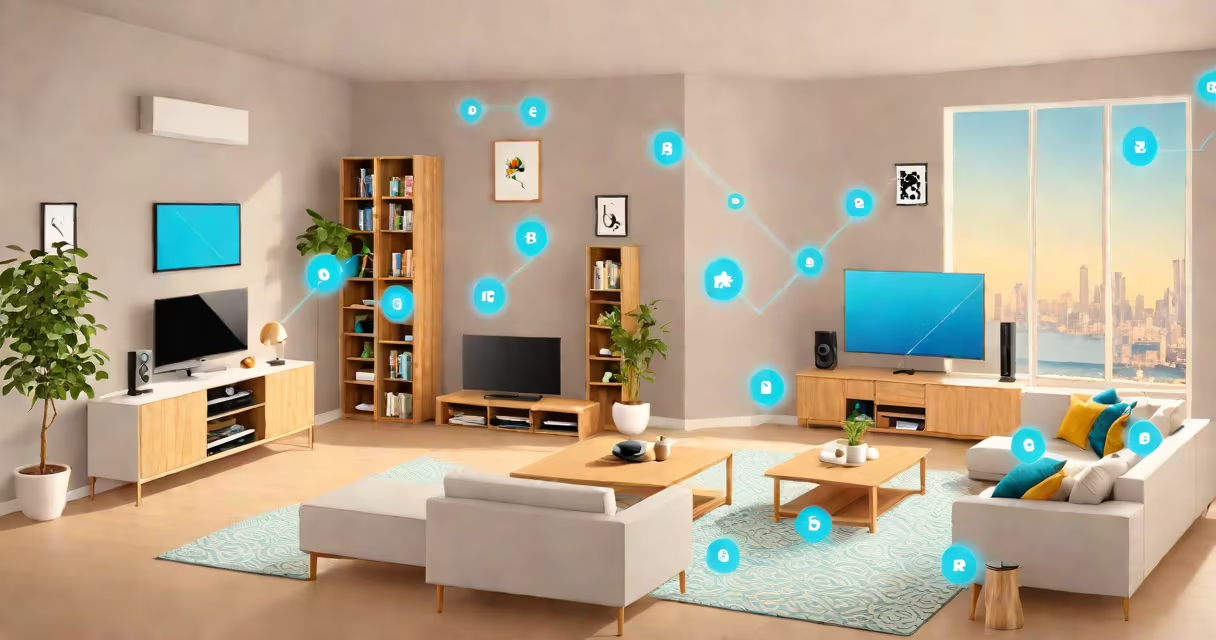
A home automation system is a network of hardware and software components that lets you control lighting, climate, entertainment systems, and appliances remotely. The best systems integrate smoothly with popular smart devices and offer solid security features.
Modern systems use wireless protocols like Wi-Fi, Zigbee, or Z-Wave to connect devices to a central hub or app. Sensors detect changes (e.g., motion, temperature), while actuators trigger responses (e.g., turning off lights). Cloud-based platforms enable remote access via smartphones or voice assistants.
| Type | Key Features | Best For |
|---|---|---|
| All-in-one hubs | Pre-integrated with multiple device brands | New smart homes |
| Modular systems | Add components as needed | Existing homes |
| Voice-controlled | Works with Alexa, Google Assistant, or Siri | Hands-free operation |
The most popular systems include:
According to Statista, the U.S. smart home market will reach $34 billion by 2025. Samsung SmartThings leads in global installations, while Apple HomeKit is growing fastest in North America.