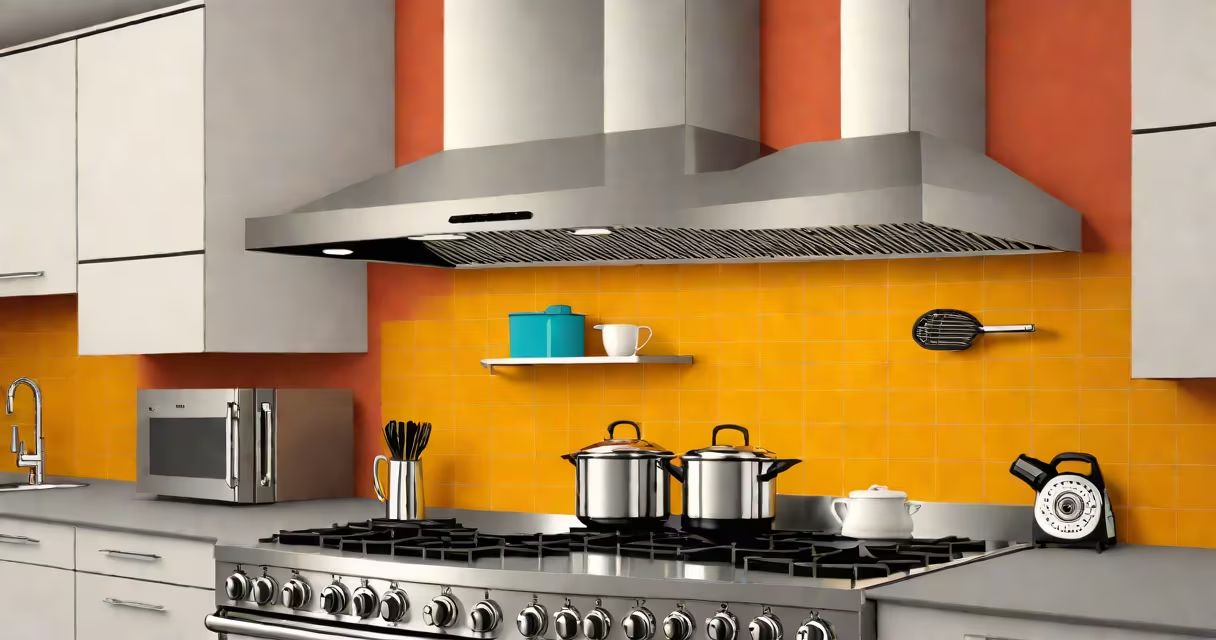
A range hood is the fan mounted above a stove to ventilate smoke, steam, and cooking odors. It's a standard fixture in most kitchens, especially those with gas stoves.
Range hoods pull air through a filter, removing grease, smoke, and odors. Most models vent air outside, while others recirculate filtered air back into the kitchen. The fan speed is adjustable, often with multiple settings for different cooking intensities.
| Type | Ventilation Method | Best For |
|---|---|---|
| Ducted Range Hood | Vents air outside through ductwork | Kitchens with external access for duct installation |
| Ductless Range Hood | Recirculates air through filters | Small kitchens or spaces where duct installation isn't possible |
| Under-Cabinet Range Hood | Mounted under kitchen cabinets | Kitchens with limited overhead space |
| Wall-Mounted Range Hood | Installed against a wall | Kitchens with open layouts |
| Island Range Hood | Designed for stoves in kitchen islands | Open-concept kitchens with island stoves |
Range hoods improve indoor air quality by removing pollutants like carbon monoxide, nitrogen dioxide, and particulate matter. They also reduce heat and humidity, making the kitchen more comfortable. According to the U.S. Environmental Protection Agency, proper kitchen ventilation can lower indoor air pollution levels.
Many people confuse range hoods with exhaust fans. Exhaust fans are typically found in bathrooms and are less useful than range hoods., some assume all range hoods vent outside, but ductless models recirculate air instead.
Professional installation ensures proper ductwork and electrical connections. Regular maintenance includes cleaning grease filters and replacing charcoal filters in ductless models. I once replaced a clogged filter in my ductless range hood, which improved airflow.