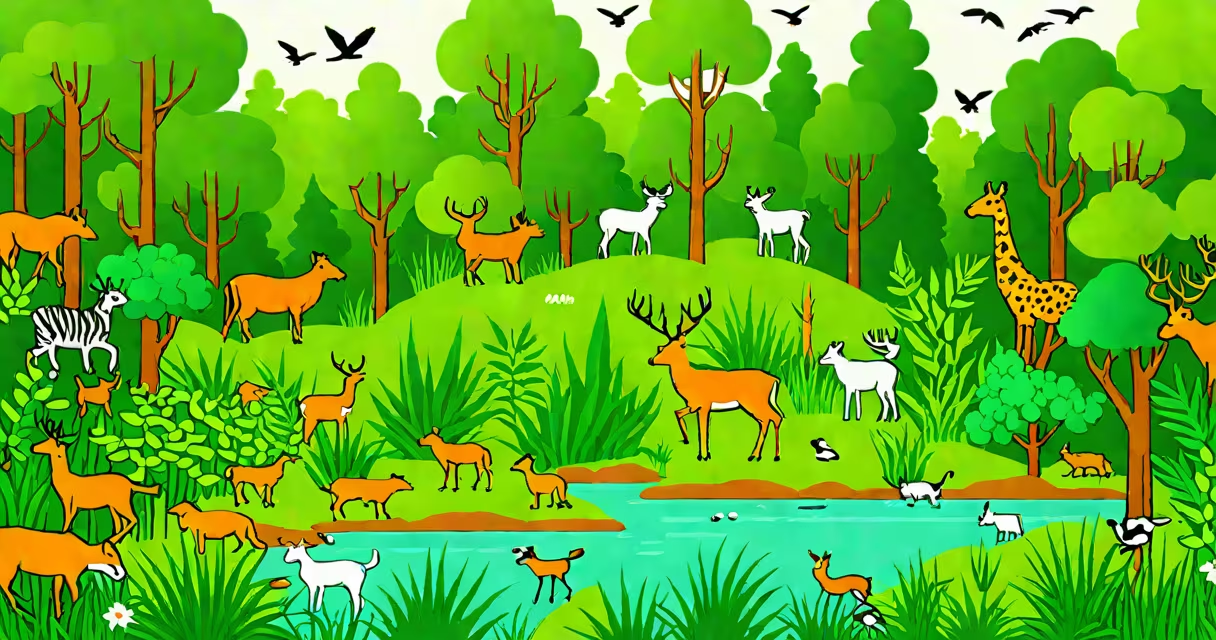
Biodiversity is the variety of life at genetic, species, and system levels. In ecosystems, it ensures stability, resilience, and productivity through diverse species interactions.
Biodiversity functions as a buffer against environmental changes. For example, forests with high tree diversity recover faster from wildfires than monoculture plantations. This resilience arises because different species fill distinct roles, creating a web of interdependencies.
Biodiversity includes:
Biodiversity is important in all ecosystems,. It supports services like pollination, water purification, and pest control. For instance, bees pollinate crops, while wetlands filter pollutants. Without biodiversity, these services collapse, threatening human survival.
Many confuse biodiversity with mere species counts. However, it's about functional roles. A single species can dominate numerically but lack ecological impact. For example, invasive species like kudzu vine smother native plants, reducing system health despite their abundance.
Another mistake is assuming biodiversity is only about charismatic species. Microorganisms, though invisible, decompose waste and recycle nutrients, sustaining soil fertility. Their loss disrupts entire food webs.
Consider the Yellowstone National Park system. Wolves were reintroduced in 1995 after a 70-year absence. Their presence controlled elk populations, allowing vegetation like aspens and willows to regrow. This benefited beavers, birds, and other species, demonstrating how a single species can restructure an entire system.
This cascading effect highlights biodiversity's role in maintaining ecological balance. Removing keystone species like wolves disrupts these interactions, leading to system degradation.
| Aspect | Biodiversity | Monocultures |
|---|---|---|
| Resilience | High (adapts to changes) | Low (vulnerable to pests/diseases) |
| Productivity | Sustainable long-term | Short-term gains, then decline |
| Examples | Tropical rainforests | Cornfields, palm oil plantations |
Monocultures prioritize short-term yields but sacrifice long-term stability. Biodiversity, in contrast, ensures ecosystems thrive under varying conditions.
While hiking in Costa Rica, I witnessed how biodiversity creates vibrant ecosystems. A single tree hosted epiphytes, insects, and birds, each contributing to the forest's health. This interconnectedness underscores biodiversity's necessity for ecological stability.
Biodiversity enhances human health. Diverse diets from varied crops provide essential nutrients, reducing malnutrition., natural environments rich in biodiversity lower stress levels and improve mental well-being, as shown by studies linking urban green spaces to better public health.
The importance of biodiversity in ecosystems lies in its ability to sustain life through complex interactions. From stabilizing food webs to supporting human health, biodiversity is indispensable for ecological and societal well-being.