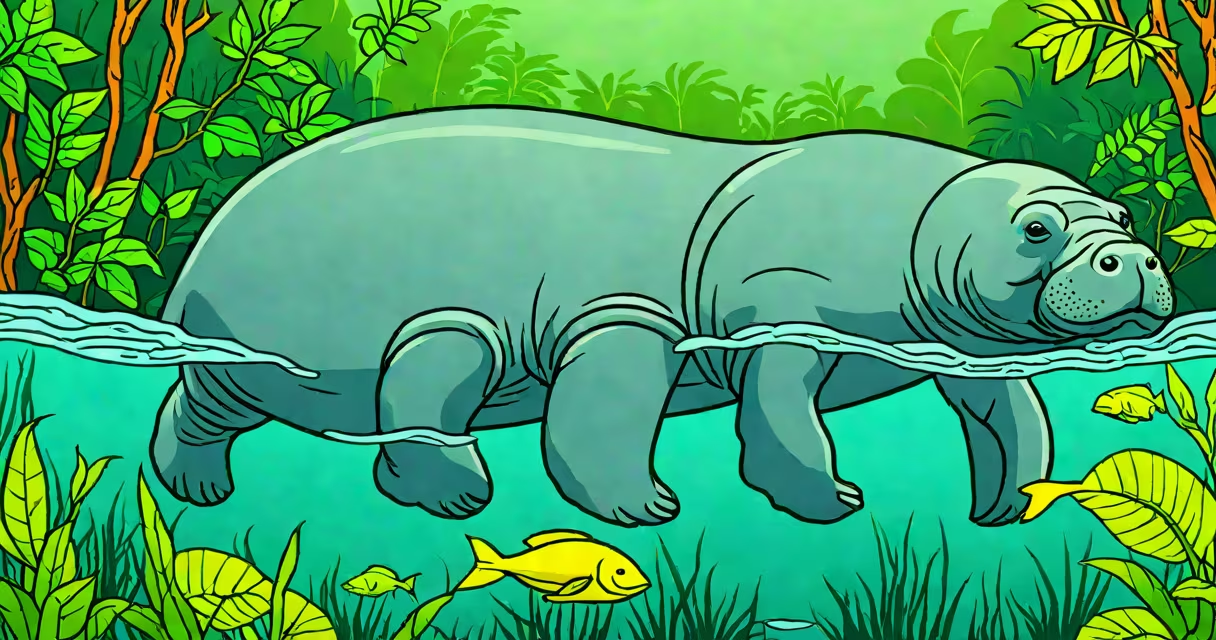
The largest animal in the rainforest is the Amazonian manatee (Trichechus inunguis), a slow-moving aquatic mammal that can reach lengths of 13 feet (4 meters) and weigh up to 1,200 pounds (544 kg). Unlike popular assumptions about rainforest giants, this gentle creature spends most of its time submerged in rivers and lakes.
While jaguars and harpy eagles capture imaginations, they're smaller than the manatee. A jaguar maxes out at 6 feet (1.8 m) and 300 pounds (136 kg), while the harpy eagle reaches 4 feet (1.2 m) tall with a wingspan of 6.5 feet (2 m). The manatee's size advantage comes from its aquatic habitat, which provides buoyancy and access to abundant vegetation.
The Amazonian manatee thrives in the rainforest's vast river systems, particularly the Amazon River basin. Its herbivorous diet consists of over 60 aquatic plant species, allowing it to grow larger than terrestrial rainforest animals. Manatees are also highly adapted to their environment, with thick skin to protect against abrasions and specialized molars for grinding tough plants.
Manatees face threats from habitat loss and hunting, despite protections. According to the International Union for Conservation of Nature (IUCN), their population is vulnerable due to deforestation and pollution. Conservation efforts focus on protecting their river habitats and enforcing anti-poaching laws.
Many assume the largest rainforest animal is a predator like the jaguar or anaconda. While these creatures are impressive, they're dwarfed by the manatee. The green anaconda, for example, reaches 20 feet (6 m) but weighs only 200-300 pounds (91-136 kg). The manatee's combination of length and weight makes it the clear winner.
During fieldwork in Peru's Amazon basin, I observed manatees in the Pacaya-Samiria National Reserve. Their massive forms glided silently through the water, occasionally surfacing to breathe. Local guides emphasized their importance to the system, noting how their grazing helps maintain healthy aquatic plant populations.