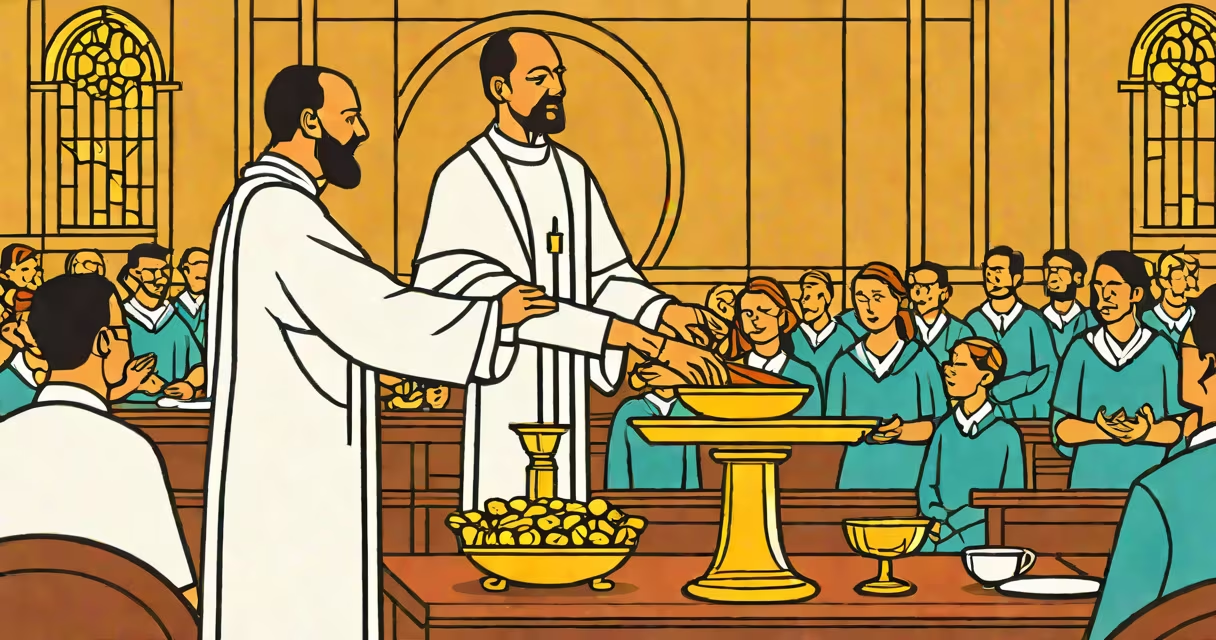
A sacrament is a religious rite in Christianity that conveys divine grace through visible signs and words. These rituals, such as baptism and communion, mark key moments in a believer's spiritual life.
Sacraments operate on two levels: physical and spiritual. The visible elements-water in baptism, bread and wine in communion-symbolize invisible spiritual realities. For example, water represents purification, while bread and wine signify Christ's body and blood. The Church teaches that God's grace is truly present in these actions.
The seven sacraments recognized by the Catholic and Orthodox Churches are:
| Sacrament | Description |
|---|---|
| Baptism | Initiation into the Christian faith through water, symbolizing rebirth. |
| Confirmation | Strengthening of faith through the Holy Spirit, often via anointing. |
| Eucharist | Communion, where believers consume consecrated bread and wine. |
| Penance | Confession of sins and reception of absolution from a priest. |
| Anointing of the Sick | Prayer and anointing for healing of physical or spiritual illness. |
| Holy Orders | Ordination of clergy, conferring spiritual authority. |
| Matrimony | Sacred union of a man and woman in marriage. |
Protestant denominations vary, often recognizing only baptism and communion as sacraments.
Sacraments serve as visible signs of God's presence and grace. They strengthen faith, provide spiritual nourishment, and mark significant life events. For instance, baptism welcomes a person into the Christian community, while communion fosters unity among believers.
According to the Catechism of the Catholic Church, sacraments are "powers that come forth" from Christ's paschal mystery, connecting believers to His sacrifice. This view contrasts with some Protestant interpretations, which emphasize personal faith over ritual.
Many assume sacraments are merely symbolic gestures. However, Catholic and Orthodox traditions hold that they convey actual grace. Another misconception is that only Catholics practice sacraments, but many Protestant churches observe baptism and communion, though they may not call them sacraments.
During my visit to a local parish, I witnessed a baptism where the priest poured water over the infant's head while reciting prayers. The family's joy and the congregation's support highlighted how sacraments unite communities in shared faith.
Some Protestant groups use the term "ordinances" instead of sacraments, emphasizing human obedience over divine grace. For example, Baptists view communion as a memorial rather than a means of grace. This distinction reflects deeper theological differences about how God interacts with believers.
In contrast, the Eastern Orthodox Church, like Catholicism, upholds the sacramental view, teaching that Christ's presence is real in these rites. This perspective shapes how believers participate in and understand these rituals.