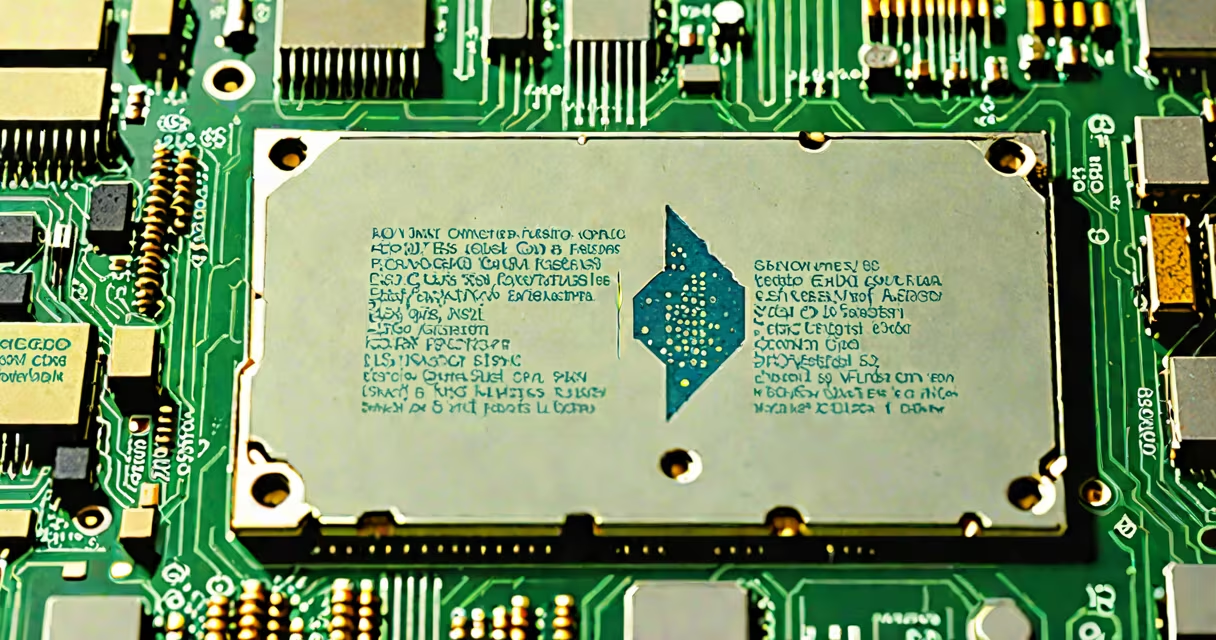
A processor, or central processing unit (CPU), is the primary component in a computer that executes instructions from programs. It performs basic arithmetic, logic, and input/output operations, acting as the brain of the device.
Processors are found in desktops, laptops, smartphones, and even embedded systems like smart thermostats. They interpret instructions from software, process data, and produce results. Without a processor, a computer couldn't run applications or perform tasks.
Processors use a combination of hardware and software to function. They fetch instructions from memory, decode them, execute the operations, and store results. This cycle repeats continuously while the computer is running.
Modern processors contain billions of transistors that switch on and off to represent binary data (0s and 1s). The speed at which these transistors operate, measured in gigahertz (GHz), determines how quickly a processor can complete tasks.
Key parts of a processor include:
Processors come in various forms, each suited to different tasks:
| Type | Use Case | Examples |
|---|---|---|
| Desktop Processors | General-purpose computing | Intel Core i7, AMD Ryzen 9 |
| Mobile Processors | Smartphones and tablets | Apple A15 Bionic, Qualcomm Snapdragon 8 Gen 1 |
| Server Processors | Data centers and cloud computing | Intel Xeon, AMD EPYC |
| Embedded Processors | Specialized devices like routers and cars | ARM Cortex-M series |
Many people confuse processors with other computer components. For instance, they might think a graphics processing unit (GPU) is the same as a CPU. While both are processors, GPUs specialize in rendering images and video, whereas CPUs handle general computing tasks.
Another misconception is that higher clock speeds always mean better performance. While clock speed is important, modern processors also rely on the number of cores, cache size, and architectural efficiency to deliver performance.
When evaluating processors, consider these key metrics:
For example, the Intel Core i9-13900K has a base clock speed of 3.0 GHz, up to 5.8 GHz with turbo boost, 24 cores, and 36 threads. Its large cache and high clock speeds make it suitable for demanding tasks like video editing and gaming.
Understanding the meaning of processor helps users make informed decisions when purchasing computers or upgrading components. Whether for gaming, productivity, or general use, choosing the right processor ensures optimal performance for specific needs.