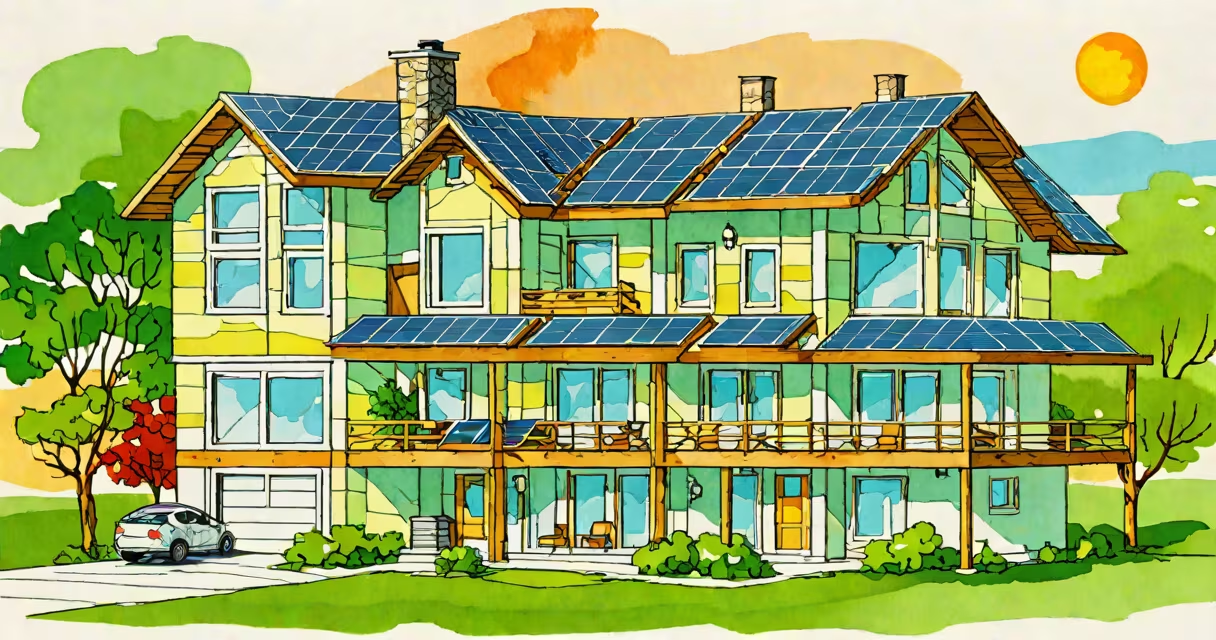
Energy efficiency in homes comes from a mix of proper insulation, air sealing, high-performance windows, and energy-efficient appliances. These elements work together to reduce energy waste and lower utility bills.
A home loses heat in winter and gains heat in summer through walls, roofs, windows, and even air leaks around doors. Energy-efficient homes minimize this transfer using materials and designs that keep indoor temperatures stable. For example, spray foam insulation expands to fill gaps, creating an airtight barrier. According to the U.S. Department of Energy, proper insulation can cut heating and cooling costs by up to 15%.
Several key factors determine a home's energy efficiency:
Many people believe that energy efficiency requires expensive upgrades. However, small changes like switching to LED lighting or installing a programmable thermostat can make a big difference. The U.S. Environmental Protection Agency reports that ENERGY STAR-certified thermostats can save homeowners about $100 per year on heating and cooling costs.
Another myth is that energy-efficient homes sacrifice comfort. In reality, proper insulation and ventilation create a more consistent indoor environment. For example, a well-insulated attic keeps rooms cooler in summer and warmer in winter without relying on excessive HVAC use.
When I helped my parents retrofit their 1980s home, we focused on three key areas: adding spray foam insulation in the attic, replacing single-pane windows with double-pane low-E models, and upgrading to a high-efficiency furnace. After these changes, their energy bills dropped by 25%, and the home stayed more comfortable year-round.
Beyond lowering utility bills, energy-efficient homes reduce environmental impact. According to the International Energy Agency, buildings account for about 30% of global energy consumption. By improving efficiency, homeowners decrease their carbon footprint and contribute to sustainability efforts.
Government incentives, such as tax credits for solar panels and rebates for energy-efficient upgrades, make these improvements more affordable. The U.S. Department of Energy provides resources to help homeowners find local programs and financing options.