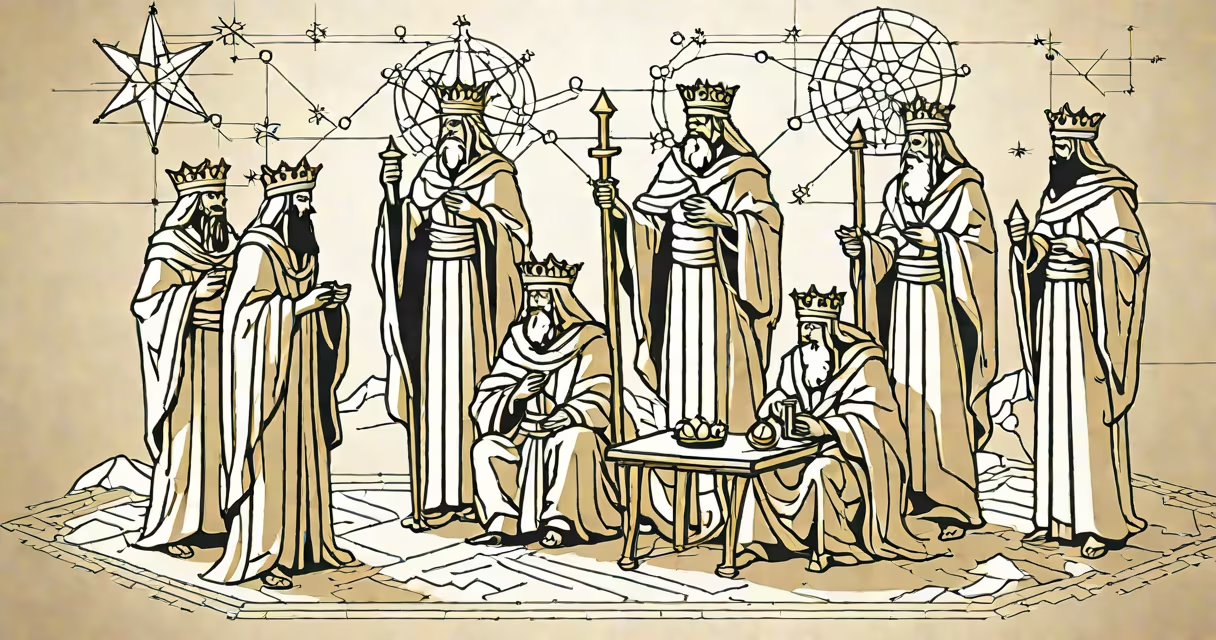
The Magi were a group of distinguished travelers who visited baby Jesus in the biblical account of the Nativity, traditionally numbered as three based on their gifts. The term "Magi" refers to wise men or astrologers from the East, likely from present-day Iran or Iraq.
The word "Magi" comes from the Old Persian term "magus," which originally denoted a priestly caste in ancient Zoroastrianism. Over time, the term evolved to describe learned individuals who studied celestial events and interpreted omens. The biblical account in Matthew 2:1-12 describes them as following a star to Bethlehem, where they presented gifts of gold, frankincense, and myrrh to the infant Jesus.
Contrary to popular depictions, the Bible does not specify the number of Magi, nor does it name them. The tradition of three Magi-Melchior, Caspar, and Balthazar-originated in later Christian writings and art. These names and their associated traits (European, Asian, and African descent, respectively) emerged in medieval Europe to symbolize the universality of Christ's message.
The Magi's process represents the recognition of Jesus' divine kingship among gentiles, fulfilling Old Proof prophecies. Their gifts hold symbolic meaning: gold for kingship, frankincense for divinity, and myrrh for suffering and death. The star they followed is often interpreted as a sign of God's guidance leading them to the Messiah.
A common misconception is that the Magi arrived at the manger alongside the shepherds on the night of Jesus' birth. However, the biblical account suggests they visited later, possibly up to two years afterward, as indicated by Herod's order to kill all male children under two years old (Matthew 2:16).
The story of the Magi has inspired countless works of art, literature, and music throughout history. For instance, the famous Adoration of the Magi by Italian Renaissance painter Sandro Botticelli depicts the scene with complex detail and symbolism. The Magi's process also influenced traditions such as Epiphany, celebrated on January 6th, which marks the culmination of the Christmas season in many Christian denominations.
In modern times, the Magi are often depicted as kings, though the Bible never explicitly identifies them as such. This royal association likely stems from the gift of gold, traditionally a gift fit for royalty. The Magi's story continues to resonate as a symbol of faith, wisdom, and the universal appeal of Jesus' message.
While the Magi are often associated with Christianity, their origins lie in Zoroastrianism, an ancient Persian religion. The Magi were originally Zoroastrian priests who played a significant role in the religious and political life of the Achaemenid Empire. Their inclusion in the biblical narrative highlights the interconnectedness of different cultures and religions during that era.
In a personal reflection, visiting the Basilica of Saint-Sernin in Toulouse, France, I saw stunning Romanesque carvings of the Magi. The artistry and historical context brought the biblical story to life, emphasizing the enduring fascination with these mysterious figures.
Understanding what is your magi involves delving into the biblical account, the symbolic significance of their gifts, and their historical and cultural impact. The Magi's story continues to captivate and inspire, serving as a reminder of faith, wisdom, and the universal message of Jesus' birth.