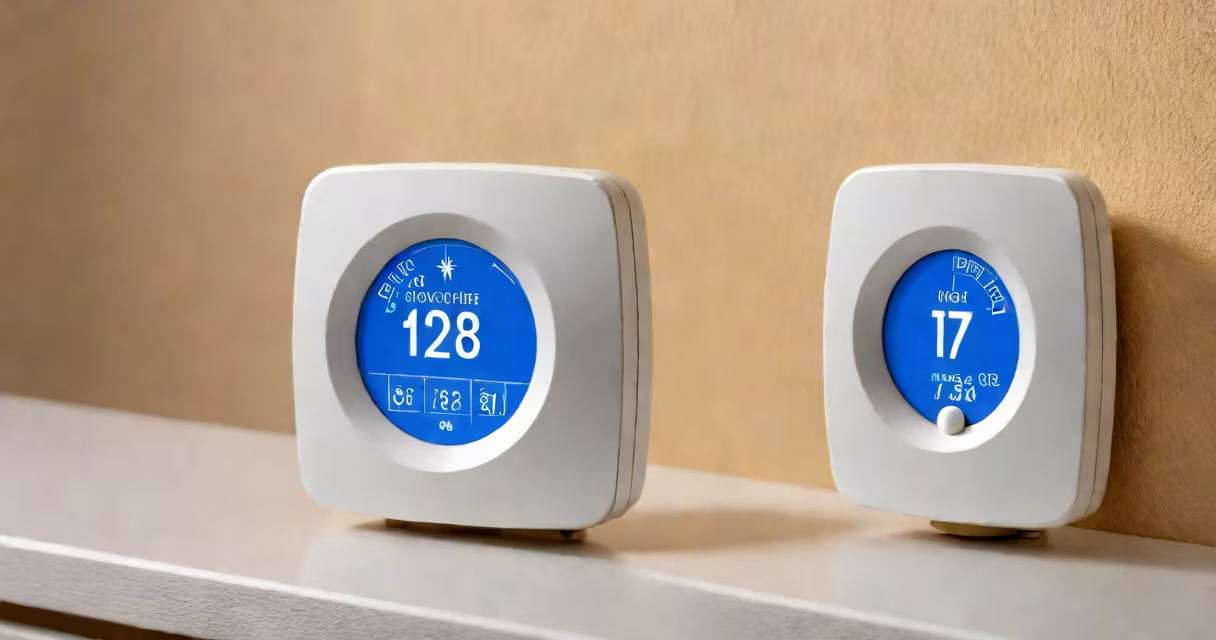
Set your thermostat to 68°F (20°C) when home during winter to balance warmth and energy efficiency. This setting keeps rooms comfortable while avoiding excessive heating costs.
Every degree lower than 68°F can increase heating bills by up to 3%. The U.S. Department of Energy recommends 68°F as the optimal winter setting. Lower temperatures force furnaces to work harder, consuming more energy.
Thermostats offer different modes for winter heating:
| Setting | Temperature Range | Best For |
|---|---|---|
| Home | 68°F (20°C) | Daytime occupancy |
| Away | 58-62°F (14-17°C) | Unoccupied periods |
| Sleep | 64-66°F (18-19°C) | Nighttime comfort |
These settings apply to most homes with forced-air heating systems. The American Society of Heating, Refrigerating and Air-Conditioning Engineers (ASHRAE) confirms that 68°F maintains comfort while reducing energy waste. Lowering the thermostat overnight saves about 10% on heating costs annually.
Many people believe turning the thermostat down temporarily makes the furnace work harder to reheat the house. In reality, modern HVAC systems adjust efficiently. The U.S. Department of Energy clarifies that this myth leads to unnecessary energy use.
During winter, I set my thermostat to 68°F when awake, 64°F at night, and 58°F when away. This routine reduced my heating bill by 15% compared to keeping it at 72°F constantly. The slight temperature drop at night didn't affect sleep quality but saved energy.
Infants, elderly individuals, or those with health conditions may require slightly warmer settings (around 70-72°F). However, maintaining 68°F during the day remains the most energy-efficient approach for most households.