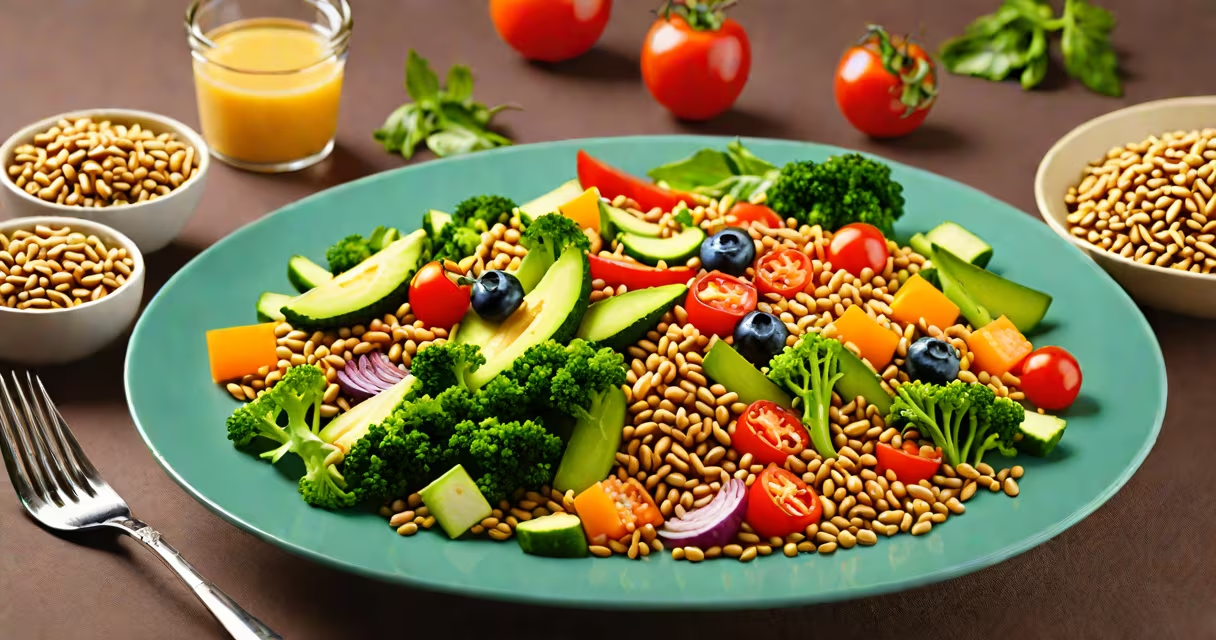
A pre-diabetic diet focuses on low-glycemic foods that stabilize blood sugar, such as leafy greens, lean proteins, and whole grains. This eating pattern helps manage insulin resistance and prevents progression to type 2 diabetes.
Pre-diabetic diets work by reducing insulin spikes through balanced meals. The body becomes resistant to insulin when blood sugar levels remain high after meals. By choosing foods with a low glycemic index, you can maintain steady glucose levels and improve insulin sensitivity.
The American Diabetes Association recommends that people with pre-diabetes focus on whole foods rather than processed options. A study published in the journal Diabetes Care found that participants who followed a low-glycemic diet reduced their risk of developing diabetes by 42%.
Pre-diabetic diets emphasize four key food groups:
Here's a sample one-day meal plan for someone with pre-diabetes:
| Meal | Food Choices |
|---|---|
| Breakfast | Greek yogurt with berries and a handful of almonds |
| Lunch | Grilled chicken salad with mixed greens, cherry tomatoes, cucumber, and balsamic vinaigrette |
| Dinner | Baked salmon with a side of quinoa and steamed broccoli |
| Snacks | Carrot sticks with hummus or an apple with peanut butter |
Many people with pre-diabetes unknowingly consume foods that spike blood sugar. Common mistakes include:
One common misconception is that fruits should be avoided entirely. While fruits contain natural sugars, they also provide essential vitamins and fiber. The key is to choose low-glycemic fruits like berries, apples, and pears.
When my doctor told me I was pre-diabetic, I immediately revised my diet. I replaced white rice with quinoa and swapped soda for sparkling water. Within three months, my blood sugar levels normalized, and I no longer felt the energy crashes I had grown accustomed to.