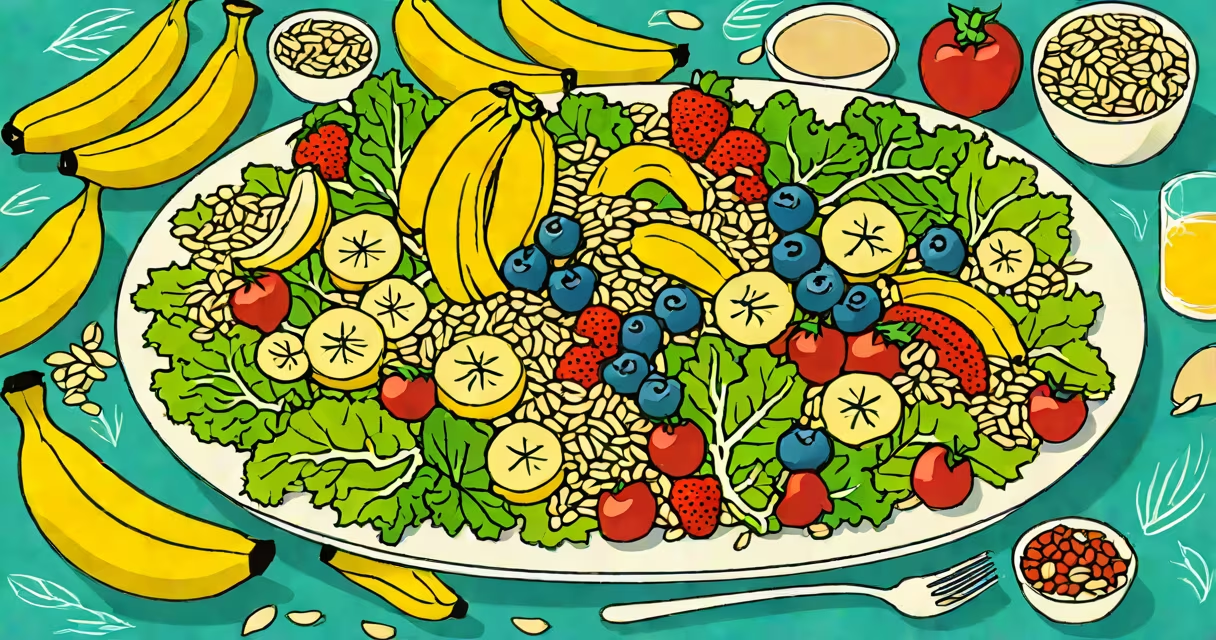
To stop gas, eat fiber-rich foods like oats, bananas, and leafy greens, along with probiotics such as yogurt and kefir. These foods improve digestion and reduce bloating.
Gas forms when undigested food reaches your colon, where bacteria break it down. Certain foods produce more gas than others due to their carbohydrate content. Soluble fiber slows digestion, giving bacteria more time to work, while insoluble fiber speeds food through your system.
Focus on soluble fiber, which dissolves in water and softens stool. Insoluble fiber adds bulk but doesn't dissolve. Probiotics, like those in yogurt, support gut health by balancing bacteria levels.
| Food Type | Examples | Benefits |
|---|---|---|
| Soluble Fiber | Oats, bananas, apples, carrots | Softens stool, reduces gas |
| Insoluble Fiber | Whole grains, nuts, seeds | Adds bulk, speeds digestion |
| Probiotics | Yogurt, kefir, sauerkraut | Balances gut bacteria |
Many people think avoiding all fiber will stop gas, but soluble fiber actually helps. The key is balance-too much insoluble fiber can worsen gas, while too little soluble fiber slows digestion. Drinking enough water is also important.
For breakfast, try oatmeal with a banana and a cup of yogurt. This combination provides soluble fiber, probiotics, and hydration. For lunch, a spinach salad with nuts and seeds offers insoluble fiber and healthy fats. Dinner could include grilled chicken with steamed carrots and quinoa, balancing protein, soluble fiber, and whole grains.
If gas persists despite dietary changes, underlying conditions like irritable bowel syndrome (IBS) or lactose intolerance may be the cause. Consulting a healthcare provider can help identify specific triggers.