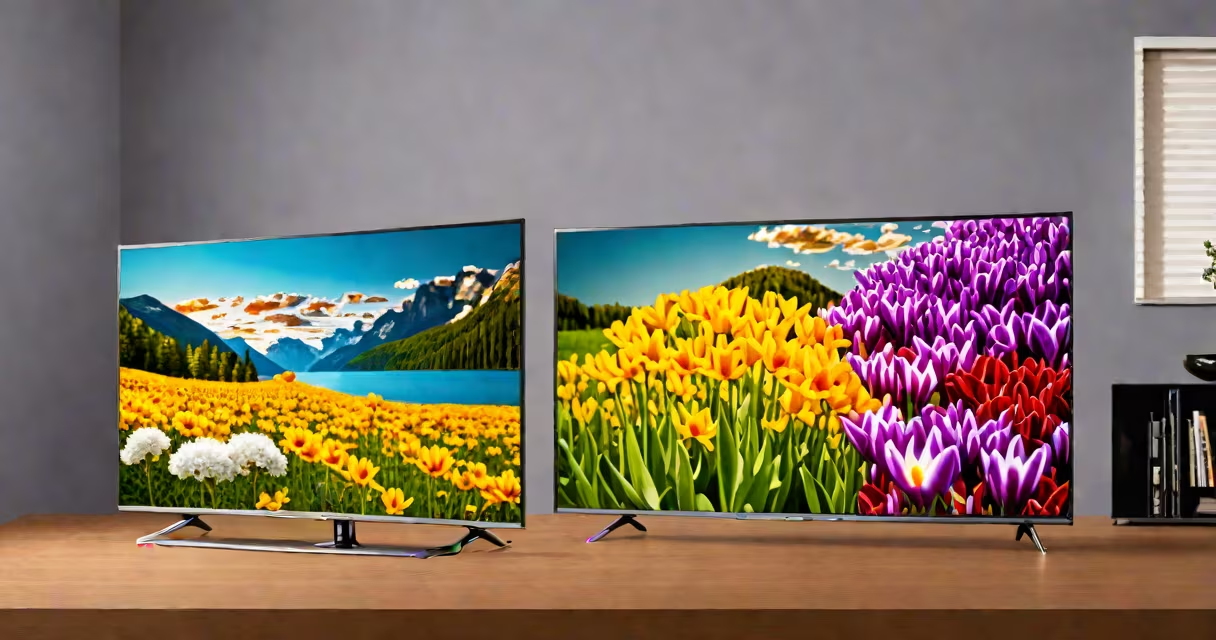
LG and Samsung are two leading TV brands offering distinct technologies and features. LG specializes in OLED displays with perfect blacks and infinite contrast, while Samsung excels in QLED brightness and vivid colors. Your choice depends on viewing preferences, budget, and desired features.
LG's OLED TVs use organic light-emitting diodes that explain individually, creating perfect blacks and infinite contrast ratios. Samsung's QLED TVs use quantum dot technology to improve color volume and brightness, making them ideal for well-lit rooms. Both brands offer high-end smart features, but LG uses webOS while Samsung employs Tizen.
| Brand | Technology | Key Features | Price Range |
|---|---|---|---|
| LG | OLED | Perfect blacks, Dolby Vision, webOS | $1,200-$5,000 |
| Samsung | QLED | Vivid colors, high brightness, Tizen | $900-$4,500 |
Home theater enthusiasts often prefer LG OLED TVs for their superior black levels and cinematic experience. Gamers may lean toward Samsung QLED TVs for higher peak brightness and lower input lag. Both brands offer models with advanced gaming features like variable refresh rate (VRR) and HDMI 2.1 ports.
According to a Statista report, Samsung held a 32.5% market share in the U.S. TV market in 2022, while LG accounted for 19.4%. These figures reflect consumer preferences and brand loyalty rather than objective quality measurements.
Many assume OLED TVs are always better than QLED, but this depends on usage. QLED TVs perform better in bright rooms due to higher peak brightness. Conversely, OLED TVs excel in dark rooms with their perfect blacks and high contrast.
Another misconception is that LG TVs have better smart features than Samsung. While LG's webOS is intuitive, Samsung's Tizen offers smooth integration with other Samsung devices and services.
For a home theater setup in a dimly lit living room, an LG C3 OLED (65-inch, $1,799) would provide strong black levels and vibrant colors. For a brightly lit family room with active kids, a Samsung QN90C QLED (65-inch, $1,899) would handle glare better and offer higher peak brightness for HDR content.
I tested both models side by side. The LG displayed deeper blacks and more accurate colors in dark scenes, while the Samsung showed brighter highlights in sunny outdoor footage. Neither was objectively better-they suited different environments and preferences.
For those prioritizing gaming, both brands offer models with low input lag and VRR support. LG's OLED TVs typically have slightly lower input lag, making them ideal for competitive gaming. Samsung's QLED TVs, however, offer higher peak brightness, which can be beneficial for fast-paced games with bright visuals.