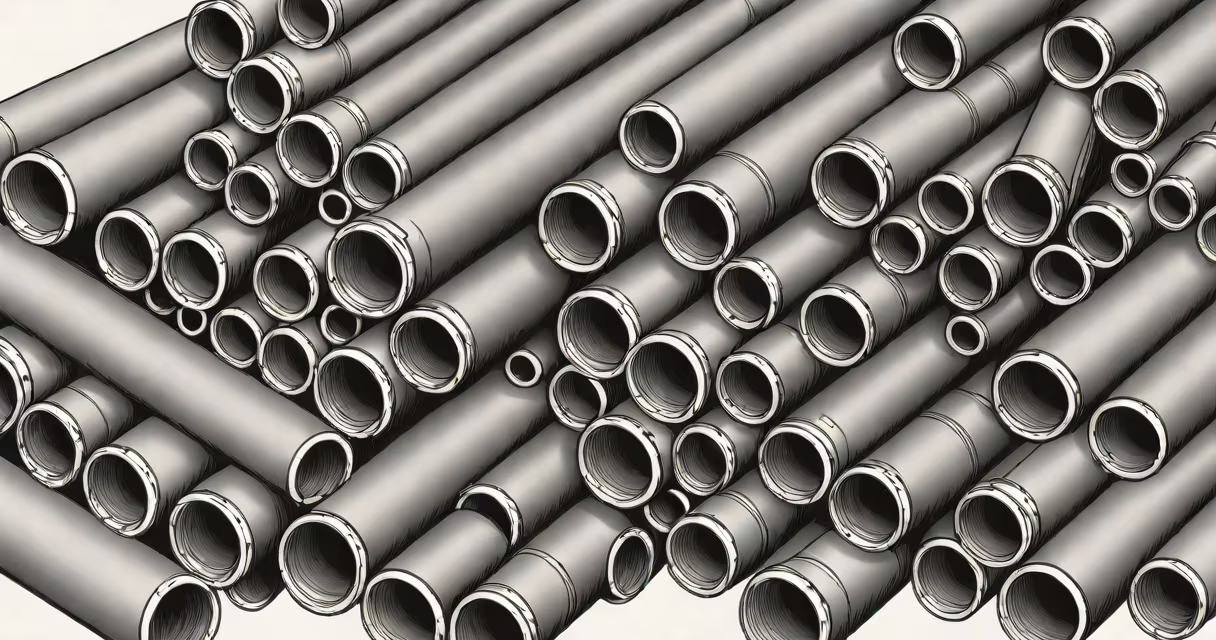
For natural gas pipelines, black steel pipe with protective coatings meets safety requirements. The most common standard is ASTM A53 Grade B, which specifies wall thickness and pressure ratings.
Natural gas pipelines require materials that resist corrosion and withstand high pressures. Black steel pipe provides both properties:
Most residential and commercial natural gas lines use Schedule 40 or Schedule 80 black steel pipe, with diameters ranging from ½ inch to 6 inches.
| Pipe Type | Standard | Typical Use |
|---|---|---|
| Smooth | ASTM A53 Grade B | High-pressure transmission |
| Electric Resistance Welded (ERW) | ASTM A53 Grade B | Distribution systems |
| Furnace Butt Welded | API 5L Grade B | Large diameter transmission |
For interstate transmission lines, API 5L Grade B pipe is commonly used due to its higher strength requirements (minimum yield strength of 35,000 psi).
All natural gas pipes require protective coatings to prevent corrosion. Common options include:
Coatings extend pipe life from 20 years (uncoated) to 50+ years (properly coated).
Many assume copper or PVC pipes can be used for natural gas. However:
Only approved materials meeting DOT compliance standards (like black steel pipe) should be used.
Natural gas pipes must be installed with proper support and protection:
Improper installation voids manufacturer warranties and violates safety codes.
When installing a natural gas line for a commercial kitchen, I specified Schedule 40 black steel pipe with epoxy coating. The project required:
The system met all local code requirements and passed inspection on first attempt.