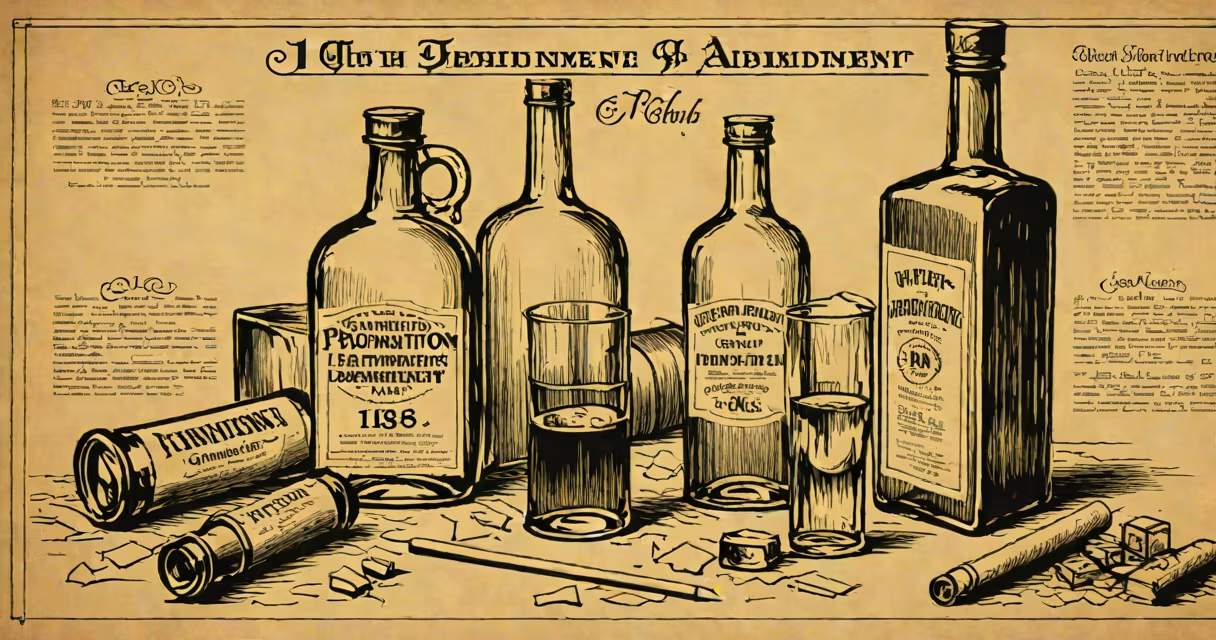
The 18th Amendment to the U.S. Constitution banned the production, sale, and transportation of alcoholic beverages. It took effect in 1920 and lasted until 1933.
The amendment prohibited "intoxicating liquors," which included beer, wine, and spirits. The Volstead Act, passed by Congress in 1919, provided enforcement guidelines for the amendment. It created penalties for violations, including fines and imprisonment.
The amendment targeted all forms of alcoholic beverages. This included:
However, there were exceptions. For example, religious purposes, medicinal use, and industrial purposes were allowed.
The amendment was introduced due to the growing temperance movement, which believed alcohol was responsible for many social problems. Supporters argued that banning alcohol would reduce crime, corruption, and family issues.
Prohibition was enforced nationwide, but compliance varied. Some states and cities had stronger enforcement than others. Rural areas tended to enforce the ban more strictly than urban centers.
Many people believe the 18th Amendment banned drinking alcohol altogether. However, it only prohibited the production, sale, and transportation of alcohol. People could still drink alcohol they had in their possession before the ban took effect.
Another misconception is that the amendment was a complete failure. While it did lead to the rise of organized crime and speakeasies, it also reduced alcohol consumption during its time in effect.
During the Prohibition era, many Americans turned to illegal sources for alcohol. Speakeasies, which were secret bars, became popular. These establishments often operated in hidden locations and required passwords to enter. Despite the risks, people continued to drink, leading to the rise of organized crime.
For example, Al Capone, a notorious gangster, made millions from illegal alcohol sales in Chicago. He controlled bootlegging operations and used the profits to expand his criminal empire. The government eventually caught up with him, but the damage had been done.
I visited a museum exhibit on the Prohibition era. The display included artifacts like a hidden door to a speakeasy and a flask used to smuggle alcohol. It was fascinating to see how people adapted to the ban and the creativity they used to circumvent the law.
The 18th Amendment was a significant part of U.S. history. It aimed to reduce the negative effects of alcohol but led to unintended consequences. Understanding the 18th Amendment provides insight into the complexities of social reform and the challenges of enforcing such laws.