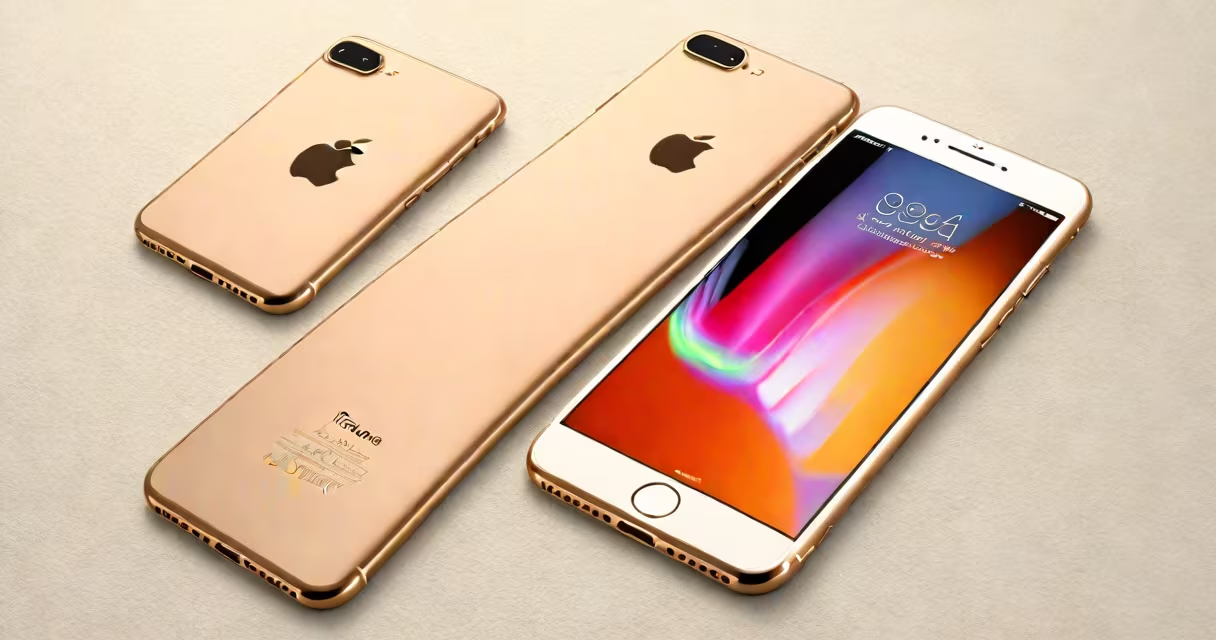
The iPhone 8 Plus launched in September 2017 as part of Apple's 10th anniversary iPhone lineup. It introduced wireless charging to iPhones and improved performance with the A11 Bionic chip.
The iPhone 8 Plus shared many features with its smaller sibling, the iPhone 8, but added a dual-camera system. Both models kept the home button, unlike the iPhone X released the same year. The device had a 5.5-inch Retina HD display with True Tone technology.
| Specification | Detail |
|---|---|
| Dimensions | 158.4 x 78.1 x 7.5 mm |
| Weight | 202 grams |
| Processor | A11 Bionic |
| RAM | 2GB |
| Storage options | 64GB, 128GB, 256GB |
| Rear camera | Dual 12MP (wide and telephoto) |
| Front camera | 7MP |
The iPhone 8 Plus marked the beginning of a new era for Apple's smartphones. It was the last iPhone model with a home button and Touch ID before the transition to Face ID. The introduction of wireless charging was particularly notable, as it became a standard feature in subsequent iPhone models.
According to Apple, the iPhone 8 Plus sold well despite being overshadowed by the iPhone X. The device received positive reviews for its improved camera performance and faster processor. However, some critics noted that the design was similar to previous models, lacking the new edge of the iPhone X.
Many people confuse the iPhone 8 Plus with the iPhone X, which was released the same year. While both devices share some features, such as the A11 Bionic chip, they have distinct differences. The iPhone X introduced an edge-to-edge display and Face ID, while the iPhone 8 Plus retained the home button and Touch ID.
Another common misconception is that the iPhone 8 Plus was discontinued shortly after its release. In reality, Apple continued to sell the device for several years, even after introducing newer models. The iPhone 8 Plus remained available until early 2021, making it one of the longest-supported iPhone models.
While the iPhone 8 Plus may not be as iconic as the iPhone X, it remains a significant milestone in Apple's history. Its features and improvements laid the foundation for future iPhone models, ensuring a smooth transition for users upgrading from older devices.