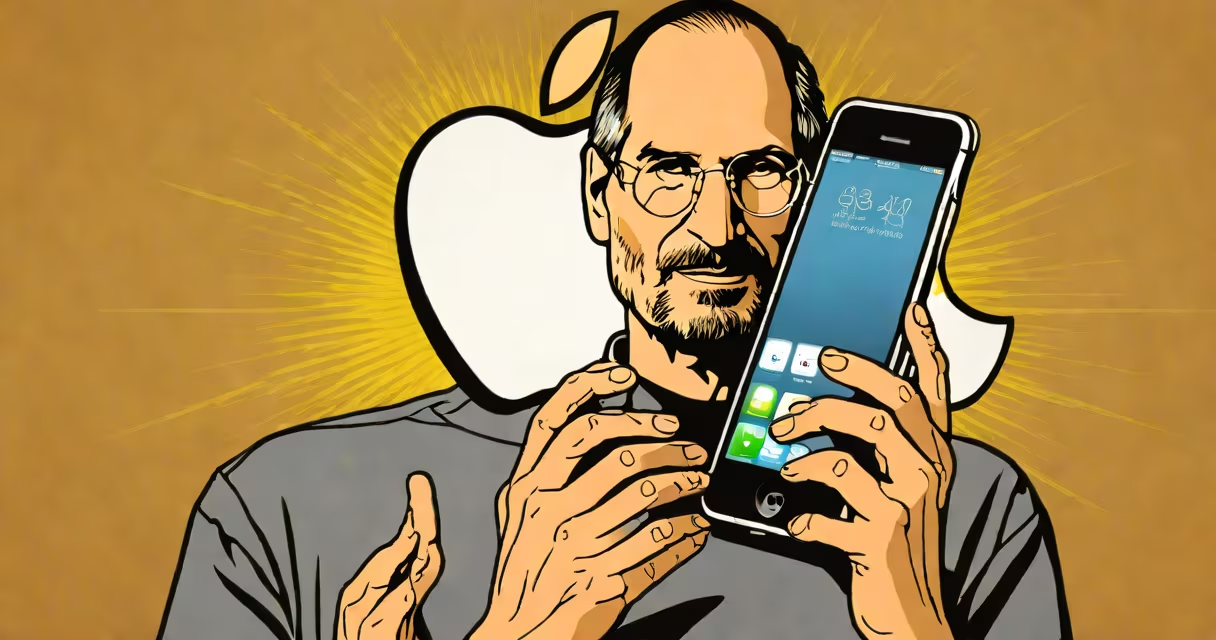
The first Apple iPhone debuted in 2007, launching a new era of smartphones. This revolutionary device combined a mobile phone, an iPod, and an internet communicator into a single handheld device.
The original iPhone introduced a multi-touch interface, eliminating physical buttons in favor of a capacitive touchscreen. This design allowed users to interact with content using gestures like pinch-to-zoom and swipe. The device also featured a 3.5-inch display, a 2-megapixel camera, and a 416MHz single-core processor.
Apple's iOS operating system, which powered the iPhone, offered a simplified user experience compared to other smartphones of the time. The App Store, introduced later in 2008, allowed third-party developers to create applications for the iPhone, expanding its functionality.
The first iPhone had several new features:
Steve Jobs unveiled the first iPhone on January 9, 2007, at the Macworld Conference & Expo in San Francisco. The device went on sale in the United States on June 29, 2007, exclusively through AT&T. The initial price was $499 for the 4GB model and $599 for the 8GB model.
The iPhone's launch marked a significant shift in the mobile industry. Before the iPhone, most smartphones relied on physical keyboards and styluses for input. The iPhone's touchscreen interface and intuitive software design set a new standard for smartphones, influencing competitors like Android devices.
Many people mistakenly believe that the first iPhone had a curved edge design or Face ID. However, these features were introduced in later models, such as the iPhone 6 and iPhone X, respectively. The original iPhone had a flat front and back with rounded edges, and it featured a home button at the bottom of the screen.
Another misconception is that the first iPhone had an App Store. While the device supported third-party applications, the App Store was not introduced until July 2008 with the release of iPhone OS 2.0.
When I first held the original iPhone in 2007, I was struck by its simplicity and elegance. The absence of physical buttons and the smooth integration of software and hardware created a user experience unlike any other smartphone at the time. As someone who had used various feature phones and early smartphones, the iPhone's intuitive interface felt like a breath of fresh air.
One of the most impressive features was the visual voicemail. Instead of listening to voicemails in the order they were received, I could see a list of my messages and choose which ones to play. This small innovation improved the user experience and set a new standard for voicemail systems.
The original iPhone's impact on the tech industry cannot be overstated. It popularized the smartphone form factor we know today and inspired competitors to adopt similar designs. The App Store system, introduced shortly after the first iPhone, created a new market for mobile applications and generated billions of dollars in revenue for developers.
Today, Apple continues to innovate with each new iPhone model, incorporating advanced features like Face ID, augmented reality capabilities, and improved camera systems. However, the foundation laid by the first iPhone remains a critical part of the device's success.