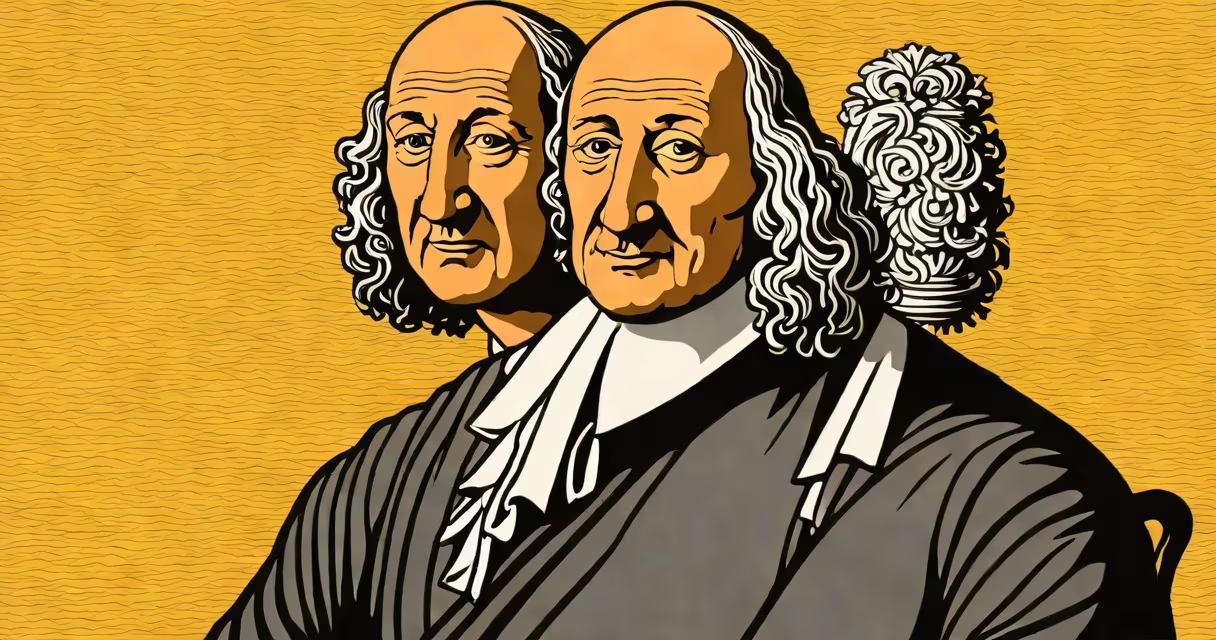
John Locke was born on August 29, 1632, in Wrington, Somerset, England. This placed him at the dawn of the Enlightenment, a period of intense intellectual activity that shaped modern philosophy, politics, and science.
Locke's birth occurred during the English Civil War (1642-1651), a time of political upheaval that influenced his later work on government and individual rights. His family moved to London when he was young, where he attended Westminster School and later Christ Church, Oxford.
Locke is best known for his theories on empiricism, natural rights, and social contract theory. His most influential works include An Essay Concerning Human Understanding (1689) and Two Treatises of Government (published together in 1689 but written earlier). The latter argued that people have natural rights to life, liberty, and property, ideas that later influenced the American and French Revolutions.
Locke's work on empiricism-the idea that knowledge comes from sensory experience rather than innate ideas-challenged the dominant philosophical views of his time. He argued that the mind is a blank slate (tabula rasa) at birth and that all knowledge is derived from experience.
Locke's ideas had a profound impact on political philosophy and liberal democracy. His concept of natural rights influenced the Declaration of Independence and the U.S. Constitution. His work on religious tolerance also laid the groundwork for modern secular governance.
Locke died on October 28, 1704, in Essex, England, leaving behind a legacy that continues to shape political and philosophical thought today. His writings remain essential reading for anyone interested in the foundations of modern democracy and individual rights.
Many people confuse Locke with Thomas Hobbes, another 17th-century philosopher who wrote about government. While both discussed social contracts, Locke emphasized natural rights and limited government, whereas Hobbes advocated for a strong central authority to prevent chaos. Locke's more optimistic view of human nature and government is what sets him apart.