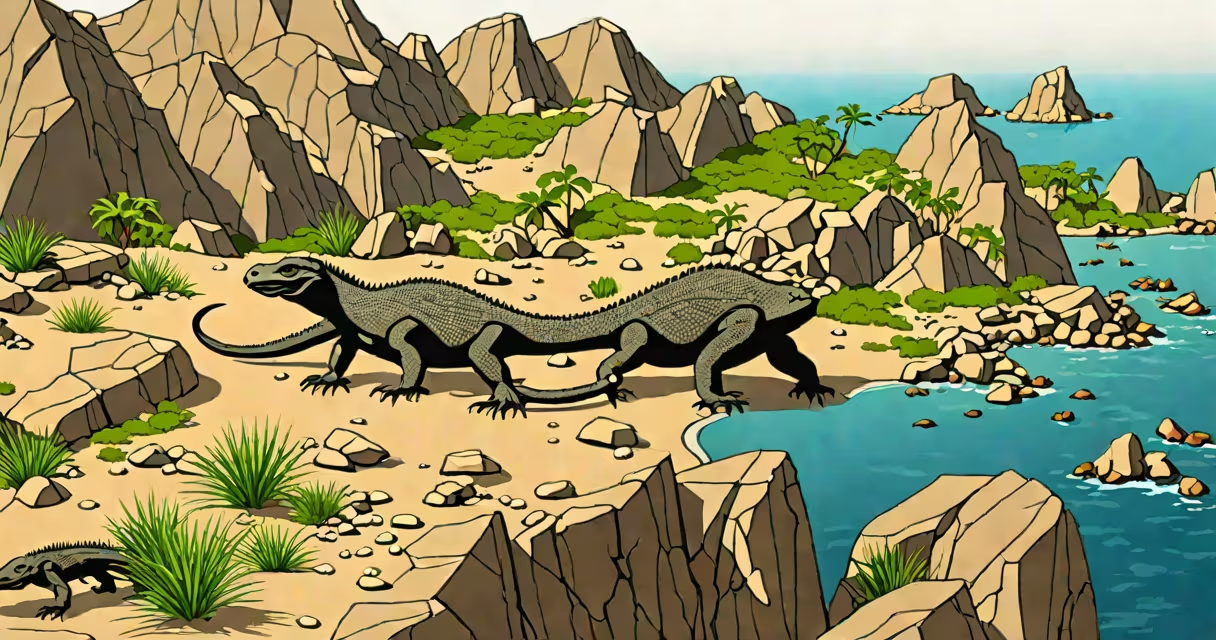
Komodo dragons inhabit only five islands in Indonesia: Komodo, Rinca, Flores, Gili Motang, and Gili Dasami. These large lizards thrive in tropical forests, savannas, and coastal areas, using their size and venomous bite to dominate their ecosystems.
The dragons' preferred habitats are hot and dry, with temperatures ranging from 77°F to 95°F (25°C to 35°C). They spend much of their time basking in the sun to regulate their body temperature, retreating to shade during peak heat. The islands' rugged terrain provides ample hiding spots for ambush hunting.
| Island | Size (sq mi) | Key Features |
|---|---|---|
| Komodo | 300 | Largest population, national park status |
| Rinca | 69 | Dense forests, water sources |
| Flores | 5,300 | Human settlements, diverse ecosystems |
| Gili Motang | 4.5 | Small, rocky, remote |
| Gili Dasami | 2.5 | Nearby to Komodo, similar terrain |
These islands offer ideal conditions for Komodo dragons: abundant prey, warm climates, and limited human interference. The dragons' isolation on these islands likely contributed to their evolution as apex predators. Their venomous bite, discovered in 2009, allows them to take down prey much larger than themselves, such as water buffalo.
Komodo dragons are often confused with other large lizards, but they are unique in their size and hunting techniques. Unlike iguanas or monitor lizards, they use a combination of sharp teeth, useful muscles, and venom to subdue prey. Their saliva contains toxic proteins that prevent blood clotting, making their bites deadly.
Conservation efforts are critical for Komodo dragons. Their population is estimated at around 2,500, with most living in Komodo National Park. Threats include habitat loss, poaching, and climate change. The park's designation as a UNESCO World Heritage Site helps protect their natural habitat and ensures their survival for future generations.
I visited Komodo National Park in 2019 and witnessed firsthand the dragons' dominance. While hiking through the rugged terrain, our guide pointed out fresh tracks and droppings, indicating recent activity. We maintained a safe distance, but the sheer size and presence of these creatures were awe-inspiring.
To ensure the survival of Komodo dragons, conservation efforts focus on habitat protection, anti-poaching measures, and research. The Indonesian government and international organizations work together to monitor populations and implement sustainable practices. Visitors to the islands are encouraged to follow guidelines that minimize disturbance to the dragons and their environment.