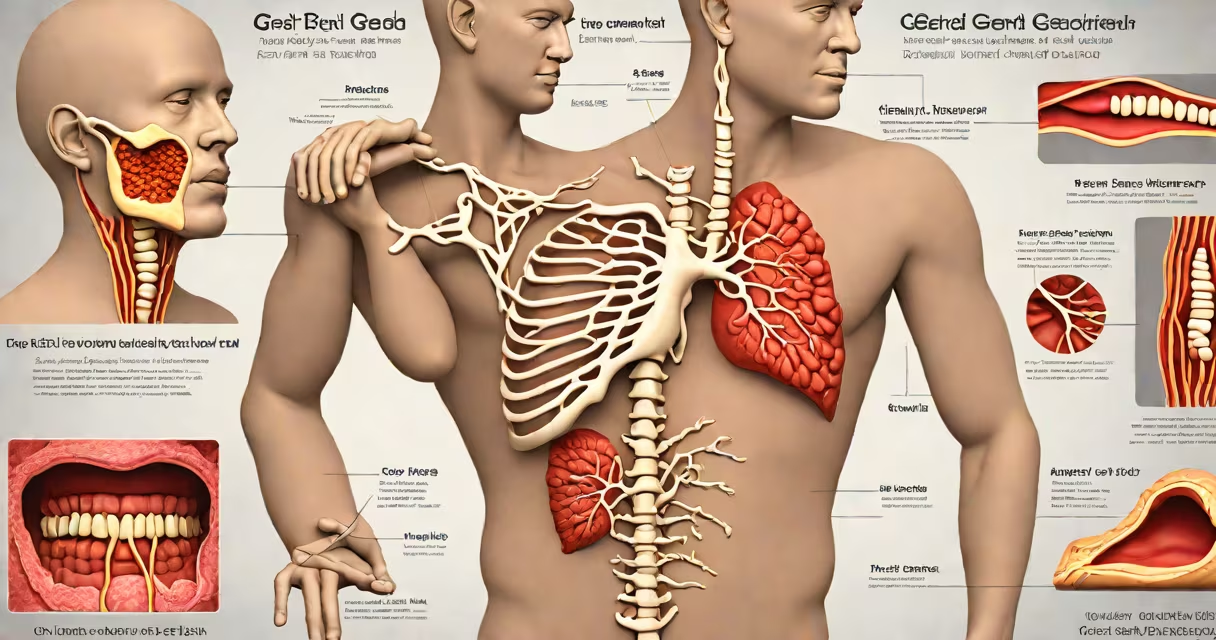
GERD (gastroesophageal reflux disease) typically causes pain in the chest, throat, jaw, and occasionally the back due to stomach acid irritating the esophagus. While chest pain is the most common symptom, GERD can mimic other conditions, making proper diagnosis important.
GERD occurs when stomach acid flows backward into the esophagus. This acid irritates the esophageal lining, triggering inflammation and pain receptors. The lower esophageal sphincter (LES), a muscle that normally prevents acid reflux, weakens in people with GERD, allowing frequent acid exposure.
GERD pain doesn't always stay in the stomach. Common locations include:
| Area | Description |
|---|---|
| Chest | Most common site, often behind the sternum (breastbone) |
| Throat | Can feel like a lump or scratchiness |
| Jaw | Less common, usually left side |
| Back | Rare, often between shoulder blades |
Many people mistake GERD pain for heart problems because both can cause chest discomfort. Unlike heart-related pain, GERD discomfort usually worsens after eating, when lying down, or at night. It may also improve with antacids.
A study in the Journal of Clinical Gastroenterology found that 60% of patients with GERD-like chest pain had normal coronary arteries. However, never assume chest pain is GERD without medical evaluation, especially if it's sudden, severe, or accompanied by shortness of breath or sweating.
GERD pain differs from other conditions in key ways:
If you're unsure whether your pain is from GERD or another cause, consult a doctor. Persistent chest pain should never be ignored.