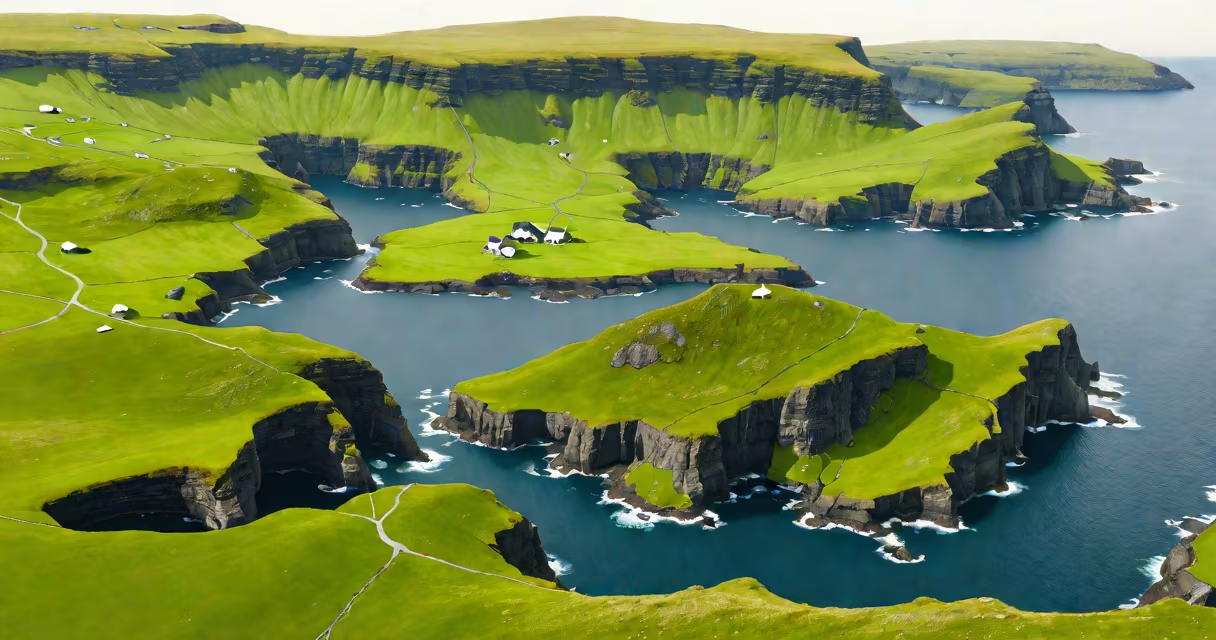
The Faroe Islands are a self-governing territory within the Kingdom of Denmark. The islands operate independently in most domestic matters while Denmark handles foreign policy, defense, and policing.
The Faroe Islands gained home rule in 1948 through the Home Rule Act, which established the Løgting (parliament) and a prime minister. This system allows the Faroese to govern their own affairs, including education, healthcare, and fisheries-critical to their economy.
Denmark retains control over areas like foreign relations and defense. For example, the Faroese have their own flag and national anthem but use Danish currency (the krona) and participate in the Nordic Council alongside Denmark.
The Faroe Islands' autonomy is a form of devolution, where power is shared between a central government (Denmark) and a regional government (the Faroe Islands). This differs from full independence or a federal system.
| Type of Autonomy | Key Features |
|---|---|
| Devolution | Power is divided between central and regional governments. The Faroe Islands manage most domestic issues but rely on Denmark for defense and foreign policy. |
| Federal System | Power is shared equally between central and state governments. The Faroe Islands do not fit this model because Denmark retains significant control. |
| Full Independence | Complete sovereignty over all matters. The Faroe Islands are not independent but have significant self-rule. |
The Faroe Islands' autonomy model is common in territories with historical ties to larger nations but strong local identities. Similar systems exist in Greenland (also part of Denmark) and the Åland Islands (Finland).
The Faroese people voted against full independence in a 2001 referendum, preferring the current arrangement. This reflects a balance between preserving Faroese culture and benefiting from Denmark's economic and political support.
Many assume the Faroe Islands are fully independent due to their distinct language, flag, and government. However, they remain part of Denmark's area, with shared sovereignty.
Another misconception is that the Faroe Islands are a province of Denmark. While they are part of the kingdom, they are not administratively equivalent to Danish regions. Instead, they operate under a unique legal structure granted by the Danish constitution.
In 2008, the Faroe Islands faced a financial crisis due to the global economic downturn. While Denmark provided economic support, the Faroese government managed the response locally, demonstrating the practical aspects of their autonomy. This included implementing austerity measures and restructuring public finances without direct interference from Copenhagen.
This event highlighted the Faroe Islands' ability to handle crises independently while still relying on Denmark for critical support when needed.