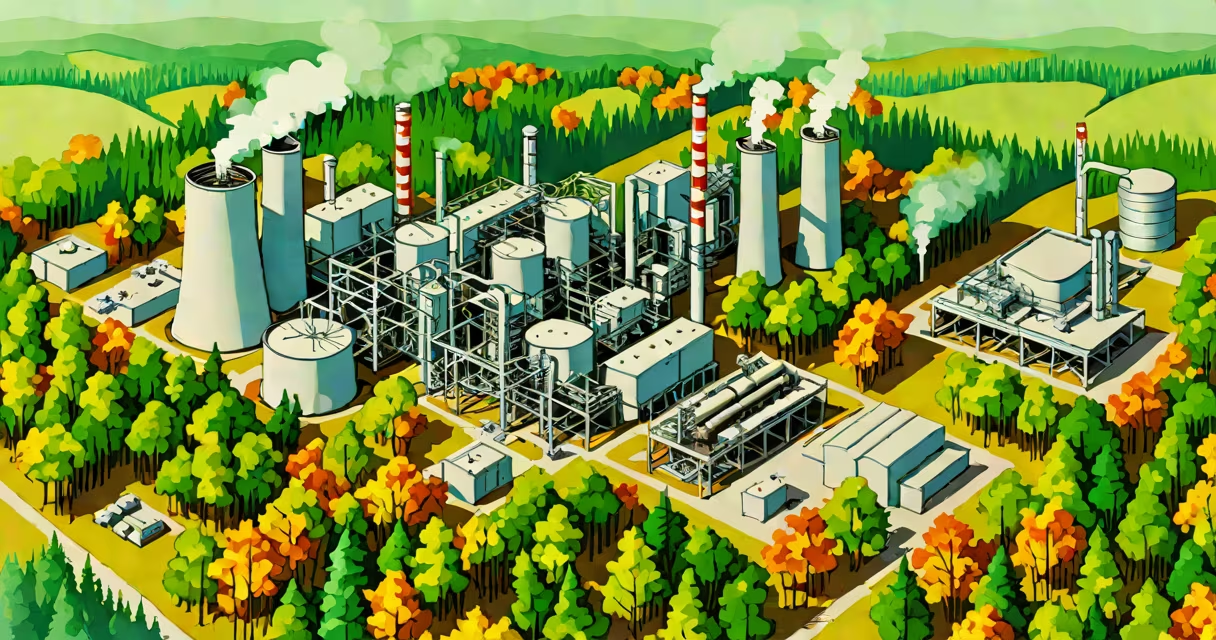
Biomass is used globally as a renewable energy source in power plants, heating systems, and transportation fuels. It's generated from organic materials like wood, agricultural crops, and waste from plants or animals.
Biomass converts organic material into usable energy through combustion, gasification, or anaerobic digestion. When burned, the chemical energy in biomass is released as heat and electricity. Some plants use the steam produced from burning biomass to generate electricity.
The most common types of biomass include:
| Country | Biomass Capacity (MW) | Primary Uses |
|---|---|---|
| United States | 16,375 | Electricity generation, industrial heat |
| China | 13,000 | District heating, combined heat and power |
| Brazil | 11,370 | Transportation fuel (ethanol), electricity |
| Germany | 8,366 | Heat and power generation |
| Japan | 4,730 | Electricity generation, co-firing with coal |
Many people confuse biomass energy with other renewable sources. Unlike solar or wind power, biomass requires physical material to generate energy. Another misconception is that biomass energy is always carbon-neutral. While biomass can be sustainable, improper sourcing or inefficient conversion can lead to greenhouse gas emissions.
I once visited a biomass power plant in rural Germany that processed local agricultural waste. The facility generated enough electricity for 50,000 homes while simultaneously reducing local waste disposal needs. This firsthand experience demonstrated how biomass can address both energy and waste management challenges simultaneously.
According to the International Renewable Energy Agency (IRENA), global biomass capacity reached 147 gigawatts in 2020, with significant growth expected in developing nations. The Food and Agriculture Organization (FAO) estimates that agricultural residues alone could potentially meet 13% of global energy demand.