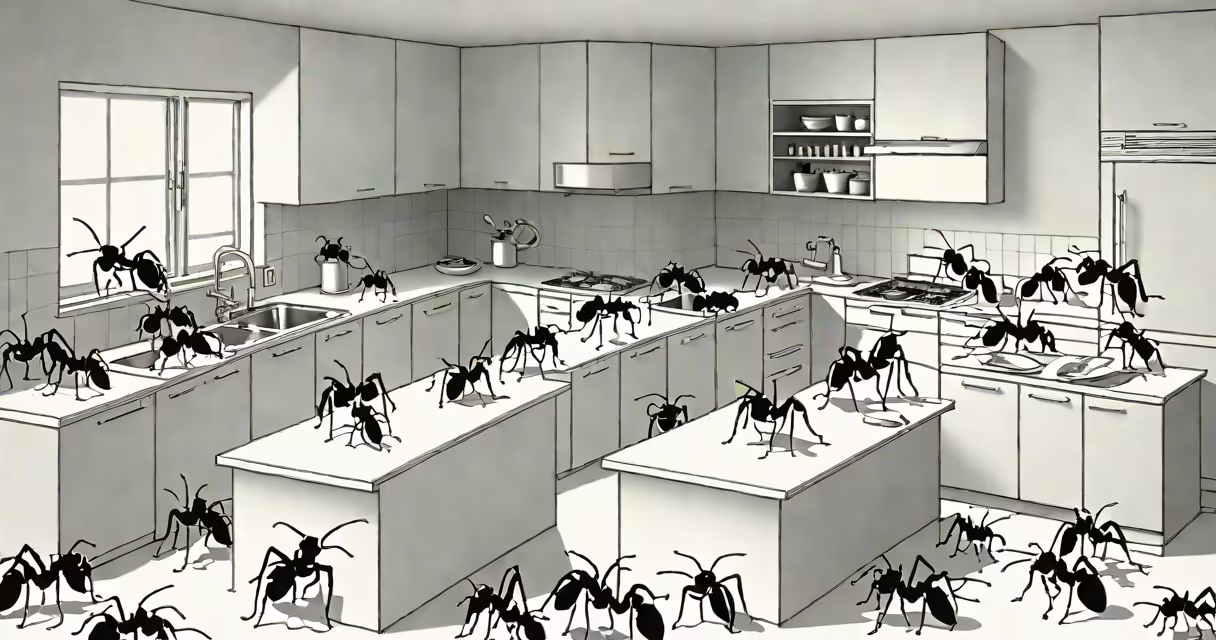
Ants enter homes seeking food, water, or shelter, typically through tiny cracks or gaps. Most species are harmless but can contaminate food or cause structural damage. Understanding their behavior helps prevent infestations.
Ants follow scent trails left by scout ants using pheromones. A single scout can lead hundreds of others indoors. They're attracted to sweet, greasy, or crumbly foods, moisture, and warm spaces. Common entry points include door frames, window sills, utility lines, and foundation cracks.
| Type | Key Traits | Common Entry Points |
|---|---|---|
| Sugar ants | Small, black or brown, love sweets | Kitchen counters, pantries |
| Carpenter ants | Large, black, nest in wood | Damaged wood, moist areas |
| Odorous house ants | Small, brown, smell like rotten coconuts | Under sinks, near garbage |
Ants return because their colonies are nearby, often underground or in walls. If you kill a few, more will follow the scent trail. Some species, like carpenter ants, can cause thousands in damage by hollowing out wood. Others, like pharaoh ants, multiply rapidly when disturbed.
I once had a sugar ant problem in my apartment. I cleaned every surface, sealed gaps, and used vinegar to disrupt trails. The infestation stopped within days. Persistence is key-ant control requires eliminating both visible ants and their hidden nests.
Prevention focuses on removing attractions and blocking access. Store food in airtight containers, wipe spills immediately, and fix leaks. Seal cracks with caulk and install weather stripping on doors. For persistent issues, bait stations or professional pest control may be needed. The University of California's Integrated Pest Management Program recommends monitoring for new trails to catch problems early.