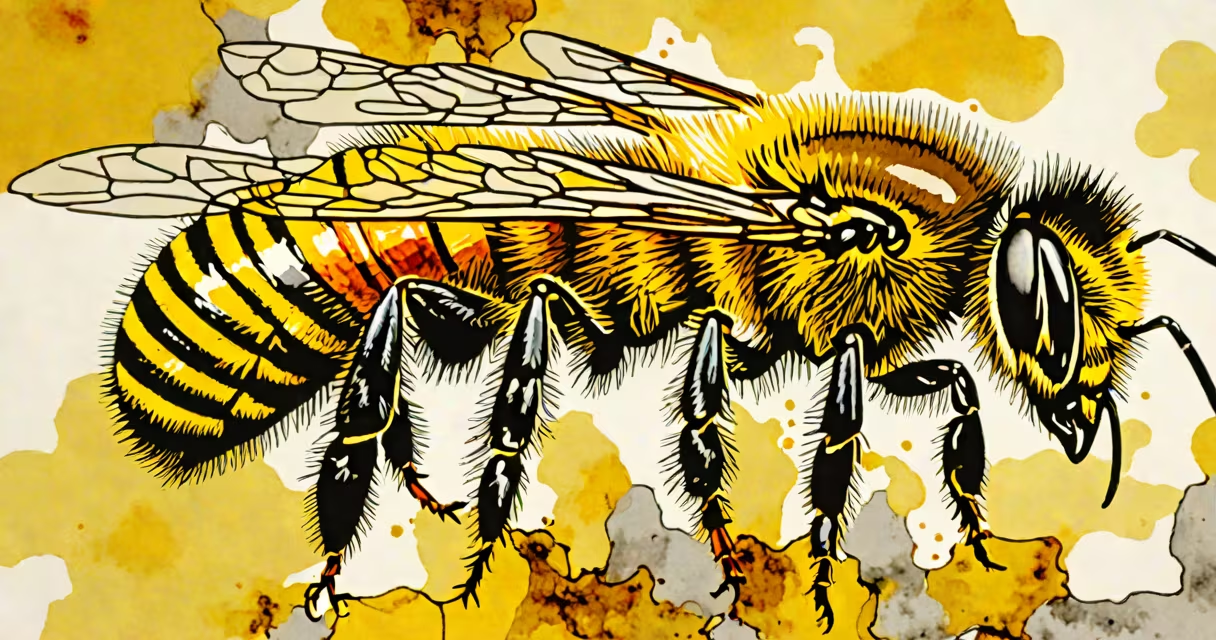
Bees are yellow because their pigmentation serves key survival functions, including camouflage, temperature regulation, and communication. The iconic yellow-and-black pattern warns predators while helping bees regulate body heat.
Bee coloration results from pigments called pterins and melanins in their exoskeletons. These compounds absorb and reflect specific light wavelengths, creating the familiar yellow and black stripes. Researchers at the University of Cambridge found that these patterns help bees recognize nestmates through ultraviolet patterns invisible to humans.
| Bee Type | Primary Colors | Key Function |
|---|---|---|
| European honeybee | Yellow and black | Aposematism (warning coloration) |
| Carpenter bee | Black or metallic green | Camouflage |
| Bumblebee | Various (yellow, orange, white, black) | Species recognition |
Bees use color for more than just appearance. Their stripes help regulate body temperature by absorbing sunlight. Darker areas absorb more heat, while lighter areas reflect it. This thermal regulation is important for bees' ability to fly in cooler temperatures., the color patterns play a role in communication, with some evidence suggesting they help bees recognize flowers rich in nectar.
Many people assume bees are yellow simply because it's a bright, noticeable color. However, the color serves practical purposes beyond visibility. Another misconception is that all bees are yellow and black. In reality, bee coloration varies widely among species, with some being entirely black or even metallic green. The yellow we see is often just one part of a complex color pattern that includes ultraviolet markers.
I once observed a hive of European honeybees and noticed how their yellow stripes seemed to glow in the sunlight. This observation led me to research the functional aspects of their coloration, revealing the complex balance between survival and communication that their colors provide.
Unlike many insects that use color primarily for camouflage, bees use color for a combination of warning signals and social communication. For example, wasps also have yellow and black patterns, but their coloration is more about intimidation. Bees, however, use their colors to communicate with each other and regulate their body temperature. This dual functionality sets them apart from many other insects.