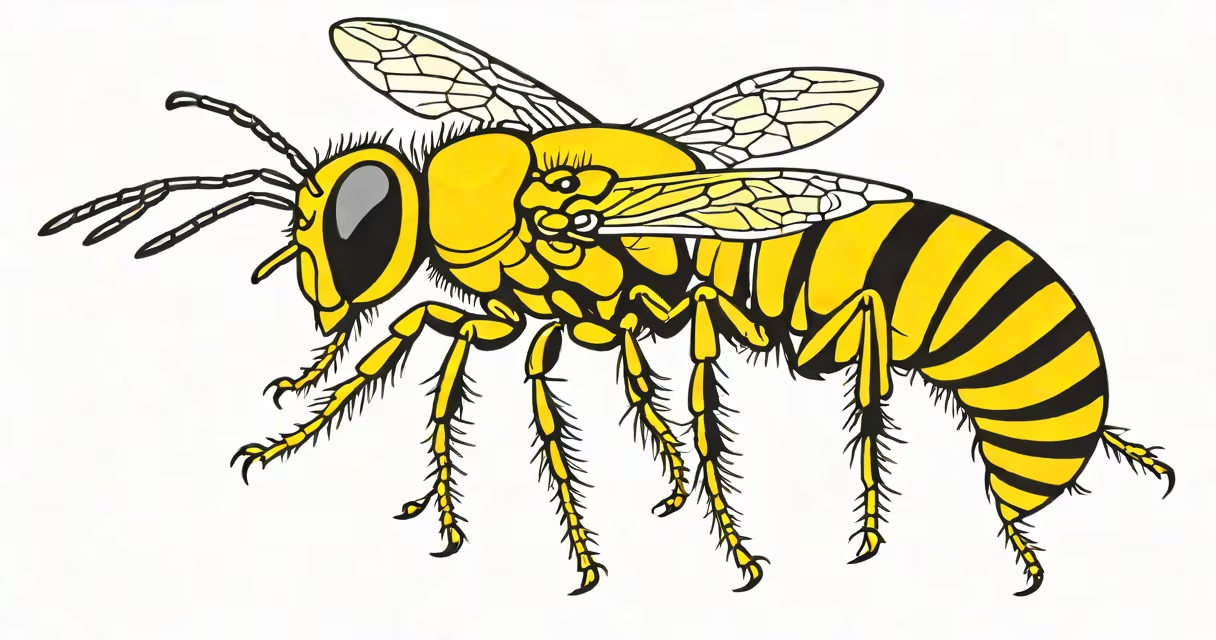
Yellow jackets invade homes seeking food, water, or shelter, especially in late summer when they become more aggressive. These social wasps build nests in wall voids, attics, or crawl spaces, attracted by sweet scents, open trash, or pet food.
Yellow jackets exploit tiny gaps around windows, doors, vents, and utility lines. A single wasp can scout your home and recruit others, leading to a larger infestation. Nests often go unnoticed until activity spikes in fall, when workers seek protein-rich foods to sustain developing larvae.
| Species | Nest Location | Aggressiveness |
|---|---|---|
| German yellow jacket (Vespula germanica) | Underground or in structures | Highly aggressive |
| Eastern yellow jacket (Vespula maculifrons) | Above ground in shrubs or buildings | Moderately aggressive |
| Southern yellow jacket (Vespula squamos) | Underground or in wall voids | Very aggressive |
Many people confuse yellow jackets with bees, but these wasps are slimmer, smoother, and lack hair. Unlike bees, yellow jackets can sting repeatedly and target protein sources like meat and garbage rather than pollen. Their nests contain hundreds to thousands of workers, far more than typical bee hives.
Another myth is that yellow jackets only appear in summer. While they're most active then, their presence peaks in late summer and early fall as they search for food to sustain their colony's final brood cycle.
Do not attempt removal without proper protection. Wear long sleeves, gloves, and a veil. Use a flashlight at night to locate entry points, as yellow jackets are less active in darkness. Place traps baited with protein or sweet solutions 10-20 feet from the nest to divert workers.
For nests inside walls or attics, hire a professional pest control service. DIY treatments often fail because yellow jackets defend their nests aggressively. After removal, seal entry points with caulk or steel wool to prevent reinfestation.
I once helped a neighbor eliminate a yellow jacket nest under their deck. We used a commercially available wasp and hornet spray, applying it at dusk when the insects were less active. Within 24 hours, the nest was inactive, and no further yellow jackets appeared.
Keep outdoor trash cans sealed and clean up spills immediately. Avoid leaving pet food outside, and harvest ripening fruits promptly. Install fine mesh screens over vents and repair damaged window and door seals. Regularly inspect your property for nests, especially in sheds, eaves, and dense vegetation.
If you suspect a nest inside your home, act quickly. Yellow jackets can cause structural damage by chewing wood and insulation. Their stings are painful and can trigger allergic reactions in sensitive individuals.