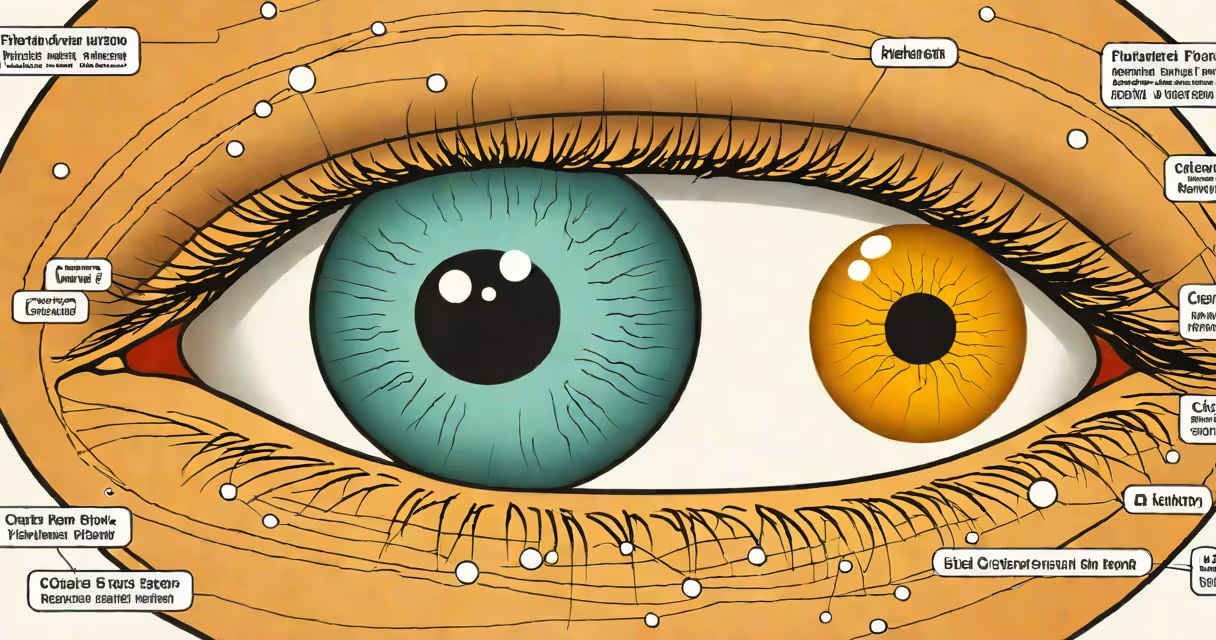
Floaters in your eye are small, dark, shadowy shapes that drift across your field of vision. They occur when tiny clumps of gel or cells inside your vitreous humor-the clear, jelly-like substance filling your eye-cast shadows on your retina.
The vitreous humor is mostly water, but it also contains collagen fibers and other cells. As you age, the vitreous gradually shrinks and becomes somewhat stringy. These strands cast tiny shadows on the retina, the light-sensitive layer at the back of your eye. These shadows appear as floaters.
| Type | Description | Common Shape |
|---|---|---|
| Collagen Floaters | Clumps of collagen fibers in the vitreous | Cobweb-like, thread-like |
| Cellular Floaters | Remnants of cells from the vitreous | Dot-like, ring-shaped |
| Posterior Vitreous Detachment (PVD) | A more severe form where the vitreous pulls away from the retina | Large, cloud-like |
Most floaters are harmless and simply a part of aging. However, a sudden increase in floaters, especially if accompanied by flashes of light or a loss of peripheral vision, can indicate a more serious condition like retinal detachment. The American Academy of Ophthalmology recommends seeing an eye doctor immediately if you experience these symptoms.
I noticed a few new floaters after staring at screens for long hours. While they were mild, I scheduled a check-up with my ophthalmologist to ensure everything was normal. The doctor confirmed they were benign and advised me to take regular breaks from screen time to reduce eye strain.
While most floaters are harmless, sudden changes in their appearance or quantity can signal a problem. The National Eye Institute advises seeking immediate medical attention if you notice:
These symptoms could indicate retinal detachment, a medical emergency requiring prompt treatment to prevent vision loss.