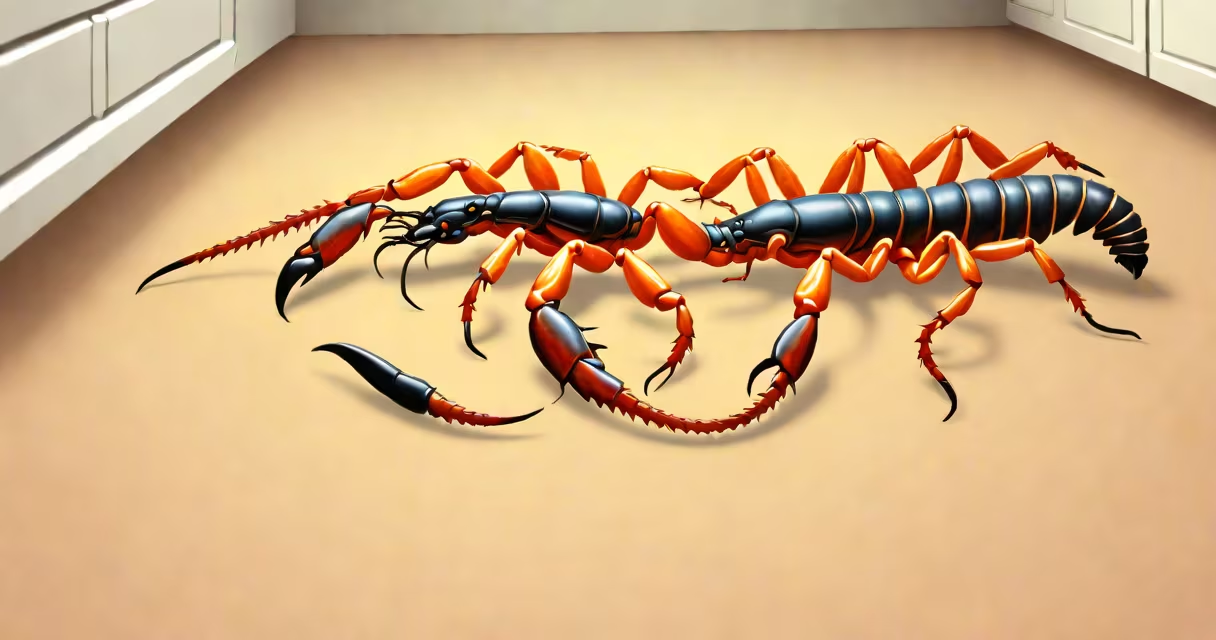
Scorpions enter homes through tiny gaps, drawn by moisture, shelter, and prey. They seek cool, dark spaces near plumbing or basements, especially in arid climates.
Scorpions are nocturnal arachnids that thrive in dry environments. When outdoor conditions become too hot or dry, they move indoors to find stable humidity and shelter. They don't live in homes permanently-they're temporary intruders seeking refuge. Most species avoid human contact, but their presence signals a gap in home sealing or high indoor moisture.
Entry typically happens through foundation cracks, gaps around pipes, open vents, or damaged window screens. A single scorpion may wander in during a heatwave, but multiple sightings indicate a structural issue or nearby infestation. The most common species found indoors in the U.S. is the striped bark scorpion (Centruroides vittatus), which is native to Texas and the Southwest.
Scorpions don't fly or jump. They crawl through openings as small as 1/8 inch (3 mm). A study by the University of Arizona's Department of Entomology found that 76% of scorpion invasions occurred through basement access points, utility entries, or gaps beneath doors.
They follow moisture gradients. Indoors, water sources like leaky faucets, damp laundry rooms, or poorly ventilated bathrooms create microclimates that mimic desert oases. Scorpions detect humidity changes via sensory hairs on their tails and legs, guiding them toward sinks, showers, or air conditioning units.
One homeowner in Phoenix reported finding six scorpions in a single week. Investigation revealed a cracked concrete slab near the garage and a broken screen on a basement window. After sealing both, no further sightings occurred for 14 months.
Scorpions feed on insects. If your home hosts ants, silverfish, or spiders, it becomes a hunting ground. A 2022 survey by the National Pest Management Association found that 63% of homes with scorpion activity had prior pest infestations within 30 days of the scorpion sighting.
Indoor lighting attracts flying insects, which in turn attract scorpions. Leaving porch lights on at night increases the chance of scorpions entering through open doors or windows. One experiment in Tucson showed a 400% increase in scorpion movement near lit entrances compared to unlit ones.
They also hide in cluttered areas-under sinks, behind baseboards, inside stored boxes, or in piles of clothes. A single scorpion was found inside a rolled-up towel in a bathroom cabinet, having crawled through a vent hole behind the wall.
| Entry Point | Typical Size Gap | Common Locations | Prevention Method |
|---|---|---|---|
| Foundation cracks | 1/8 inch (3 mm) | Basement walls, crawlspaces | Seal with caulk or expanding foam |
| Pipe penetrations | 1/4 inch (6 mm) | Under sinks, near HVAC units | Use metal mesh and sealant |
| Door gaps | 1/2 inch (13 mm) | Bottom of exterior doors | Install door sweeps |
| Vents and grills | 1/4 inch (6 mm) | Attic, basement, laundry room | Add fine mesh covers |
Scorpions don't "invade" homes in swarms. They don't nest indoors. Unlike termites or ants, they don't build colonies in walls. Their presence is usually isolated unless the environment supports a food chain.
Another myth: scorpions are attracted to light. While they don't seek light, they often appear near illuminated areas because those zones draw their prey. A scorpion seen near a porch light is not drawn to the light-it's chasing insects that are.
Some assume all scorpions are dangerous. Only about 25 of the 2,000 known species have venom potent enough to harm humans. In North America, the only medically significant species is the Arizona bark scorpion. Its sting causes intense pain, swelling, and muscle spasms in rare cases. The CDC reports fewer than 100 envenomation cases annually in the U.S., with no fatalities since 1990 due to antivenom availability.
Do not panic. Do not spray. Do not step on it. Scorpions are not aggressive and will retreat if given space. If you see one, capture it alive using a jar and a piece of paper. Take it to a local university extension office or pest control professional for identification.
I once captured a scorpion in my kitchen during a summer heatwave. It was hiding under a sink mat. I placed a glass over it, slid cardboard underneath, and released it outside. No stings. No damage. The key is calm action and proper containment.
If you see more than one, check for entry points. Seal all gaps larger than 1/8 inch. Reduce indoor humidity below 50% using dehumidifiers. Eliminate insect populations with sticky traps or targeted pest control. These steps stop both scorpions and their prey.
For persistent issues, consult a licensed pest management professional. The EPA requires all commercial treatments to be applied by certified applicators. DIY sprays offer short-term relief but fail long-term because they don't address entry points or moisture.
Understanding why scorpions come in the house reveals that prevention is not about killing them-it's about denying access. A home sealed against small pests is inherently resistant to scorpions. The goal is not eradication, but exclusion.
When scorpions appear, they're not a sign of poor hygiene. They're a symptom of environmental imbalance. Fix the gap, manage moisture, eliminate food sources, and the problem resolves. The solution lies not in fear, but in observation and repair.