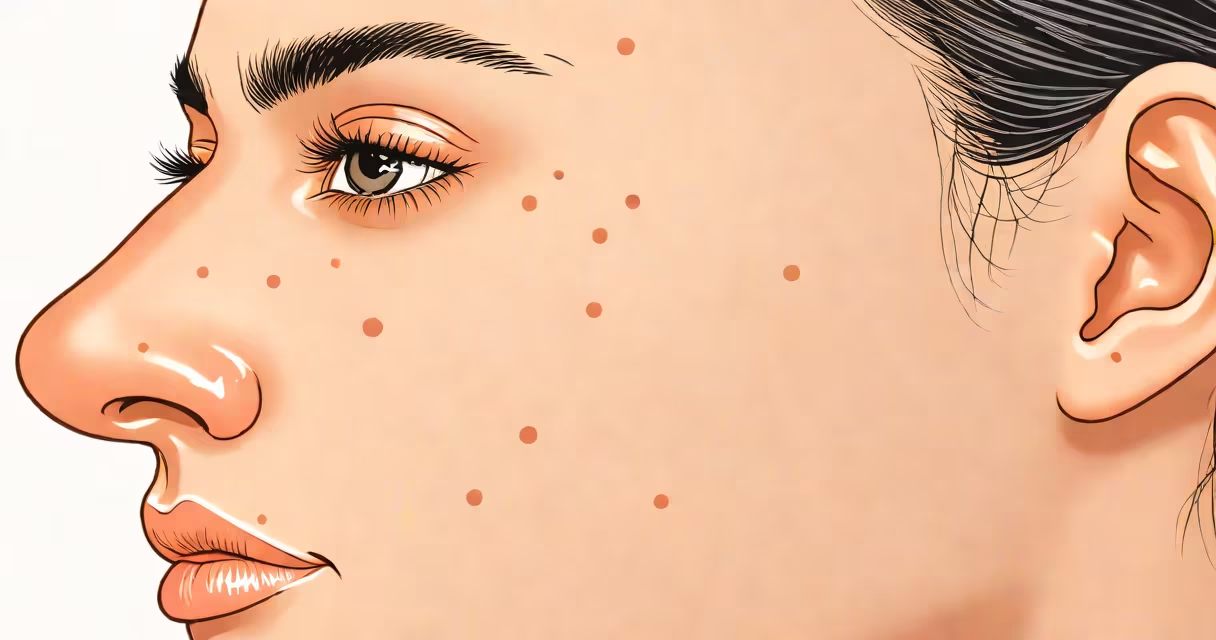
Pimples leave black spots due to post-inflammatory hyperpigmentation (PIH), a temporary darkening of skin after injury. This happens when acne damages deeper skin layers, triggering excess melanin production during healing.
When a pimple forms, inflammation extends below the epidermis into the dermis. The body responds by producing melanin, the pigment responsible for skin color, as part of the healing process. This creates the dark spot that persists after the pimple itself disappears.
| Type | Color | Duration | Skin Tone Impact |
|---|---|---|---|
| Post-inflammatory hyperpigmentation (PIH) | Reddish-brown to dark brown | Months to years | More common in darker skin tones |
| Post-inflammatory erythema (PIE) | Pink to red | Weeks to months | More visible in lighter skin tones |
Deeper pimples (like nodules or cysts) cause more significant damage to skin structures, leading to longer-lasting and darker PIH. Surface-level pimples (whiteheads or blackheads) typically heal with minimal marking. The severity also depends on how aggressively you pick or squeeze the pimple.
Darker skin tones are more prone to noticeable PIH because melanin production is more active in these skin types. According to the American Academy of Dermatology, people with Fitzpatrick skin types IV-VI (olive to dark brown skin) are particularly vulnerable to persistent dark marks.
Most PIH fades within 6-12 months without treatment, but these methods can speed up the process:
Many people confuse PIH with true acne scars, which involve permanent structural changes to the skin. Unlike scars, PIH doesn't involve tissue loss or raised areas. The dark marks from PIH are flat and simply discolored skin.
I noticed this distinction firsthand when treating my own post-acne marks. While some areas had temporary dark spots, others had small indentations that wouldn't fade-the scars. Understanding this difference helped me target treatments more effectively.