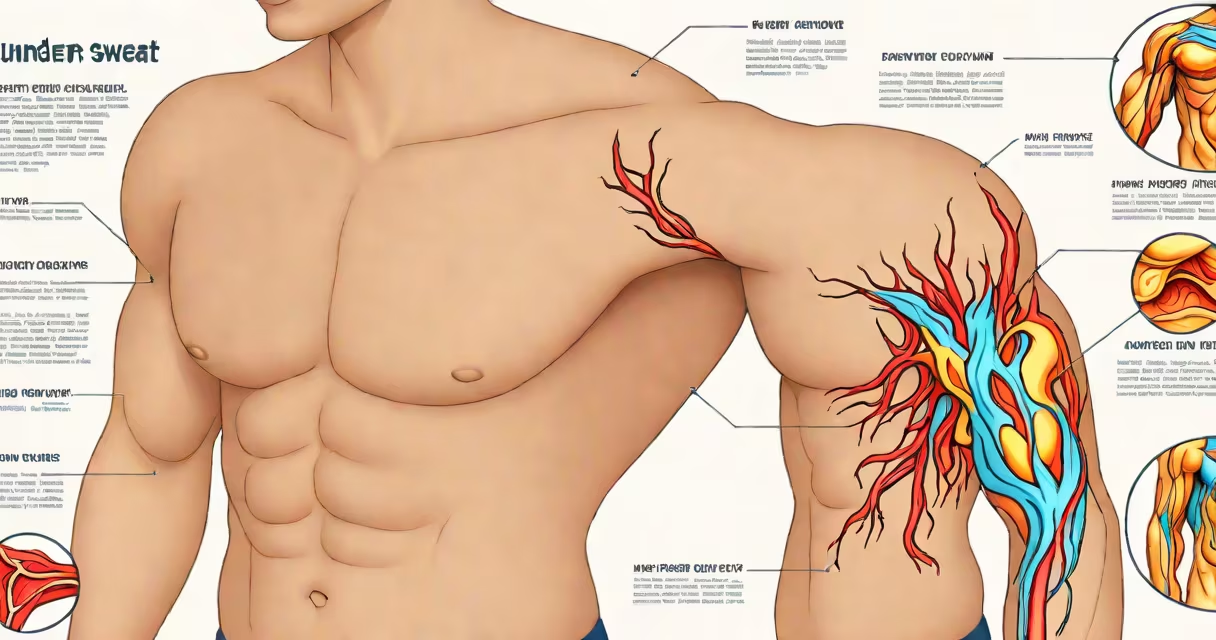
Your underarms sweat because they contain a high concentration of eccrine sweat glands, which regulate body temperature by releasing moisture. This process is controlled by the autonomic nervous system.
Sweating is a natural cooling mechanism. When your body temperature rises, your brain signals sweat glands to release moisture onto the skin's surface. As this moisture evaporates, it cools the skin and lowers body temperature.
Underarms have more sweat glands than other areas, making them prime spots for perspiration. On average, each underarm contains about 200,000 sweat glands, according to the American Academy of Dermatology.
There are two main types of sweat glands:
| Type | Function | Location |
|---|---|---|
| Eccrine | Regulates body temperature | All over the body, especially underarms, palms, and soles |
| Apocrine | Produces thicker sweat linked to scent | Underarms and groin |
Underarm sweating is triggered by several factors:
Many people assume sweating is solely about heat regulation. However, stress and hormonal fluctuations also play significant roles. Unlike eccrine sweat, which is mostly water, apocrine sweat contains fats and proteins that bacteria feed on, creating body odor.
Another myth is that sweating only happens during exertion. In reality, even mild stress or anxiety can trigger sweating, particularly in the underarms.
To reduce excessive underarm sweating, consider these strategies:
If sweating interferes with daily life, consult a doctor to rule out conditions like hyperhidrosis. Understanding why your underarms sweat helps you manage it effectively.