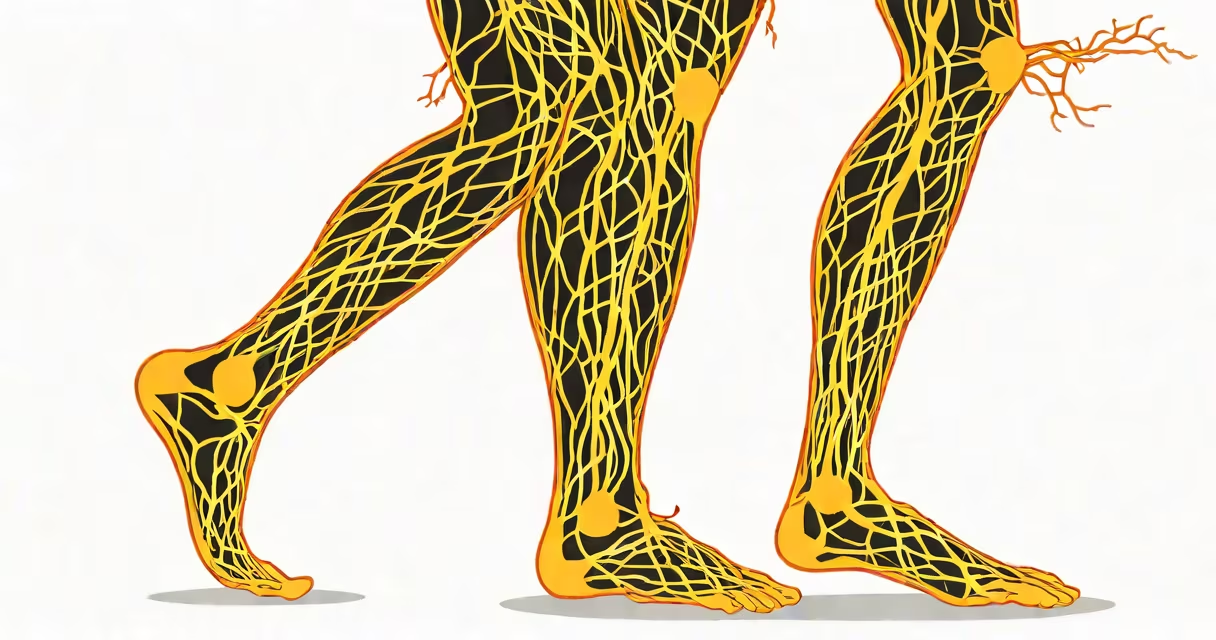
Left leg tingling occurs when nerves in your leg send abnormal signals, often due to compression, irritation, or damage. This sensation can range from mild pins-and-needles to constant numbness.
Nerves transmit signals between your brain and body using electrical impulses. When these pathways become disrupted, you may feel tingling, numbness, or even pain. The sciatic nerve, which runs from your lower back down each leg, is particularly prone to issues that cause tingling sensations.
| Cause | Description | Duration |
|---|---|---|
| Temporary compression | Sitting or sleeping in awkward positions | Minutes to hours |
| Peripheral neuropathy | Chronic nerve damage from diabetes or vitamin deficiencies | Days to permanent |
| Spinal stenosis | Narrowing of spinal canal compressing nerves | Recurrent episodes |
| Circulation issues | Poor blood flow from atherosclerosis or varicose veins | Variable |
Persistent tingling lasting more than a few days warrants medical evaluation. Seek immediate care if tingling accompanies weakness, loss of coordination, or bowel/bladder dysfunction - these could indicate serious conditions like stroke or cauda equina syndrome.
I once experienced persistent left leg tingling after a long car ride. While it turned out to be temporary nerve compression from sitting too long, the experience taught me to pay attention to duration and accompanying symptoms.
Many people assume tingling is always harmless, but it can indicate serious underlying conditions. Another frequent mistake is confusing tingling with swelling or pain - while they often occur together, they have different causes and treatments. For more on this distinction, see our guide on why legs swell.
Tingling shouldn't be ignored if it's accompanied by other symptoms. The National Institute of Neurological Disorders and Stroke recommends paying particular attention to progressive symptoms or those that wake you from sleep.
Maintain good posture during prolonged sitting, stay active to promote circulation, and manage chronic conditions like diabetes that can contribute to nerve damage. Regular exercise and a balanced diet support nerve health.
For persistent or recurring issues, consulting with a healthcare professional is essential. They can perform physical exams and diagnostic tests to determine the exact cause of your leg tingling and recommend appropriate treatment options.