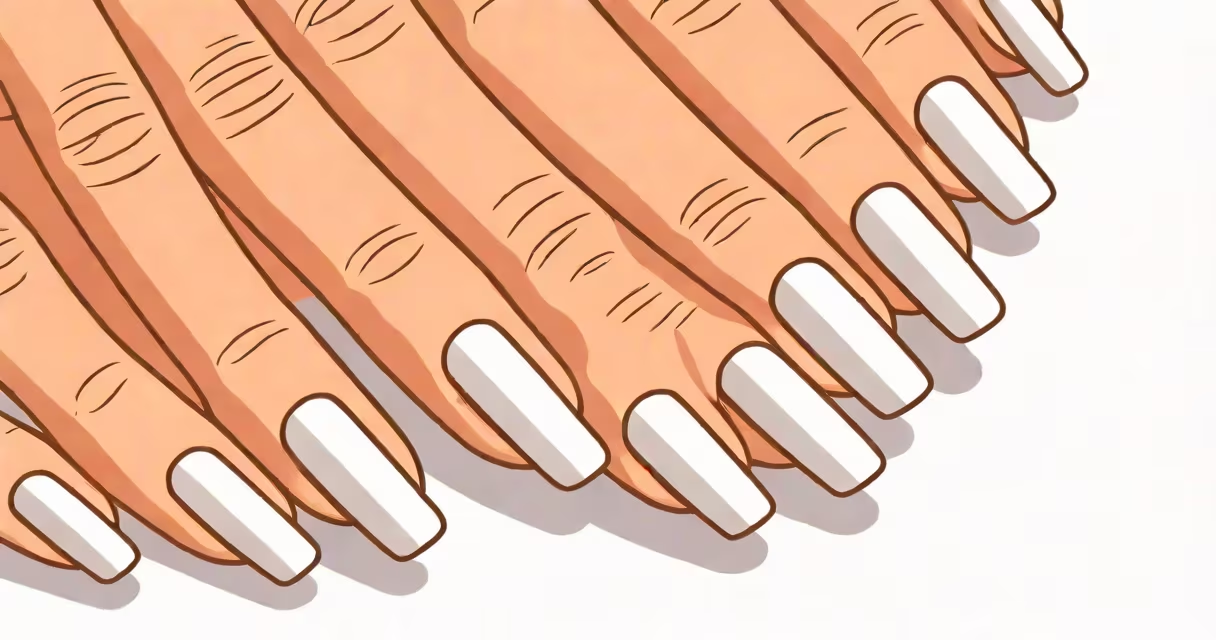
Lines in fingernails form due to temporary disruptions in nail growth, often caused by minor injuries, illnesses, or nutritional deficiencies. These lines, also called Beau's lines, typically grow out as the nail regenerates.
Fingernails grow from the nail matrix, a tissue at the base of the nail. This growth happens in layers, creating ridges that normally appear as faint, horizontal lines. When something disrupts this process, deeper or more visible lines form.
The most common type of line is a vertical ridge, which becomes more prominent with age. Horizontal lines, however, often indicate a specific event or condition that temporarily slowed nail growth. According to the American Academy of Dermatology, these lines usually appear about 6 months after the triggering event.
Nail lines can be categorized by their direction and appearance:
| Type | Appearance | Common Causes |
|---|---|---|
| Vertical ridges | Lines running from the cuticle to the tip | Aging, dehydration, or nutritional deficiencies |
| Horizontal lines (Beau's lines) | White or dark bands across the width | Illness, injury, or severe stress |
| Mees' lines | Multiple horizontal white bands | Arsenic poisoning or chemotherapy |
| Muehrcke's lines | Two parallel white bands | Low albumin levels, often from kidney disease |
Most nail lines are harmless and grow out over time. However, sudden changes or unusual patterns may indicate an underlying health issue. The Mayo Clinic recommends consulting a doctor if lines appear alongside other symptoms, such as discoloration, pain, or changes in nail shape.
For example, if you notice multiple horizontal lines appearing suddenly, it could indicate a recent illness or severe stress. Similarly, if lines are accompanied by a change in nail color or texture, it might signal a fungal infection or other medical condition.
Many people assume that lines in fingernails always indicate poor health. While some lines can signal underlying issues, others are simply a normal part of aging. Vertical ridges, for instance, become more common with age and are rarely a cause for concern.
Another misconception is that nail lines are permanent. In reality, most lines grow out as the nail regenerates, typically taking 6 months for fingernails and up to a year for toenails. Regular nail care and maintaining a balanced diet can also help minimize the appearance of lines.
I noticed vertical ridges on my own nails becoming more pronounced after turning 40. A dermatologist confirmed that this was a normal part of aging and not a sign of any underlying health issue. Keeping my nails hydrated and using a gentle nail buffer helped reduce their appearance.
Understanding why lines in fingernails appear can help you distinguish between normal variations and potential health concerns. Most lines are harmless, but paying attention to sudden changes can ensure you catch any underlying issues early.