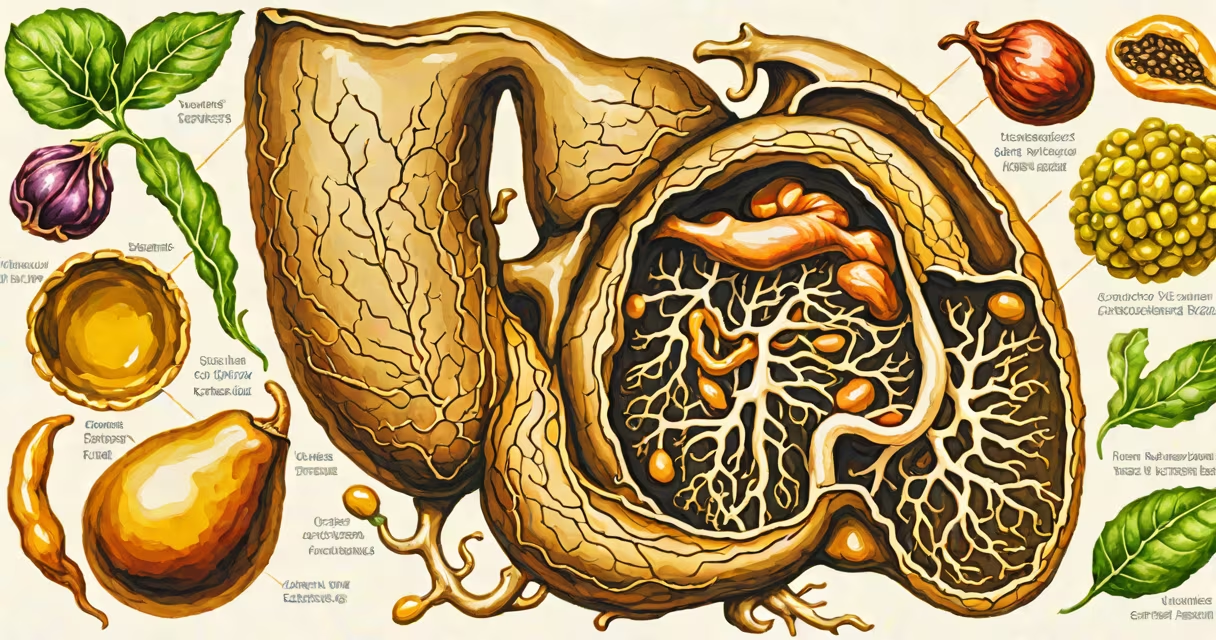
Gallstones can cause bloating, along with other symptoms like abdominal pain and nausea. This happens because gallstones block bile flow, disrupting digestion.
Your gallbladder stores bile produced by your liver. Bile helps digest fats. When gallstones block bile ducts, bile can't reach your small intestine properly. Undigested fat moves into your colon, causing gas, bloating, and diarrhea.
| Type | Composition | Cause |
|---|---|---|
| Cholesterol stones | Mostly cholesterol | Too much cholesterol in bile |
| Pigment stones | Bilirubin | Liver disease or infection |
| Mixed stones | Cholesterol and bilirubin | Combination factors |
Cholesterol stones are most common, making up 80% of cases (National Institute of Diabetes and Digestive and Kidney Diseases).
Bloating often appears with:
Symptoms typically occur after eating fatty meals. Pain usually lasts 1-5 hours.
Seek immediate care if you have:
These may indicate serious complications like cholecystitis (gallbladder inflammation) or pancreatitis.
People often confuse gallstone bloating with:
Unlike gallstone bloating, these usually don't cause severe pain.
Doctors diagnose gallstones through:
Treatment options include:
The American College of Gastroenterology recommends surgery for most patients with symptomatic gallstones.
To reduce gallstone risk:
Gallstones form when bile contains too much cholesterol or bilirubin, or doesn't empty properly. These steps help maintain bile balance.