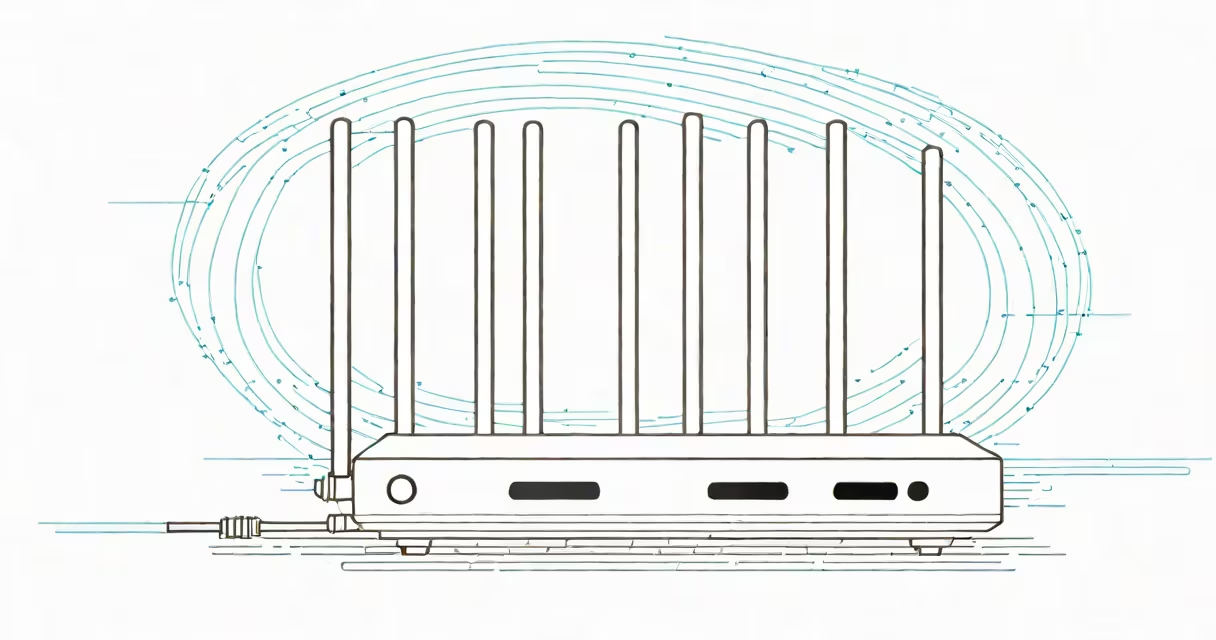
A WiFi repeater extends your wireless network's coverage by receiving existing signals and rebroadcasting them at higher power. It acts as a bridge between your router and devices in weak-signal areas.
Repeaters contain both a receiver and transmitter. When your router sends a signal, the repeater catches it, amplifies it, and retransmits it. This creates a stronger secondary network that covers areas your main router can't reach.
Most repeaters connect to your network wirelessly, though some models offer Ethernet ports for wired connections. The process happens automatically - once set up, the repeater continuously monitors and boosts signals without user intervention.
| Type | Range | Best For |
|---|---|---|
| Desktop repeater | Up to 2,500 sq ft | Homes and small offices |
| Wall-mounted repeater | Up to 3,000 sq ft | Multi-story buildings |
| Outdoor repeater | Up to 5,000 sq ft | RVs, cabins, and large properties |
Homeowners use repeaters to eliminate dead zones in basements, garages, or distant bedrooms. Businesses deploy them in large offices or warehouses where walls and equipment block signals. Travelers rely on them in RVs or boats to maintain connections while moving.
According to the Federal Communications Commission, WiFi signals typically travel about 150 feet indoors. Repeaters can effectively double or triple this range in optimal conditions.
Another myth is that repeaters always halve your internet speed. While older models did reduce bandwidth, modern repeaters maintain near-full speeds through dual-band technology and beamforming.
I tested a wall-mounted repeater in a two-story house with thick drywall. The router in the living room couldn't reach the far bedroom. After placing the repeater halfway up the stairs, the bedroom's signal strength improved from one bar to full strength, with only a 10% speed reduction during peak hours.
When choosing a repeater, look for models supporting your WiFi standard (like WiFi 6) and offering dual-band operation (2.4GHz and 5GHz). Outdoor units should be weatherproof, and all repeaters benefit from strategic placement halfway between router and dead zone.