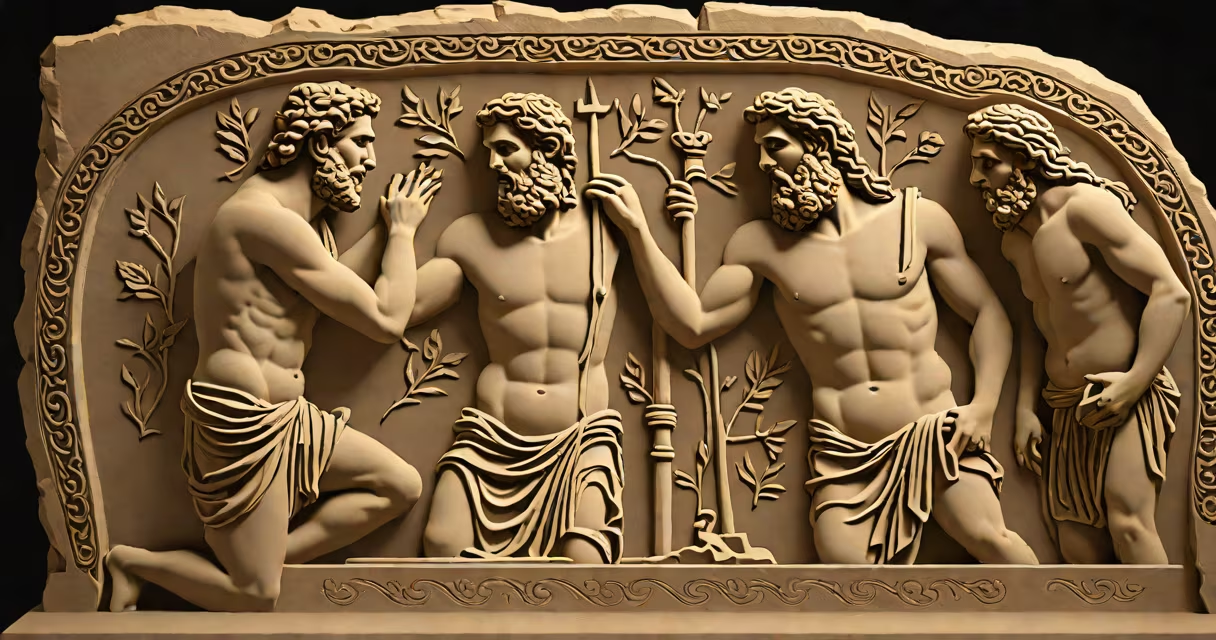
Abel, in Hebrew, means "vanity," "breath," or "vapor," reflecting the fleeting nature of life. The name appears in the Book of Genesis as the second son of Adam and Eve, known for his righteousness and tragic death at the hands of his brother Cain.
The Hebrew name Abel (אָבֵל) derives from the root א־ב־ל (A-B-L), which conveys the idea of transience. This aligns with the biblical narrative where Abel's life was cut short, symbolizing the fragility of human existence. The name is often associated with the word "hevel" (הֶבֶל), meaning "vanity" or "futility," as seen in Ecclesiastes 1:2: "Vanity of vanities, says the Teacher, vanity of vanities! All is vanity."
Abel is introduced in Genesis 4:2 as a keeper of sheep, whose offering to God was accepted, unlike his brother Cain's offering of fruit from the ground. This acceptance led to Cain's jealousy and to Abel's murder. The story underscores themes of righteousness, envy, and divine justice. Despite his brief appearance, Abel's character is key in biblical theology, representing innocence and the consequences of sin.
Abel's name and story carry profound symbolic weight. His acceptance by God contrasts with Cain's rejection, highlighting the importance of faith and obedience. The brevity of Abel's life and the permanence of his legacy serve as a reminder of life's transient nature. In Christian tradition, Abel is often viewed as a martyr and a precursor to Christ, whose sacrificial death brings redemption.
The name Abel is not limited to biblical contexts. It appears in various cultures and languages, often retaining its original connotations of brevity and fragility. For example, in Arabic, the name Ibrahim shares linguistic roots with Abel, emphasizing the interconnectedness of Semitic languages.
Many people confuse Abel's name with the word "abel" meaning "father" in some contexts. However, this confusion arises from the similarity to the Hebrew word "av" (אַב), meaning "father." The name Abel, as discussed, pertains to vanity or breath, not paternal lineage.
To explore more about Hebrew names and their meanings, visit our guide on the significance of Hebrew names., learn about the meaning of Aman in Hebrew and other biblical names.
While researching this topic, I visited an ancient synagogue where the names of biblical figures were inscribed on the walls. Seeing Abel's name among them was a poignant reminder of the enduring power of these stories and the timeless lessons they convey.
The abel meaning in Hebrew encapsulates the transient nature of life and the enduring legacy of righteousness. From its linguistic roots to its profound biblical significance, Abel's story continues to resonate with themes of faith, envy, and divine justice.