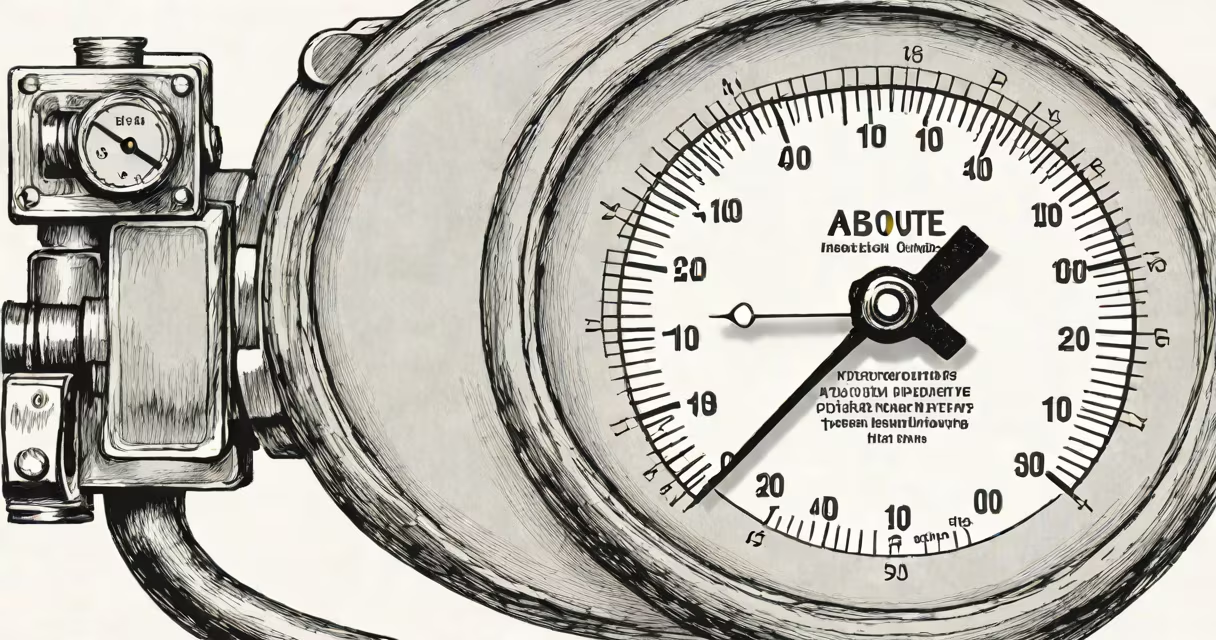
Absolute pressure is pressure measured relative to a perfect vacuum (zero pressure) using an absolute reference. Unlike gauge pressure, which measures relative to ambient air pressure, absolute pressure always includes atmospheric pressure as part of its value.
Absolute pressure measurements start from zero - a complete vacuum - and increase upward. This means absolute pressure is always positive. The most common unit for absolute pressure is pounds per square inch absolute (psia), though other units like bar, pascal, and torr are also used.
At sea level, atmospheric pressure is approximately 14.7 psi. So if a gauge shows 0 psi, the absolute pressure is actually 14.7 psia. In space, where there's a near-perfect vacuum, absolute pressure approaches 0 psia.
| Type | Reference Point | Typical Use Cases |
|---|---|---|
| Absolute pressure | Perfect vacuum (0 pressure) | Scientific research, aviation, meteorology |
| Gauge pressure | Ambient air pressure | Industrial processes, automotive systems |
| Differential pressure | Difference between two points | HVAC systems, fluid dynamics |
Absolute pressure measurements are critical in applications where knowing the exact pressure relative to a vacuum is essential. For example:
Many people confuse absolute pressure with gauge pressure. The key difference is that absolute pressure always includes atmospheric pressure, while gauge pressure measures the difference from ambient pressure. For example, a tire inflated to 35 psi gauge pressure actually has an absolute pressure of about 49.7 psia (35 + 14.7).
Another misconception is that vacuum pressure is negative. In reality, vacuum pressure is simply absolute pressure below atmospheric pressure. A perfect vacuum would be 0 psia, not negative pressure.
When I worked with industrial vacuum systems, we used absolute pressure gauges to monitor system performance. At one point, a gauge reading showed 20 kPa (absolute). Since atmospheric pressure was 101.3 kPa, this meant the system had created a partial vacuum of 81.3 kPa below atmospheric pressure - valuable information for optimizing the system's performance.