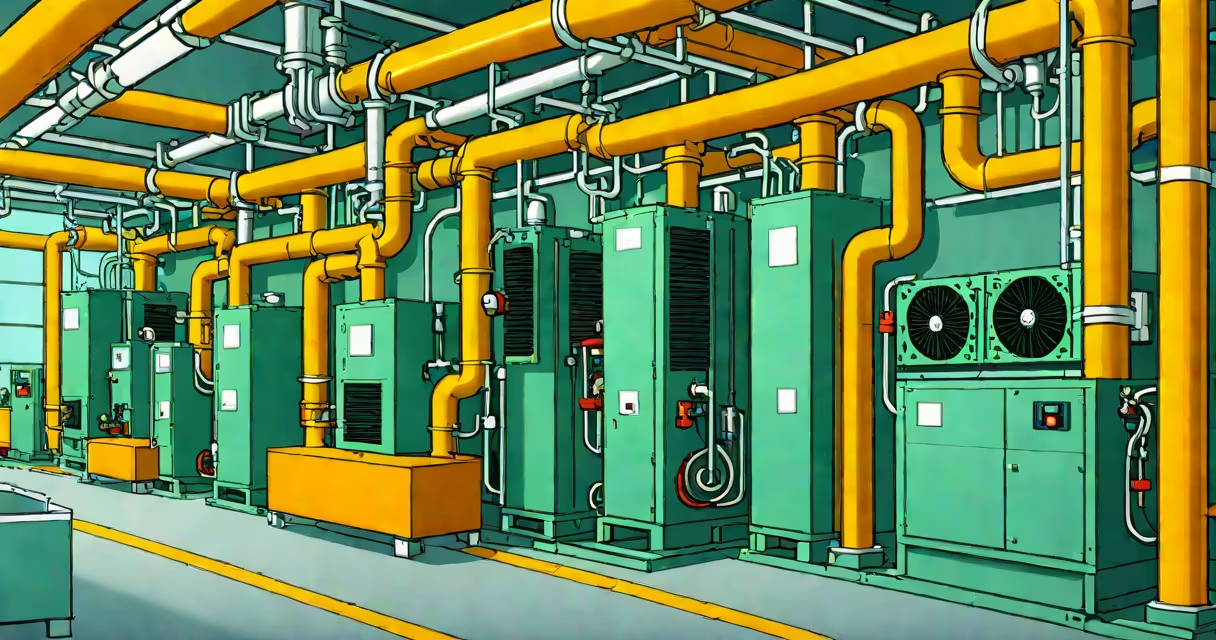
An air handling unit (AHU) is a device that conditions and circulates air in buildings, typically part of an HVAC system. It regulates temperature, humidity, and air quality by filtering, heating, cooling, and ventilating air.
An AHU pulls outside air through dampers, filters it, then passes it over heating or cooling coils. The treated air is pushed through ducts to supply vents. Exhaust fans remove stale air. Sensors monitor conditions, adjusting components automatically.
| Component | Function |
|---|---|
| Filters | Remove particles like dust and pollen |
| Dampers | Control airflow and mix outdoor/recirculated air |
| Coils | Heat or cool air using steam, hot water, or refrigerants |
| Fans | Move air through the system |
| Humidifiers/Dehumidifiers | Adjust moisture levels |
AHUs serve commercial buildings like offices, hospitals, and schools. They're also used in industrial settings where clean air is critical. Large facilities often have multiple AHUs serving different zones. For example, a hospital might have separate units for operating rooms and patient floors.
Many people confuse AHUs with air conditioners. While both cool air, AHUs do much more: they filter, humidify, and distribute air throughout entire buildings. Another misconception is that AHUs only work in cold climates. They actually operate year-round, providing heating in winter and cooling in summer.
I once visited a data center where the AHU system maintained precise temperature and humidity levels to protect sensitive equipment. The facility manager showed me how the system adjusted automatically based on real-time sensor data - a clear example of how advanced these units have become.
Building size, climate, and air quality requirements determine AHU selection. Energy efficiency ratings (like ENERGY STAR certification) are important for long-term operating costs. Proper sizing prevents excessive cycling, which wears out components faster.
The American Society of Heating, Refrigerating and Air-Conditioning Engineers (ASHRAE) provides guidelines for AHU selection and operation. Their standards ensure proper ventilation rates and indoor air quality.