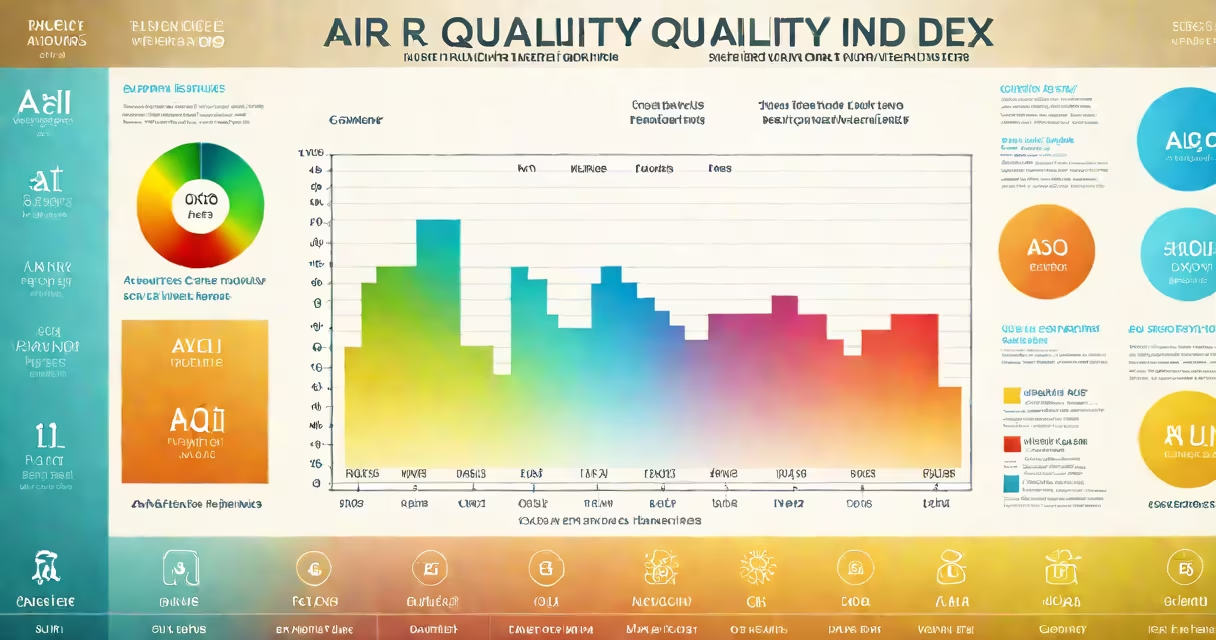
The Air Quality Index (AQI) measures daily air pollution levels using a standardized scale ranging. The U.S. Environmental Protection Agency (EPA) developed this system to communicate health risks associated with five major pollutants: ground-level ozone, particle pollution, carbon monoxide, sulfur dioxide, and nitrogen dioxide.
AQI units represent concentrations of each pollutant in the air. Higher values indicate greater health risks. The EPA calculates AQI using a weighted average of pollutant concentrations over time, typically measured hourly or daily. The index transforms complex air quality data into a single number that reflects air quality.
| Category | AQI Range | Health Implications |
|---|---|---|
| Good | 0-50 | Air quality is satisfactory, posing little or no risk |
| Moderate | 51-100 | Acceptable air quality, but sensitive groups may experience effects |
| Unhealthy for Sensitive Groups | 101-150 | General public unlikely to be affected, but sensitive groups may experience health effects |
| Unhealthy | 151-200 | Some members of the general public may experience effects |
| Very Unhealthy | 201-300 | Health alert: general public likely to experience effects |
| Hazardous | 301-500 | Health warning of emergency conditions: entire population likely to experience serious effects |
Governments, environmental agencies, and health organizations worldwide use AQI units to monitor and report air quality. The EPA provides AQI forecasts and reports through AirNow, helping people make informed decisions about outdoor activities and protecting their health. Many cities also display real-time AQI data on public screens and websites.
One common misconception is that AQI units measure specific pollutants independently. However, the AQI represents a composite score based on the worst-performing pollutant at the time of measurement. For example, during wildfires, particle pollution (PM2.5) often dominates the AQI reading, even if other pollutants are at lower concentrations.
Another point of confusion is the color coding used to represent AQI ranges. The colors correspond to health concern levels, not specific pollutants. For instance, purple on the AQI scale indicates hazardous conditions, but this doesn't necessarily mean a particular pollutant is causing the poor air quality. The color simply represents the AQI value in that range.
During the 2018 California wildfires, AQI readings reached hazardous levels in many areas. In Paradise, California, AQI values exceeded 400 due to extreme particle pollution from the Camp Fire. This measurement indicated that the entire population was likely to experience serious health effects, highlighting the importance of understanding AQI units and their implications for public health.
When AQI values reach this level, health officials recommend staying indoors with windows closed, using air purifiers if available, and avoiding outdoor activities. Understanding AQI units helps individuals make informed decisions to protect their health during periods of poor air quality.