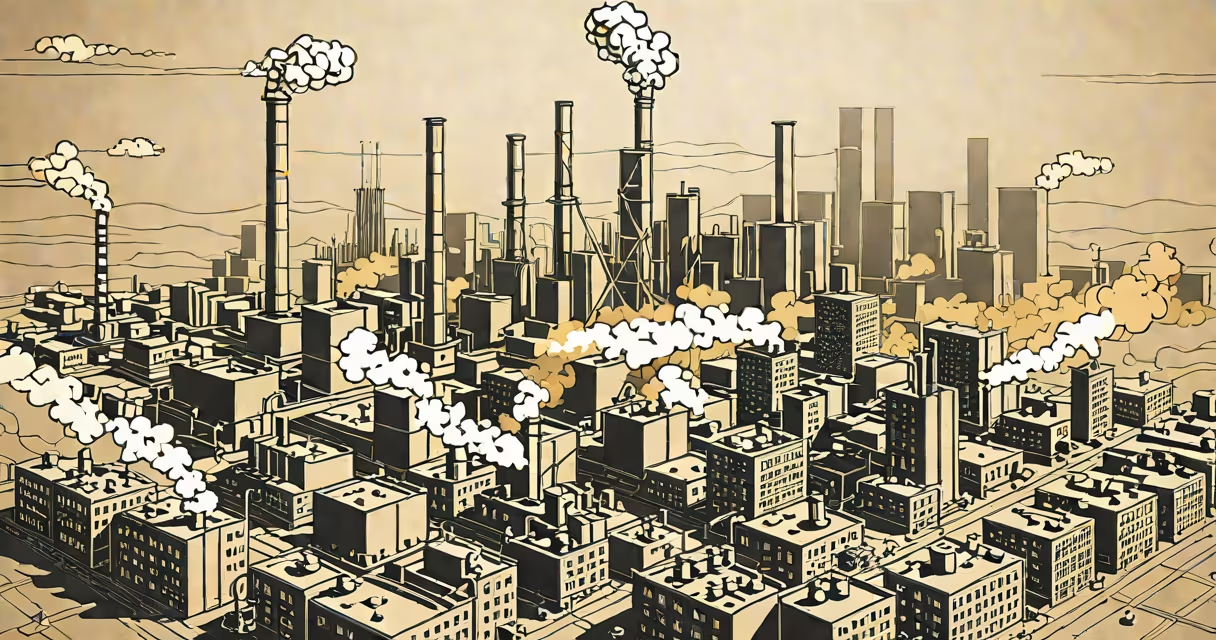
Air pollution in chemistry is the presence of harmful substances in the atmosphere caused by chemical reactions and human activities. These pollutants include gases, particulates, and biological molecules that can cause respiratory diseases, environmental damage, and climate change.
Air pollution occurs when harmful substances are released into the atmosphere. These substances can come from natural sources like volcanic eruptions or wildfires, but most air pollution is caused by human activities such as burning fossil fuels, industrial processes, and transportation. Once released, these pollutants undergo chemical reactions that can form secondary pollutants, which are often more harmful than the primary pollutants.
The main types of air pollutants are:
Air pollution is a global issue with significant sources including:
In London, the Great Smog of 1952 was a severe air pollution event caused by a combination of weather conditions and high emissions from coal burning. This event led to thousands of deaths and highlighted the dangers of air pollution. It prompted stricter regulations on emissions and improved air quality monitoring.
Air pollution involves complex chemical reactions. For example, nitrogen oxides (NOₓ) react with volatile organic compounds (VOCs) under sunlight to form ground-level ozone (O₃), a harmful pollutant that can cause respiratory problems. Similarly, sulfur dioxide (SO₂) reacts with water vapor to form sulfuric acid, a component of acid rain.
To reduce air pollution, various strategies are employed, including: