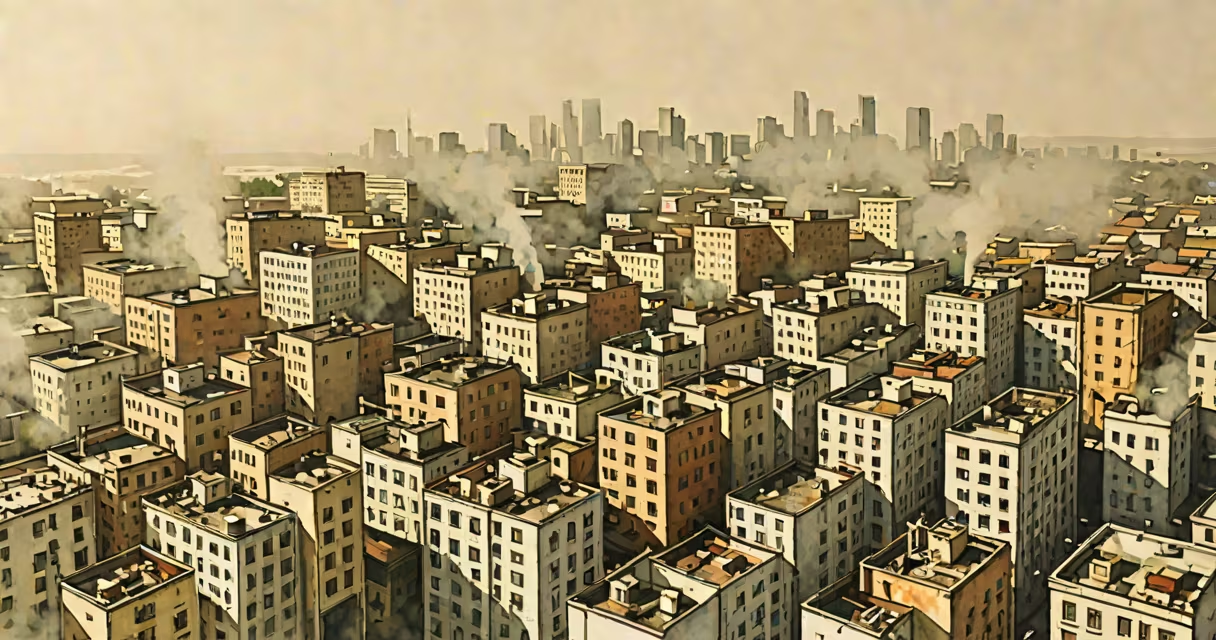
Air pollution in urban areas is the presence of harmful substances in the air caused by human activities in cities, such as vehicle emissions, industrial processes, and construction. These pollutants create smog, reduce visibility, and harm health.
Urban air pollution results from a mix of natural and human-made sources. The most common pollutants are particulate matter (PM), nitrogen oxides (NOx), sulfur dioxide (SO2), carbon monoxide (CO), and ozone (O3). These pollutants come from:
For example, Los Angeles suffers from high levels of ozone due to car emissions reacting with sunlight. The city has implemented stricter vehicle emission standards to reduce this problem.
| Pollutant | Source | Health Effect |
|---|---|---|
| Particulate Matter (PM) | Vehicle exhaust, construction dust | Lung disease, heart problems |
| Nitrogen Oxides (NOx) | Car engines, power plants | Asthma, respiratory infections |
| Sulfur Dioxide (SO2) | Industrial processes, coal burning | Breathing difficulties, acid rain |
| Carbon Monoxide (CO) | Vehicle exhaust, incomplete combustion | Headaches, reduced oxygen flow |
| Ozone (O3) | Chemical reactions with sunlight | Lung damage, reduced lung function |
Cities have higher pollution levels because they concentrate people, vehicles, and industries in small spaces. Urban heat islands-where cities are warmer than surrounding areas-can worsen pollution by increasing chemical reactions that form smog. For instance, Delhi experiences extreme pollution levels during winter due to crop burning, vehicle emissions, and industrial activity.
To combat urban air pollution, cities implement measures like promoting public transportation, enforcing stricter emission standards, and planting trees. For example, London introduced an Ultra Low Emission Zone (ULEZ) to charge high-emission vehicles entering the city center. This has reduced nitrogen oxide levels by 44% since 2017. Another effective strategy is green infrastructure, such as parks and green roofs, which absorb pollutants and improve air quality.