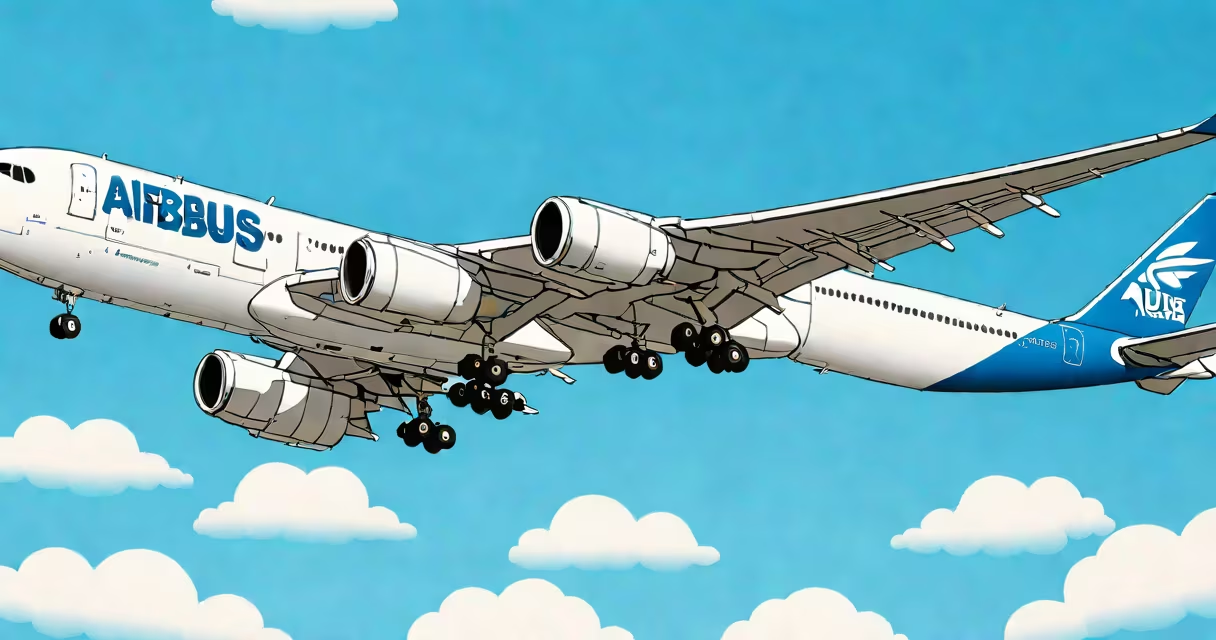
The Airbus A330-300 is a long-range, wide-body twin-engine jetliner designed for high-capacity transcontinental and intercontinental flights. It seats up to 335 passengers in a two-class configuration and has a maximum range of 6,350 nautical miles.
The A330-300 is part of the Airbus A330 family, which includes several variants optimized for different missions. The -300 model features a fuselage stretch compared to the base A330-200, allowing it to carry more passengers and cargo. It has a wingspan of 174 feet and a length of 188 feet, making it one of the larger aircraft in the Airbus fleet.
The aircraft is powered by two high-bypass turbofan engines, typically either the General Electric CF6 or the Pratt & Whitney PW4000. These engines provide the necessary thrust for long-haul flights while maintaining fuel efficiency. The A330-300 also features advanced avionics, including the Airbus-designed fly-by-wire system, which enhances flight control and safety.
The A330-300 is designed for versatility, capable of operating on both high-density routes and ultra-long-haul flights. Its wide-body design allows for multiple cabin configurations, accommodating various passenger classes and cargo requirements. The aircraft's range makes it suitable for routes such as Los Angeles to Sydney or New York to Hong Kong.
One of the standout features of the A330-300 is its fuel efficiency. Despite its size, the aircraft consumes less fuel per passenger than many smaller jets, thanks to its advanced aerodynamics and engine technology. This makes it a cost-effective choice for airlines operating on long-haul routes.
The A330-300 is widely used by major airlines around the world for both passenger and cargo services. Airlines such as Delta Air Lines, Cathay Pacific, and Air France have operated the A330-300 on their international routes. The aircraft's reliability and efficiency make it a popular choice for transatlantic and transpacific flights.
To passenger services, the A330-300 is also used for cargo operations. Its large cargo hold can accommodate a significant amount of freight, making it suitable for both dedicated cargo flights and combined passenger-cargo operations.
One common misconception is that the A330-300 is a four-engine aircraft. In reality, it is a twin-engine jet, which contributes to its fuel efficiency and operational flexibility. Another misconception is that the A330-300 is primarily used for short-haul flights. However, its long range makes it ideal for intercontinental routes.
According to Airbus, the A330-300 has a proven track record of reliability and safety. It has been in service since the early 1990s and has accumulated millions of flight hours. The aircraft's advanced systems and solid design contribute to its excellent safety record.
The Airbus A330-300 is a versatile and efficient wide-body jetliner designed for long-haul flights. Its advanced features, including fuel-efficient engines and a spacious cabin, make it a popular choice for airlines operating on international routes. Whether used for passenger or cargo services, the A330-300 continues to be a key player in commercial aviation.