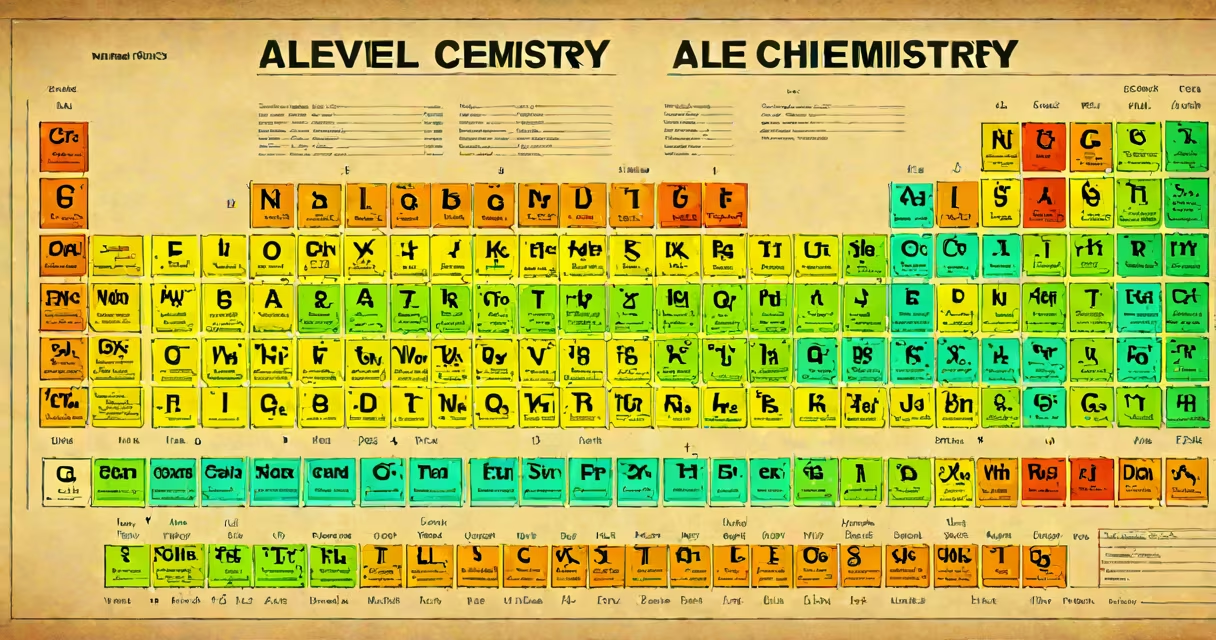
The periodic table in Alevel chemistry is divided into groups (columns) and periods (rows). Groups are numbered 1-8 plus the zero group, while periods range. Each group shares similar chemical properties due to having the same number of electrons in their outer shell.
For example, Group 1 elements (alkali metals) like lithium, sodium, and potassium all have one electron in their outermost shell, making them highly reactive with water. This pattern repeats across other groups, allowing chemists to predict behavior based on position.
The key groups covered in Alevel specifications include:
| Group | Name | Key Properties |
|---|---|---|
| 1 | Alkali Metals | High reactivity, low density, soft texture |
| 2 | Alkaline Earth Metals | Reactive but less so than Group 1, form +2 ions |
| 17 | Halogens | Highly reactive non-metals, form -1 ions |
| 18 | Noble Gases | Inert, stable electron configuration |
Two critical trends examined in Alevel chemistry are atomic radius and electronegativity. Atomic radius decreases across periods (left to right) due to increasing nuclear charge pulling electrons closer. It increases down groups as new electron shells are added.
Electronegativity, measuring an atom's attraction to bonding electrons, increases across periods and decreases down groups. For instance, fluorine (Group 17, Period 2) is the most electronegative element, while francium (Group 1, Period 7) is the least.
Alevel exams frequently test understanding of periodic trends through questions on reaction rates, bond types, and element properties. For example, a question might ask why chlorine is a better oxidizing agent than iodine, requiring knowledge of electronegativity trends in Group 17.
Practice involves predicting reactions between elements based on their group properties. For instance, combining a Group 1 metal with a Group 17 non-metal typically forms an ionic compound, as seen in sodium chloride (NaCl).
Most students find the transition metals (Groups 3-12) challenging due to their varied oxidation states and catalytic properties. Mastery here often separates high-achieving candidates from the rest.
Another mistake is extending trends inaccurately. While most properties follow predictable patterns, exceptions exist, such as oxygen's reactivity despite being in the same group as the relatively inert noble gases.
To avoid these errors, focus on understanding why trends occur rather than memorizing them. The Royal Society of Chemistry emphasizes conceptual understanding over rote learning for exam success.