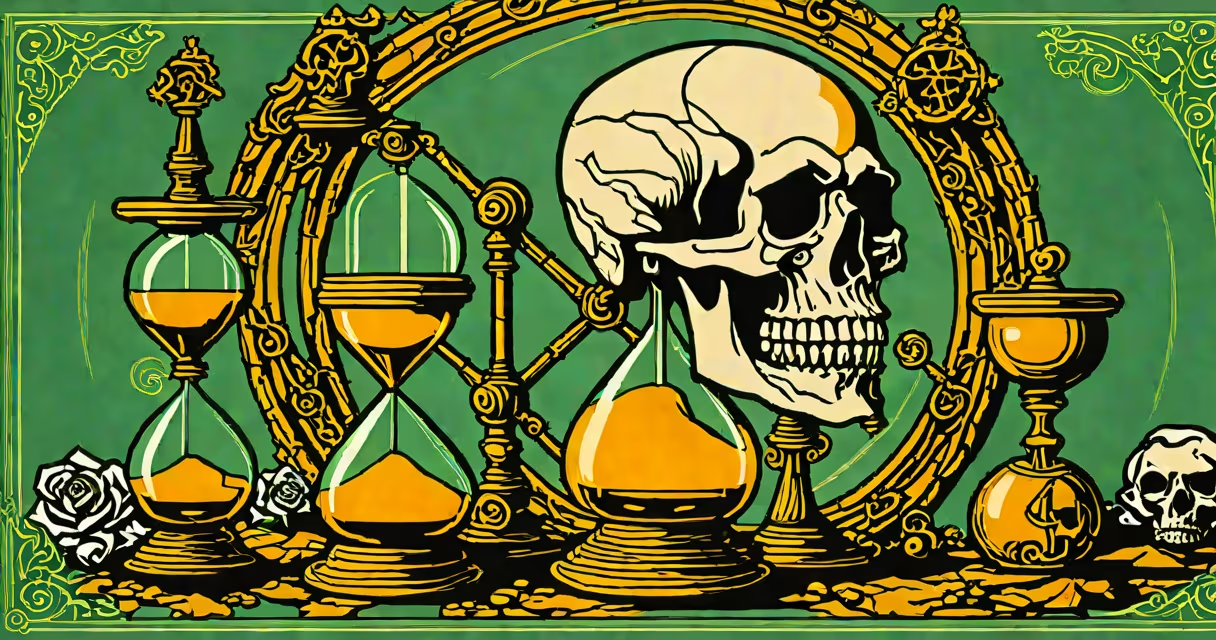
The alchemical symbol for death is a skull or hourglass, representing transformation, decay, and the inevitable passage of time. These symbols appear in medieval and Renaissance alchemical texts to signify the dissolution of matter during the magnum opus, or Great Work.
Alchemy used visual symbols to convey complex ideas about the transmutation of substances and spiritual enlightenment. The symbol for death indicates a necessary stage in the alchemical process where matter decomposes before being reborn in a purer form. This mirrors the philosophical belief in rebirth and renewal.
Alchemists employed several symbols to represent death:
| Symbol | Meaning |
|---|---|
| Skull | Represents mortality and the end of physical form |
| Hourglass | Signifies the passage of time and inevitability of death |
| Caduceus with a Skull | Combines healing with mortality, symbolizing life and death |
These symbols appeared in alchemical manuscripts, laboratory equipment, and even architectural designs. They served as reminders of the transient nature of life and the necessity of decay before rebirth. For example, the Ripley Scroll, a 15th-century alchemical manuscript, features a skull to mark the stage of putrefaction in the alchemical process.
Many assume these symbols were purely morbid, but they actually represent a philosophical concept: destruction precedes creation. Unlike modern depictions of death as purely negative, alchemists viewed it as a major step toward perfection. The skull, for instance, wasn't just a grim reaper's tool-it was a metaphor for the purification of the soul.
Another misconception is that alchemical symbols were standardized. In reality, different alchemists used varying symbols, and interpretations could differ. The skull, for example, might represent death in one context but corruption in another. This ambiguity reflects the esoteric nature of alchemy itself.
While researching this topic, I visited the Chemical Heritage Foundation in Philadelphia, which houses original alchemical texts. Seeing these symbols etched into ancient manuscripts reinforced their dual meaning-both ominous and hopeful. The hourglass, in particular, stood out as a useful reminder of alchemy's focus on time and transformation.